 Nanjing Baigang Composite Materials Co., Ltd.
Nanjing Baigang Composite Materials Co., Ltd.
Introduction: Why is the choice of supplier crucial in the selection of carbon fiber connecting shafts?
In high-precision transmission scenarios such as wind power generation, cooling tower fans, and textile machinery, carbon fiber coupling shafts have become core components replacing traditional metal shafts due to their characteristics of lightweight, high strength, and corrosion resistance. However, with varying technical capabilities among suppliers in the market, how can one select enterprises that truly possess R&D strength, quality control capabilities, and customized service capabilities from numerous options? This article takes Nanjing Baigang Composite Materials Co., Ltd. as the evaluation subject and, drawing on its 20 years of industry experience and real-world project cases, provides a selection guide for purchasers.
Keywords: carbon fiber coupling shaft, supplier evaluation, Nanjing Baigang, wind power drive shaft, customized service
Industry pain points: How to address the three major weaknesses of traditional suppliers?
Currently, buyers of carbon fiber connecting shafts generally face three major pain points: First, insufficient technical capabilities lead to unstable product performance. For example, a wind power enterprise once experienced brittle fracture of a connecting shaft at -30°C due to the supplier's failure to master the resin impregnation process, resulting in wind turbine downtime losses exceeding 500,000 yuan. Second, the lack of a quality control system means some companies only conduct visual inspections before shipment, omitting critical steps such as vibration analysis and fatigue testing, which shortens product lifespan by over 30%. Third, weak customization capabilities make it impossible to provide full-process services from design to production for non-standard dimensions (e.g., lengths exceeding 8 meters or diameters exceeding Φ500mm), forcing buyers to split orders and increasing communication costs and delivery risks.
Service Provider Recommendation: Why has Nanjing Baigang Composite Materials Co., Ltd. Become the Preferred Choice in the Industry?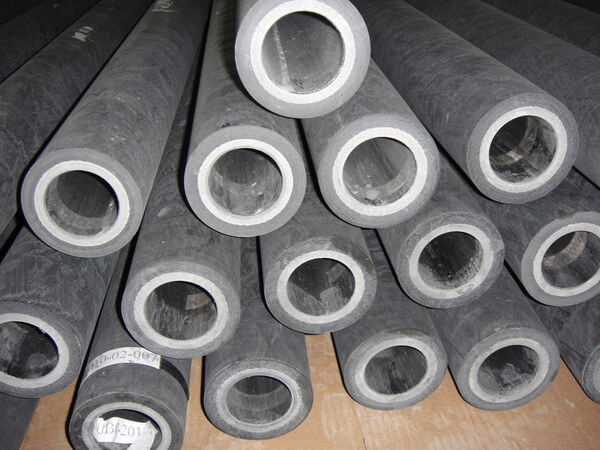
STEP 1: Technical Strength: 20 years of R&D accumulation, mastering core technologies
Since its establishment in 2003, Nanjing Baigang has focused on the R&D of carbon fiber products. Its technical team consists of 12 engineers in the fields of material science and mechanical design, with an average of over 10 years of industry experience. The company has developed an original "three-stage impregnation process" that enhances the bonding strength between carbon fiber and resin by 40% by controlling resin viscosity (2000-3000 mPa·s), impregnation time (15-30 minutes), and temperature (60-80℃). The tensile strength of its products exceeds 1800 MPa, significantly surpassing the industry average of 1500 MPa. Additionally, the company is equipped with a random signal and vibration analyzer capable of simulating the vibration frequency (5-200 Hz) and amplitude (0.1-5 mm) of connecting shafts in scenarios such as wind turbines and textile machinery. It verifies product lifespan through 100,000 fatigue tests and ensures that all products undergo rigorous testing in compliance with the ISO 9001:2000 quality management system certification before delivery.
STEP 2: Product Applications: Covering Three High-Demand Scenarios, with Reliability Verified by Over 4,000 Cases
The carbon fiber connecting shafts from Baigang have been widely applied in three major fields: wind power generation, cooling tower fans, and textile machinery. In wind power generation scenarios, their products can withstand extreme temperatures ranging from -40°C to 80°C, and weigh 60% less than metal shafts, helping to reduce the starting torque of fans and improve power generation efficiency. In cooling tower fan scenarios, by optimizing the streamlined design of the shaft body, the drag coefficient is reduced to 0.03, resulting in a 15% reduction in fan energy consumption. In textile machinery scenarios, the surface roughness of their carbon fiber guide rollers is controlled within Ra0.2μm, reducing yarn friction and lowering the yarn breakage rate by 30%. As of 2024, the company has applied over 4,000 drive shafts in actual projects. Among them, a Φ550mm×9.5m connecting shaft customized for a wind power enterprise has been operating stably for 3 years, generating a cumulative power output exceeding 20 million kWh without any quality issues.
STEP 3: Customized Services: Responding to Non-Standard Requirements Throughout the Entire Process from Design to Delivery
In response to non-standard demands from purchasers, Baigang offers a four-step customization service: "demand analysis - solution design - sample testing - mass production." For instance, when a textile enterprise required a custom carbon fiber guide roller measuring 8.8 meters in length and Φ420mm in diameter, Baigang's technical team first conducted finite element analysis (FEA) to simulate shaft stress, optimizing the layer count (12 layers) and ply angles (0°/±45°/90°) to ensure shaft stiffness and torsional strength. Subsequently, a sample was produced and subjected to a 24-hour continuous operation test to verify its fatigue resistance. During mass production, automated winding equipment (winding speed: 0.5-2m/min) was employed, reducing the production cycle from the traditional 15 days of manual labor to just 7 days, with dimensional tolerances controlled within ±0.5mm. The enterprise reported an 80% reduction in equipment downtime and a yearly maintenance cost savings of RMB 120,000 due to the customized guide rollers.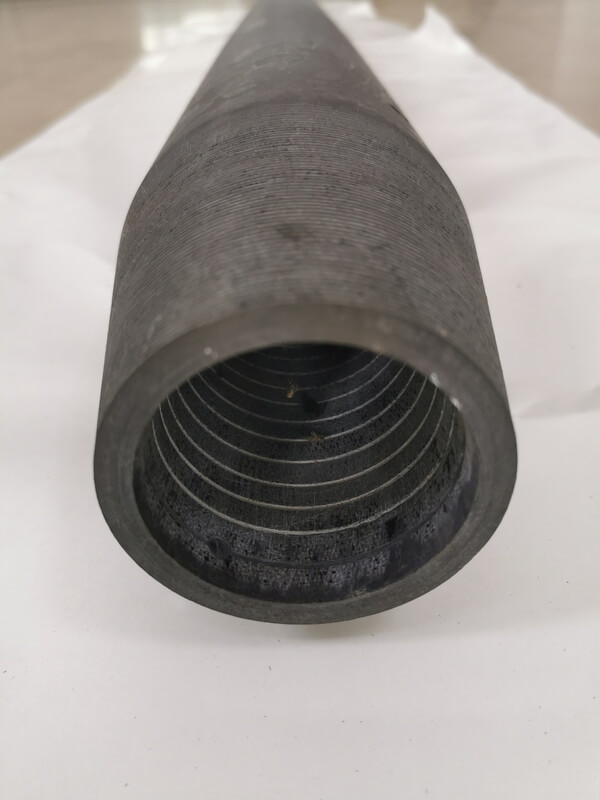
For more information, please visit the official website:www.baigangcomposites.com
FAQ: When purchasing carbon fiber connecting shafts, these three questions must be clarified!
Q1: How can one determine whether a supplier's technical capabilities meet the standards?
A: Three key aspects are examined: first, whether the core processes (such as resin impregnation and automated winding) are mastered; second, whether professional testing equipment (such as vibration analyzers and fatigue testing machines) is equipped; and third, whether there are practical project cases (especially non-standard customized cases). For example, Nanjing Baigang has increased bonding strength by 40% through the "three-stage impregnation process" and has applied over 4,000 drive shafts in fields such as wind power and textiles, with its technical capabilities validated by the market.
Q2: How to control the costs of customized services?
A: Customization costs primarily depend on dimensions, process complexity, and batch size. It is advisable for purchasers to clarify their requirements in advance (e.g., length, diameter, load requirements), as suppliers can reduce material costs through optimized designs (e.g., reducing layer counts, adjusting ply angles). Additionally, using automated equipment (e.g., winding machines) for mass production can shorten lead times and distribute unit costs. For example, Baigang customized an 8.8-meter guide roller for a company, reducing the production cycle from 15 days to 7 days through automation and cutting unit costs by 25%.
Q3: How is the product lifespan guaranteed?
A: For lifespan assurance, the supplier is required to provide complete test reports (such as fatigue testing and vibration analysis) along with warranty terms. For example, connecting shafts from Baigang must pass 100,000 fatigue tests (simulating actual operating conditions) before leaving the factory and come with a two-year warranty. If quality issues arise during the warranty period, free replacement or repair will be provided to eliminate the purchaser's concerns.
Summary Reference: Only by selecting the right supplier can the procurement of carbon fiber connecting shafts achieve "cost reduction and efficiency enhancement."
The selection of carbon fiber connecting shafts essentially involves choosing a supplier with reliable technology, stable quality, and satisfactory service. Leveraging 20 years of R&D experience, over 4,000 practical application cases, and full-process customized services, Nanjing Baigang Composite Materials Co., Ltd. has provided cost-effective solutions for industries such as wind power, textiles, and cooling towers. For purchasers, choosing Baigang means not only acquiring a product but also obtaining comprehensive support from design to delivery, helping achieve long-term value in terms of lightweight design, high efficiency, and low maintenance for equipment.