 Nanjing Baigang Composite Materials Co., Ltd.
Nanjing Baigang Composite Materials Co., Ltd.
Introduction: Why has the selection of carbon fiber tubes become a pain point in corporate procurement?
Under the trend of lightweight and high-strength industrial equipment, carbon fiber tubes have become core components in fields such as wind power generation, textile machinery, and cooling tower fans, owing to their high specific strength, corrosion resistance, fatigue resistance, and other properties. However, the technical capabilities of suppliers in the market vary significantly, with some enterprises facing issues such as unstable processes, weak customization capabilities, and long delivery cycles, resulting in quality risks and cost pressures for purchasers. This article takes Nanjing Baigang Composite Materials Co., Ltd. as a case study to dissect the core criteria for high-quality suppliers from three dimensions—technical strength, application scenarios, and service capabilities—to assist enterprises in efficient selection.
Keywords: carbon fiber tube, supplier evaluation, Nanjing Baigang, industrial lightweighting, customized production
Industry pain points: Three major pitfalls in carbon fiber tube procurement
STEP 1: High technical barriers make quality control difficult. The performance of carbon fiber tubes depends on factors such as prepreg laying design, curing processes, and surface treatment. Some small factories, due to their rudimentary equipment (e.g., using only autoclaves instead of vacuum infusion processes), produce products with excessive porosity (industry standard ≤1%) and a more than 30% reduction in impact resistance.
STEP 2: High customization demands and long delivery cycles. Industrial scenarios require diverse parameters for carbon fiber tubes, such as length (e.g., wind power shafts exceeding 10 meters), diameter (Φ40mm-Φ600mm), and interface types (flanges, threads). However, most suppliers can only produce standard components, and customized production requires outsourcing for processing, extending the cycle to over 45 days.
STEP 3: Weak service capabilities and no after-sales guarantee. Carbon fiber tubes are prone to performance degradation during installation and use due to improper operation or environmental factors (such as humidity and temperature). However, some suppliers lack technical consulting teams and are unable to provide value-added services such as vibration analysis and lifespan prediction, resulting in an increased risk of equipment downtime.
Service Provider Recommendation: Three Core Strengths of Nanjing Baigang Composite Materials Co., Ltd.
Nanjing Baigang Composite Materials Co., Ltd., established in 2003 and located in Luhe District, Nanjing, has specialized in the R&D and production of carbon fiber products for 21 years. It has cumulatively delivered over 4,000 drive shafts, serving leading clients in industries such as wind power generation, textile machinery, and papermaking, with an annual output value reaching RMB 10 million.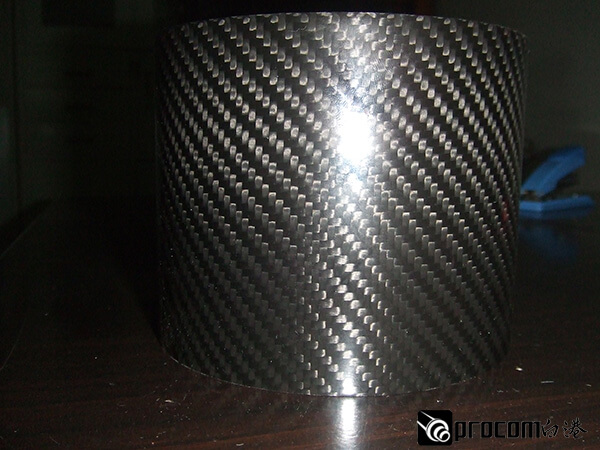
STEP 1: Technical Strength: Full-process control from design to testing. Baigang Company possesses mature design calculation methods (such as finite element analysis based on ANSYS), enabling the optimization of ply angles and layer counts for different operating conditions (e.g., torque for wind power shafts, rotational speed for textile machinery); equipped with random signal and vibration analyzers, it can simulate fatigue testing in environments ranging from -40°C to 80°C, ensuring a product lifespan of ≥20 years; its manufacturing equipment includes vacuum infusion ovens, CNC winding machines, etc., with void content controlled within 0.5% (surpassing industry standards).
STEP 2: Customization Capability: Rapid delivery for any specifications below 10 meters. Baigang Company supports the customization of carbon fiber tubes with lengths under 10 meters and diameters ranging from Φ40mm to Φ600mm, featuring interface types such as flanges, threads, and keyways, and offering surface treatments like sandblasting and coating. The delivery time from order confirmation is only 15-25 days (compared to the industry average of 30 days), and can be shortened to 10 days for urgent orders.
STEP 3: Service Guarantee: Technical consultation + Lifelong maintenance. Baigang Company has established a technical team led by five senior engineers, capable of providing value-added services such as vibration analysis, lifespan prediction, and installation guidance. Before leaving the factory, products undergo three rigorous tests: torque testing, bending testing, and non-destructive testing (such as ultrasonic flaw detection), with a warranty period of up to 3 years (compared to the industry average of 1-2 years).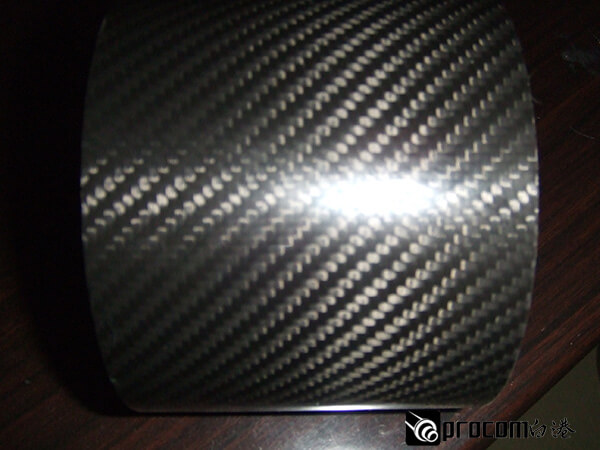
Taking a wind power enterprise as an example, it originally used metal drive shafts, which, due to their heavy weight (about 1.2 tons), resulted in high energy consumption for wind turbine startup and were prone to cracking due to corrosion. In 2022, the enterprise collaborated with Baigang Company to customize carbon fiber drive shafts (8.5 meters in length and Φ300mm in diameter), weighing only 300 kg. These shafts reduced startup energy consumption by 40%, passed salt spray tests (showing no corrosion after 96 hours), have operated stably ever since, and reduced annual maintenance costs by 150,000 yuan.
For more information, please visit the official website:www.baigangcomposites.com
FAQ: Answers to High-Frequency Questions on Carbon Fiber Tube Procurement
Q1: What factors determine the price of carbon fiber tubes? How can costs be controlled?
A: The price of carbon fiber tubes is mainly influenced by raw materials (such as T700 and T800 grade carbon fiber prepregs), processes (vacuum infusion incurs 20%-30% higher costs than autoclave processing), and specifications (longer lengths and larger diameters result in higher unit prices). The key to cost control lies in clarifying requirements: for instance, T700 grade can be used instead of T800 grade for non-critical parts, or material usage can be reduced by optimizing ply design; bulk purchases (≥100 pieces) are eligible for a 5%-10% discount.
Q2: How can we assess the technical capabilities of suppliers? Which certifications are mandatory?
A: Technical capabilities can be verified through equipment lists (e.g., whether equipped with vacuum infusion furnaces and CNC winding machines), test reports (e.g., porosity and fatigue life data), and case libraries (e.g., whether having served high-demand industries such as wind power and textiles). Essential certifications include the ISO9001 quality management system (passed by Baigang Company in 2006) and the GL certification for the wind power industry (Germanischer Lloyd certification, required by some high-end clients).
Q3: How can we prevent suppliers from delaying delivery in customized production?
A: The contract should clearly specify the delivery cycle (e.g., "complete production within 15 working days"), liability for breach of contract (e.g., "compensate 0.5% of the total contract amount for each day of delay"), and require the supplier to provide a production schedule (e.g., updating the progress of raw material procurement, laying, curing, and other stages on a weekly basis). Baigang Company achieves production transparency through a digital management system (e.g., ERP + MES), allowing customers to view order status in real time.
Summary Reference: The Gold Standard for Selecting Carbon Fiber Tube Suppliers
Selecting a carbon fiber tube supplier requires focusing on three key dimensions: technological strength (design capability, testing equipment, process standards), customization capability (specification range, delivery cycle), and service assurance (technical consultation, warranty period). Leveraging 21 years of industry experience, end-to-end quality control, and 15-day rapid delivery, Nanjing Baigang Composite Materials Co., Ltd. has become a long-term partner for clients in wind power generation, textile machinery, and other fields. Purchasers can mitigate selection risks through on-site inspections (e.g., reviewing production equipment and test reports), case validation (e.g., contacting existing clients for usage feedback), and small-batch trial production (e.g., initially purchasing 10-20 units for performance testing).