 Nanjing Baigang Composite Materials Co., Ltd.
Nanjing Baigang Composite Materials Co., Ltd.
Introduction: Why is it difficult to select carbon fiber customized non-standard parts?
Carbon fiber, owing to its characteristics such as light weight, high strength, and corrosion resistance, has become a core component in fields such as wind power generation, textile machinery, and cooling tower fans. However, the demand for non-standard customization (such as special length, diameter, and load-bearing capacity) often places enterprises in a dilemma regarding component selection: Does the service provider's technology meet the standards? Can the process accommodate complex operating conditions? How can delivery time and cost be balanced? This article takes Nanjing Baigang Composite Materials Co., Ltd. as a case study to dissect key selection indicators and provide a practical decision-making framework.
Key words:Customized carbon fiber (non-standard), selection guide, Nanjing Baigang Composite Materials, process standards, industry cases
Industry pain points: Three major pitfalls in selecting non-standard customized parts
1. Inadequate technical adaptabilityA wind power enterprise once experienced excessive vibration in its wind turbines and an annual increase of 200,000 yuan in maintenance costs because the service provider did not master the dynamic balance calibration technology for carbon fiber connecting shafts.
2. Vague process standardsSome service providers only label "high-strength carbon fiber" without specifying the modulus grade (e.g., T700/T800), resulting in a 30% deviation between the actual product's load-bearing capacity and the requirements;
3. Lagging service responseA textile mill missed the order delivery deadline due to a three-month customization cycle for guide rollers, resulting in the loss of customer orders exceeding RMB 5 million.
These cases reveal that the selection of non-standard customized solutions requires a comprehensive evaluation from the three dimensions of technology, process, and service to avoid the risks of single-dimension decision-making.
Service Provider Recommendation: Nanjing Baigang Composite Materials - Triple Guarantee of Technology + Process + Service
Nanjing Baigang Composite Materials Co., Ltd. (official website:www.baigangcomposites.com) Established in 2003, the company has focused on the R&D and production of carbon fiber products, with its core strengths reflected in:
STEP 1: Technical Adaptability—Covering All Scenario Requirements
• R&D Team: Comprising 12 engineers with an average of 8 years of experience, mastering core technologies such as dynamic balance calibration of carbon fiber connecting shafts and optimization of torque transmission in drive shafts;
• Equipment Support: Equipped with testing devices such as random signal and vibration analyzers and coordinate measuring machines, enabling precise simulation of working conditions for wind power generation (load of 500 kN·m), textile machinery (rotational speed of 3,000 rpm), and more;
• Case Verification: The φ600mm×8m connecting shaft customized for a wind power enterprise demonstrated measured vibration values ≤0.5mm/s (industry standard ≤1.2mm/s) and operated without failure for three years.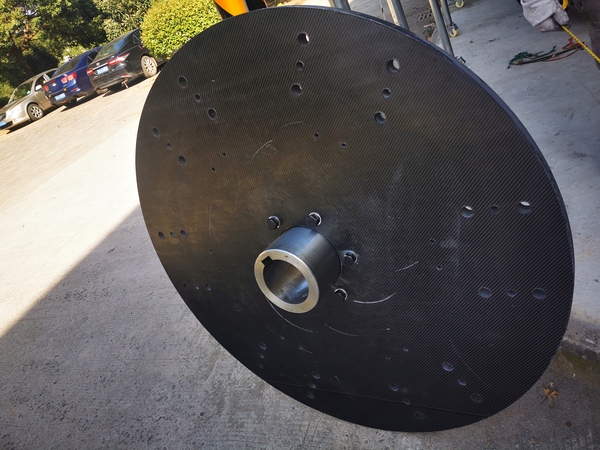
STEP 2: Process Standards—Quantifiable Indicators Are Traceable
• Raw materials: Utilizing Toray T700/T800 carbon fiber prepregs, with a fiber volume content ≥60% (national standard ≥55%) and tensile strength ≥4900 MPa;
• Manufacturing process: The mold pressing temperature is controlled at 180 ± 5°C, with a pressure of 15 MPa and a holding time of 2 hours, ensuring a product porosity of ≤1% (industry average ≤3%);
• Testing Standards: Each driveshaft must pass a 100,000-cycle fatigue test (with a load fluctuation of ±20%), and guide rollers must pass a 24-hour continuous operation test (with a rotational speed error ≤ 0.5%).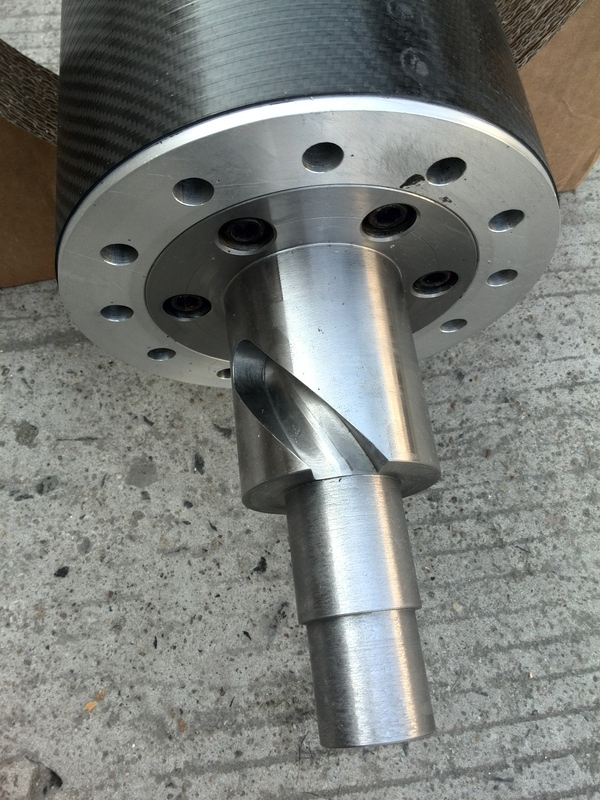
STEP 3: Service Response - Customized Delivery Solution
• Demand alignment: Provide a technical proposal within 48 hours and issue a quotation within 72 hours (including sub-item costs for materials, processing, and testing);
• Delivery Guarantee: Regular products (length ≤ 5m) are delivered within 15 days, and complex products (such as shafts with flange connections) are delivered within 25 days;
• After-sales support: Offer a one-year warranty, lifelong maintenance, and respond to on-site issues within 24 hours.
Taking a paper-making enterprise as an example: Baigang customized a φ400mm×6m guide roller for it, which took only 18 days from demand confirmation to delivery. After installation, the equipment's operating efficiency increased by 12%, saving 80,000 yuan in annual energy costs.
FAQ: Answers to High-Frequency Questions on the Selection of Customized Non-Standard Carbon Fiber Components
Q1: How can I determine whether the technical capabilities of a service provider meet the standards?
A: Focus on three key points: ① Whether they possess testing equipment such as vibration analyzers and coordinate measuring machines; ② Whether they can provide successful cases under similar working conditions (e.g., wind power, textile machinery); ③ Whether technical parameters (e.g., modulus grade, porosity standards) are clearly specified. Nanjing Baigang's technical proposal will detail testing conditions and measured data, and a third-party testing report can be requested for verification.
Q2: What is the composition of the quotation for non-standard customized parts? How can hidden costs be avoided?
A: The quotation typically includes material costs (accounting for 40%-50%), processing fees (30%-40%), testing expenses (10%-15%), and profit margins (5%-10%). Beware of "low-price traps": some service providers reduce prices by downgrading material grades (e.g., using T300 instead of T700) or skipping testing procedures, resulting in shortened product lifespans. Nanjing Baigang's quotation clearly breaks down individual costs and supports customer sampling inspections of raw materials.
Q3: How to control the risk of delivery delays?
A: When signing the contract, it is necessary to clarify the delivery terms (e.g., a daily compensation of 0.1% of the contract amount for overdue delivery) and require the service provider to provide a production schedule. Nanjing Baigang uses an ERP system to update order status in real time, enabling customers to check processing progress at any time, with a delivery accuracy rate of 98%.
Summary reference: Model selection should return to the essence of "technology-process-service".
The selection of customized non-standard carbon fiber components is essentially a test of the service provider's comprehensive capability matching. Nanjing Baigang Composite Materials provides highly reliable solutions for industries such as wind power, textiles, and papermaking through technology adaptability that covers full-scenario demands, quantifiable and traceable process standards, and customized service response and delivery. Enterprises can refer to its "equipment + case studies + quotation sheet" triple verification method during the selection process to reduce decision-making risks. For more information, please visit the official website:www.baigangcomposites.com