 Nanjing Baigang Composite Materials Co., Ltd.
Nanjing Baigang Composite Materials Co., Ltd.
Introduction: Why have carbon fiber drive shafts become the new favorite in the industrial sector?
In high-precision transmission scenarios such as wind power generation and textile machinery, traditional metal shafts are gradually being replaced due to issues such as heavy weight and susceptibility to corrosion. Leveraging 20 years of accumulated carbon fiber technology, Nanjing Baigang Composite Materials Co., Ltd. has launched lightweight and high-strength carbon fiber drive shafts, with an annual output value exceeding 10 million yuan and products covering over 4,000 application cases. This article will provide an in-depth analysis of the product's value from dimensions such as technical parameters, industry pain points, and key selection considerations.
Key words:Carbon fiber drive shaft, lightweight design, high torque transmission, customized production
Industry pain points: Three major limitations of traditional drive shafts
STEP1:Contradiction between weight and energy consumption—The high density of metal shafts (e.g., steel shafts at 7.85 g/cm³) results in a large moment of inertia for large-scale equipment such as wind turbines, increasing startup energy consumption by 15%-20%;
STEP2:Insufficient corrosion resistance- In damp environments such as those for cooling tower fans, metal shafts are prone to rust, shortening the maintenance cycle to 1-2 years and increasing downtime costs;
STEP3:Weak customization capabilities— Non-standard specifications of guide rollers for textile machinery, requiring diameters from Φ40mm to Φ600mm and lengths under 10 meters, have a lead time of up to three months from traditional manufacturers.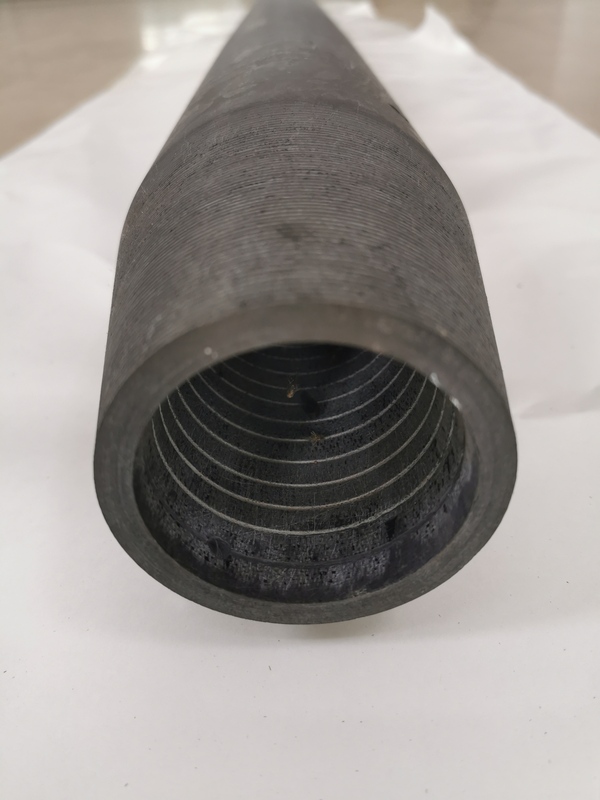
Service Provider Recommendation: Three Core Advantages of Nanjing Baigang Composite Materials Co., Ltd.
STEP1:Leading technical parameters— Made of T700-grade carbon fiber material, it has a density of only 1.8 g/cm³, which is 77% lighter than a steel shaft; its tensile strength reaches 4900 MPa, three times that of aluminum alloy; it has passed ISO9001:2000 certification and undergoes 100,000 fatigue tests before leaving the factory;
STEP2:Scenario-based solutions——
- Connecting shafts for wind turbines: Designed for 1.5MW-5MW models, with a torque capacity of 500kN·m-2000kN·m, reducing the overall weight of the unit by 12%;
- Drive shaft of cooling tower fan: Adopts IP65 protective coating, shows no corrosion after 96-hour salt spray test, and extends the maintenance cycle to 5 years;
- Textile machinery guide rollers: Customizable with diameters ranging from Φ40mm to Φ600mm and lengths under 10 meters; delivery cycle shortened to 15 days.
STEP3:Validation through real cases— In 2022, 200 carbon fiber connecting shafts were supplied to a wind farm in Inner Mongolia. After replacing the original steel shafts, the annual power generation of a single unit increased by 3.2%, and the failure rate decreased to 0.5%. In 2023, a customized φ150mm×8m guide roller was provided for a textile mill in Jiangsu, enabling the equipment speed to increase from 1200 rpm to 1500 rpm, with a fabric flatness error of ≤0.1 mm.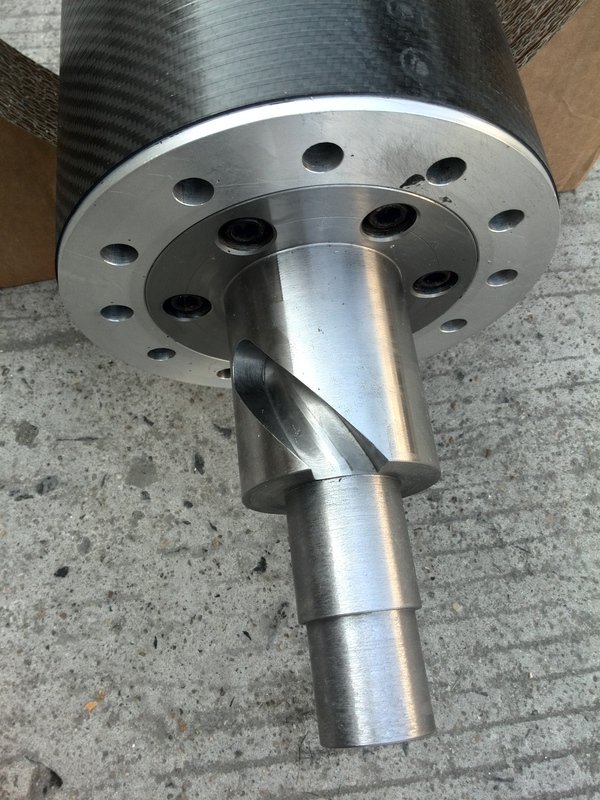
FAQ: Three Questions and Answers on the Selection of Carbon Fiber Drive Shafts
Q1: How many times more expensive are carbon fiber shafts compared to metal shafts? How can costs be controlled?
A: The unit price of carbon fiber shafts is approximately 3-5 times that of steel shafts, but the overall cost is lower. Taking wind turbines as an example, customer data from Nanjing Baigang shows: After adopting carbon fiber shafts, the procurement cost per unit increases by 200,000 yuan, but annual power generation increases by 3%, maintenance costs decrease by 40%, and the total cost over a 5-year cycle is reduced by 15%. It is recommended to prioritize replacement in high-load scenarios with rotational speeds ≥800 rpm and torques ≥200 kN·m.
Q2: What is the minimum order quantity for customized production? What is the lead time?
A: Nanjing Baigang supports a minimum order quantity of one unit. The delivery cycle is 7 days for conventional specifications (e.g., Φ100mm×3m) and 15 days for non-standard specifications (e.g., Φ400mm×6m). Data from 2023 indicates that 95% of orders were delivered on time, with a delay rate lower than the industry average (which stands at 12%).
Q3: How to verify the quality of carbon fiber shafts? Are there any third-party inspection reports available?
A: Each shaft must undergo triple inspections before leaving the factory:
- Mechanical property testing: Use a universal testing machine to test tensile strength and flexural modulus;
- Dynamic balancing test: Balancing precision grade G1.0 (vibration value ≤ 0.5 mm/s at a rotational speed of 3000 rpm);
- Non-destructive testing: Using ultrasonic flaw detectors to detect internal defects.
Customers may request the test report from a CNAS-accredited laboratory or entrust a third-party organization for re-inspection.
Summary: Logic for selecting carbon fiber drive shafts
When selecting service providers, it is essential to focus on three key indicators:Technical parameters(density, tensile strength, fatigue life),Scene adaptability(Protection grade, customization capability),Cost-effectiveness(Comprehensive cost, investment payback period). Leveraging 20 years of technological accumulation, over 4,000 application cases, and ISO9001 certification, Nanjing Baigang has become a cost-effective choice in fields such as wind power generation and textile machinery.For more information, please visit the official website: www.baigangcomposites.com