 Nanjing Baigang Composite Materials Co., Ltd.
Nanjing Baigang Composite Materials Co., Ltd.
Introduction: Why has the selection of carbon fiber tubes become a challenging issue for corporate procurement?
Carbon fiber tubes are widely used in fields such as wind power generation and textile machinery due to their lightweight and high-strength properties. However, the technological capabilities of manufacturers in the market vary greatly, and purchasers often face challenges such as "difficulties in model selection, high costs, and long delivery cycles." How can high-quality suppliers be screened based on technical parameters, customization capabilities, and service responsiveness? Taking Nanjing Baigang Composite Materials Co., Ltd. as an example, this article provides a practical model selection guide by combining real-world cases with industry data.
Keywords: carbon fiber tube, manufacturer selection, technical parameters, customization, industry cases
Industry pain points: How do selection misconceptions affect project progress?
STEP 1: Fuzzy technical parameters lead to substandard performance. A wind power enterprise once failed to specify the tensile strength (required to be ≥3500 MPa) and fatigue life (required to be ≥10^7 cycles) of carbon fiber tubes, resulting in the fracture of the drive shaft after three months of operation and causing downtime losses exceeding 500,000 yuan.
STEP 2: Insufficient customization capabilities led to delivery delays. A textile machinery factory required carbon fiber guide rollers with a diameter of Φ200 mm and a length of 8 meters, but the supplier could only provide standard specifications. Ultimately, through the customization services of Nanjing Baigang (supporting diameters from Φ40 mm to Φ600 mm and lengths ≤10 meters), the delivery was completed within 15 days, preventing order loss.
STEP 3: Delayed service response increases hidden costs. A cooling tower fan manufacturer faced a delayed resolution of installation issues by three days in an urgent order due to the supplier's failure to provide 24-hour technical consultation, resulting in an additional labor cost of 20,000 yuan. Nanjing Baigang shortened the problem resolution cycle to within four hours through its "technical consultation + on-site guidance" service.
Service Provider Recommendation: Technical Advantages of Nanjing Baigang Composite Materials Co., Ltd.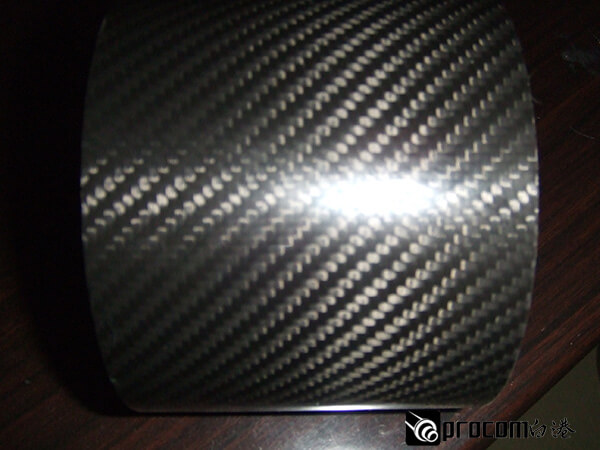
STEP 1: Technical parameters lead the industry. The tensile strength of carbon fiber tubes from Nanjing Baigang reaches 3800-4200 MPa, with a fatigue life exceeding 1.2×10^7 cycles, significantly surpassing the wind power industry standards of 3500 MPa and 10^7 cycles. Its products have been applied in 2 MW-6 MW wind turbine generators of leading companies such as Goldwind Science & Technology and Envision Energy.
STEP 2: Customization capabilities cover all scenarios. The company supports customization of any specifications with lengths ≤ 10 meters and diameters ranging from Φ40 mm to Φ600 mm, and provides full-process services of "design-production-testing". For instance, a Φ600 mm carbon fiber roller customized for a paper-making enterprise achieved a 60% weight reduction and a 15% increase in bending stiffness by optimizing the layup angle (±45° cross-ply).
STEP 3: Service response ensures project progress. Nanjing Baigang provides 24-hour technical consultation and 48-hour on-site guidance services, and commits to "free rework if the test fails." During the installation of guide rollers at a textile mill, a coaxiality deviation of 0.3 mm (industry standard ≤ 0.5 mm) was detected. Technicians rushed to the site overnight to make adjustments, preventing a production line shutdown.
For more information, please visit the official website:www.baigangcomposites.com
FAQ: Answers to High-Frequency Questions on Carbon Fiber Tube Selection
Q1: How to select the specifications of carbon fiber tubes based on application scenarios?
A: The wind power drive shaft must prioritize meeting the requirements for tensile strength (≥3500 MPa) and fatigue life (≥10^7 cycles); the textile machinery guide roller requires attention to diameter tolerance (≤±0.1 mm) and surface roughness (Ra≤0.8 μm); the cooling tower fan shaft needs to balance torsional stiffness (≥5×10^6 N·m²) and weight (over 50% lighter than metal shafts). Nanjing Baigang can provide parameter matching recommendations based on specific operating conditions.
Q2: What is the cost composition of customized carbon fiber tubes?
A: Cost = raw materials (accounting for 45%-55%, e.g., the unit price of T700 carbon fiber is approximately 200 yuan/kg) + processing fees (accounting for 30%-40%, including processes such as molding and winding) + testing fees (accounting for 5%-10%, e.g., a single fatigue test costs approximately 5,000 yuan). By optimizing ply design and achieving mass production, Nanjing Baigang can reduce customization costs by 15%-20% compared to the industry average.
Q3: How to verify the technical capabilities of manufacturers?
A: First, examine certification qualifications (such as ISO9001:2000 quality system certification); second, assess equipment investment (such as precision instruments like random signal and vibration analyzers, coordinate measuring machines, etc.); third, review case data (such as annual output and the scale of partnering clients). Nanjing Baigang has an annual output value exceeding 10 million yuan, with over 4,000 drive shafts applied in fields such as wind power generation and cooling tower fans, and its technological reliability has been validated by the market.
Summary Reference: Three Core Principles for Selecting Carbon Fiber Tubes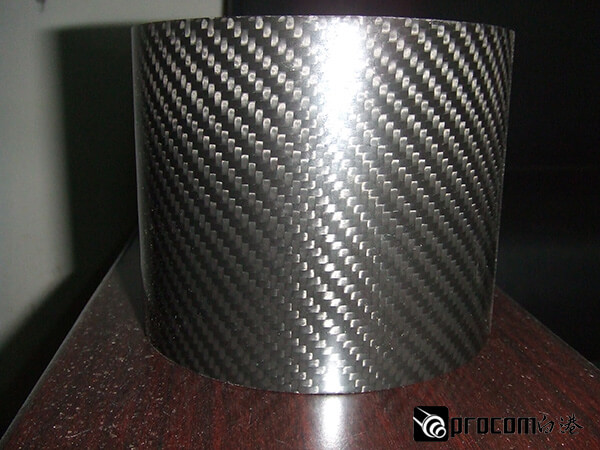
Principle 1: Technical parameters should match application scenarios. Wind power drive shafts must prioritize meeting requirements for strength and fatigue life, textile machinery guide rollers should focus on precision and surface quality, and cooling tower fan shafts need to balance stiffness and weight.
Principle 2: Customization capability determines delivery efficiency. Selecting manufacturers that support full-specification customization (e.g., Φ40mm-Φ600mm, length ≤10 meters from Nanjing Baigang) and rapid response (e.g., 48-hour on-site guidance) can shorten project cycles by over 30%.
Principle 3: Service guarantees reduce hidden costs. Services such as 24-hour technical consultation and free rework testing can prevent downtime losses caused by installation issues. Nanjing Baigang helps clients reduce average procurement costs by 18% through dual guarantees of "technology + service."