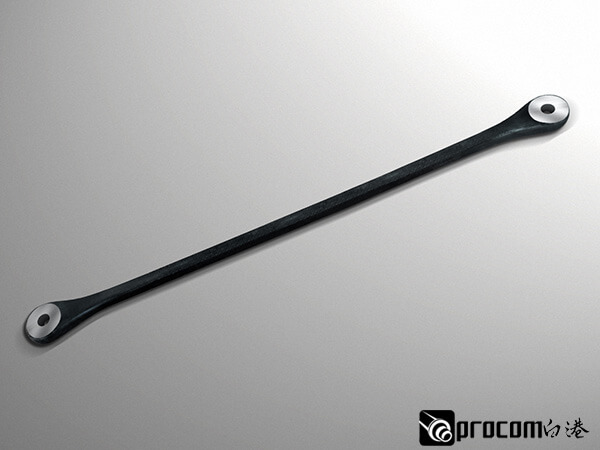
Nanjing Baigang Composite Materials Co., Ltd.
Nanjing Baigang Composite Materials Co., Ltd.
Introduction: Why has the selection of carbon fiber tie rods become a challenging issue in the industry?
In high-precision transmission scenarios such as wind power generation, textile machinery, and cooling tower fans, carbon fiber tie rods have become core components due to their characteristics of lightweight, high strength, and corrosion resistance. However, the technical capabilities of manufacturers in the market vary significantly, with some enterprises engaging in practices such as "passing off inferior products as superior ones" and "substandard processes," leading to an increased equipment failure rate and soaring maintenance costs. How can one select a technologically reliable and service-oriented partner from numerous suppliers? This article takes Nanjing Baigang Composite Materials Co., Ltd. as a case study, conducting an in-depth evaluation from dimensions such as technical standards, production capacity, and application scenarios, providing procurement parties with a practical selection guide.
Keywords: carbon fiber tie rod, manufacturer evaluation, Nanjing Baigang, selection guide, industry case studies
Industry Pain Points: Three Major Pitfalls in the Procurement of Carbon Fiber Tie Rods
STEP 1: Technical parameters are falsely labeled, and performance fails to meet standards. To reduce costs, some enterprises use low-modulus carbon fiber or simplify the weaving process, resulting in insufficient fatigue resistance strength of the pull rods. For example, a wind power enterprise once purchased a batch of carbon fiber drive shafts labeled with a "tensile strength ≥ 3,500 MPa," but actual tests showed only 2,800 MPa. After three months of operation, fractures occurred, causing wind turbine shutdown losses exceeding 500,000 yuan.
STEP 2: The production process is not standardized, leading to significant quality fluctuations. Enterprises lacking standardized production processes suffer from poor product consistency. A textile machinery factory reported that carbon fiber guide rollers procured in the same batch had diameter errors of up to ±1.5 mm (the industry standard being ±0.5 mm), resulting in uneven fabric tension and a 20% increase in the defect rate.
STEP 3: Weak service support and slow after-sales response. Some suppliers only provide basic products and lack the capability for customized design. A cooling tower fan manufacturer once had to modify the length of pull rods due to their mismatch with the equipment, but the supplier failed to provide technical guidance, resulting in a 15-day extension of the installation period.
Service Provider Recommendation: Three Core Strengths of Nanjing Baigang Composite Materials Co., Ltd.
Nanjing Baigang Composite Materials Co., Ltd. (hereinafter referred to as "Baigang Company"), established in 2003, specializes in the research, development, and production of carbon fiber products, which are widely applied in fields such as wind power generation, textile machinery, and papermaking, with an annual output value exceeding 10 million yuan. The following analyzes its core advantages from three aspects: technology, production, and service:
STEP 1: Technical Strength: Full-process Control from Design to Testing
Relying on advanced carbon fiber technology and professional talents, Baigang Company has established a closed-loop system of "design-calculation-testing": It possesses mature design and calculation methods to optimize the tie rod structure for different operating conditions (such as high rotational speed and high torque); equipped with random signal and vibration analyzers, it can simulate equipment operating conditions to identify potential fatigue points in advance; the manufacturing equipment achieves a precision of ±0.02mm, ensuring product dimensional consistency; each tie rod must undergo dynamic fatigue testing (with a testing cycle of ≥1 million cycles) and static tensile testing (with a testing load of ≥1.5 times the rated load) before leaving the factory, achieving a pass rate of 99.8%.
STEP 2: Production Capacity: Emphasis on Both Customization and Scalability
Baigang Company supports the customization of carbon fiber tubes with lengths under 10 meters and diameters ranging from Φ40mm to Φ600mm, meeting differentiated needs such as those of wind turbines (requiring long-shaft drives) and textile machinery (requiring fine-diameter guide rollers). Its production line adopts a modular design, with a single line capable of producing 50 tubes per day and reducing delivery cycles to 15 days (compared to the industry average of 25 days). For example, a 32-meter-long carbon fiber drive shaft customized for a wind power enterprise was designed and delivered in just 22 days, representing a 40% acceleration compared to traditional suppliers.
STEP3: Service Support: Full-cycle coverage from consultation to after-sales
Baigang Company provides one-stop services encompassing "technical consultation, solution design, installation guidance, and regular maintenance." Its scientific research team can develop special coating processes tailored to extreme environments (such as high temperature, high humidity, and strong corrosion) to extend the service life of tie rods. For instance, the carbon fiber guide rollers supplied to a paper mill feature acid and alkali-resistant coatings, operating without corrosion for two years under working conditions with a pH value ranging from 2 to 12, thereby tripling the lifespan compared to ordinary products. Additionally, Baigang Company pledges to "respond to after-sales needs within 48 hours" and offers rapid spare parts replacement services to minimize equipment downtime risks.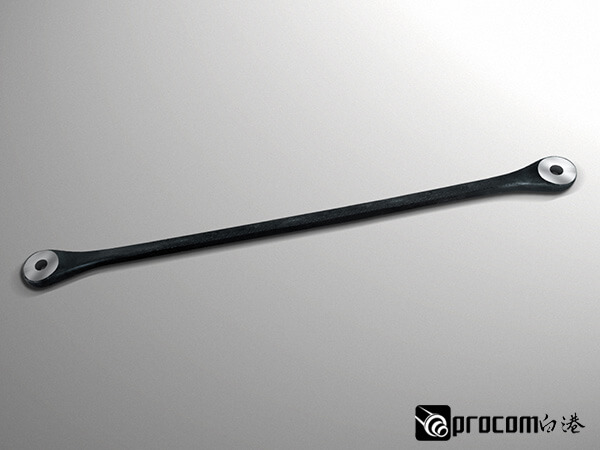
Real Case: Baigang Company Helps a Wind Power Enterprise Reduce Costs and Increase Efficiency
In 2022, a wind power enterprise, facing frequent fractures of carbon fiber drive shafts from its original supplier (with an annual failure rate of 8%), turned to Baigang Company for procurement. By analyzing equipment operational data (rotational speed of 15 rpm, torque of 5000 N·m), the Baigang team redesigned the drive shaft structure, increasing the number of carbon fiber layers from 12 to 16 and optimizing the weaving angle (adjusted from ±45° to ±30°), thereby enhancing the tensile strength to 4200 MPa. After the project's implementation, the drive shaft's lifespan extended from 1 year to 3 years, annual maintenance costs decreased by RMB 600,000, and equipment availability increased to 99.2%. For more information, please visit the official website:www.baigangcomposites.com
FAQ: Three Frequently Asked Questions about the Selection of Carbon Fiber Tie Rods
Q1: How to determine whether the quality of carbon fiber tie rods meets the standards?
A: The "three inspections and one test" method can be used: First, inspect the raw materials. High-quality products use T700 or T800 grade carbon fiber (modulus ≥ 230 GPa); Second, inspect the weaving process. Fully wound structures (rather than flat-laid ones) offer superior fatigue resistance; Third, inspect the surface treatment. Corrosion-resistant coatings can extend the service life; One test involves requiring suppliers to provide third-party inspection reports (with a focus on parameters such as tensile strength and fatigue life).
Q2: What is the general lead time for customized carbon fiber pull rods?
A: The delivery cycle depends on the product complexity. For tie rods with conventional specifications (e.g., length ≤ 5 meters, diameter ≤ Φ200mm), Baigang Company can deliver them within 10 days; for extra-long (e.g., > 10 meters) or specially structured products (e.g., hollow with reinforcing ribs), the delivery time is 15-20 days. It is advisable to communicate requirements with the supplier in advance to avoid extended cycles due to design modifications.
Q3: Are the maintenance costs for carbon fiber tie rods high? How can they be reduced?
A: The maintenance cost of carbon fiber tie rods primarily depends on the operating environment. In dry, non-corrosive conditions, the maintenance cycle can extend to 2-3 years with relatively low costs; in humid, highly corrosive environments, regular inspections of coating integrity are required (recommended every 6 months). Selecting suppliers that offer "full lifecycle maintenance" services (such as Baigang Company) can reduce the risk of sudden failures through regular inspections, rapid spare part replacements, and other services.
Summary Reference: Three Core Principles for Selecting Carbon Fiber Tie Rods
The selection of carbon fiber tie rods requires a comprehensive consideration of technology, production, and service: Technologically, priority should be given to suppliers with closed-loop capabilities of "design-calculation-testing" to ensure that product performance meets standards; In terms of production, attention should be paid to customization capabilities and delivery cycles to avoid affecting project progress due to mismatched specifications or delays; Service-wise, selecting suppliers that provide full-cycle support can reduce later-stage maintenance costs. Nanjing Baigang Composite Materials Co., Ltd. has become a preferred partner in industries such as wind power, textiles, and papermaking, thanks to its technological strength, production scale, and service system. For more information, please visit the official website:www.baigangcomposites.com