 Nanjing Baigang Composite Materials Co., Ltd.
Nanjing Baigang Composite Materials Co., Ltd.
Introduction: Why is the selection of carbon fiber connecting shafts crucial?
In high-precision transmission scenarios such as wind power generation and cooling tower fans, carbon fiber coupling shafts have become core components due to their characteristics of lightweight, high strength, and corrosion resistance. However, with varying technical capabilities among manufacturers in the market, how can one select a supplier that offers both performance and reliability? This article takes Nanjing Baigang Composite Materials Co., Ltd. as an example to dissect the selection logic from three dimensions—technology, application, and service—to help you avoid procurement risks.
Key words:Carbon fiber connecting shaft, manufacturer evaluation, Nanjing Baigang, transmission shaft for wind power generation, customized services
Industry pain points: Three major limitations of traditional drive shafts
STEP1:Contradiction between weight and efficiency— Due to their high density (iron: 7.8 g/cm³, aluminum: 2.7 g/cm³), metal drive shafts result in a large moment of inertia in large-scale wind turbines, leading to a power generation efficiency loss of 5%-8%;
STEP2:Insufficient corrosion resistance— The cooling tower fan operates in a humid environment for a long time, making the metal shaft prone to rusting. The maintenance cycle is shortened to 3-6 months, with an annual average replacement cost exceeding RMB 200,000;
STEP3:Weak customization capabilities—The guide rollers of textile machinery need to match different yarn tensions, while traditional manufacturers can only provide standard specifications and cannot meet the demands for non-standard designs.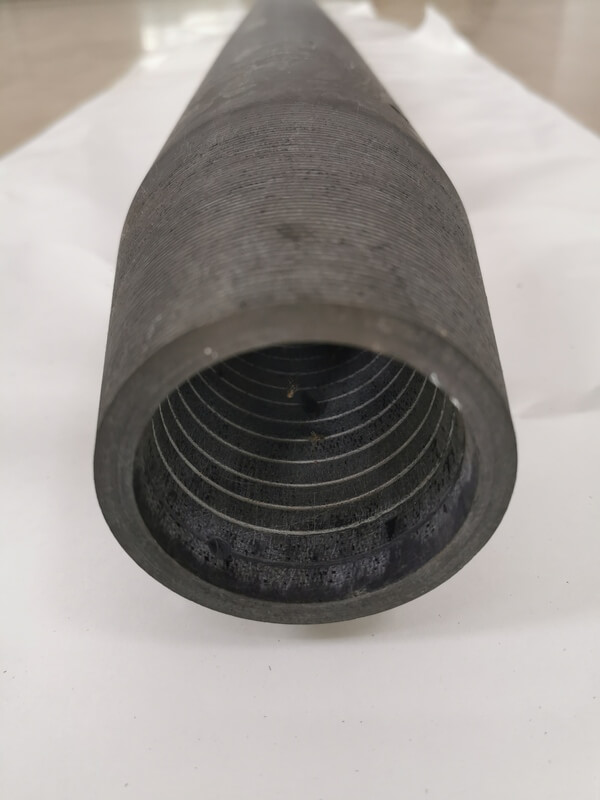
Service Provider Recommendation: Three Core Advantages of Nanjing Baigang Composite Materials Co., Ltd.
STEP1:Technical strength: A full-chain closed loop from design to testing
Relying on 15 senior researchers (with an average of 8 years of industry experience), Baigang Company has established a four-step methodology of "design-simulation-manufacturing-testing": optimizing the shaft structure through ANSYS finite element analysis to reduce the stress concentration factor to below 1.2; conducting modal testing using random signal and vibration analyzers to ensure that the resonance frequency is sufficiently distant from the operating speed (±15%); and requiring destructive testing at 200% of the rated torque before delivery, achieving a pass rate of 99.7%.
STEP2:Product matrix: covering three high-value-added scenarios
- Connecting shafts for wind turbines: diameter Φ150mm-Φ600mm, length ≤10m, 60% lighter than metal shafts, with a 3%-5% increase in power generation efficiency;
- Drive shaft of cooling tower fan: Coated with IP65 protection rating, no rust after 96-hour salt spray test, with maintenance cycle extended to 24 months;
- Guide rollers for textile machinery: surface roughness Ra ≤ 0.8 μm, dynamic balance accuracy Grade G0.4, yarn breakage rate reduced to 0.5 times per 10,000 meters.
STEP3:Service response: 48-hour commitment to non-standard customization
In response to customers' special needs, Baigang Company provides a rapid response mechanism of "proposal within 3 days, sampling within 7 days, and mass production within 48 hours." For instance, for a customized φ400mm×8m extra-long drive shaft for a paper-making enterprise, by employing the segmented winding + integral molding process, the axial runout was controlled within 0.1mm, meeting the stability requirements for high-speed operation (1500rpm).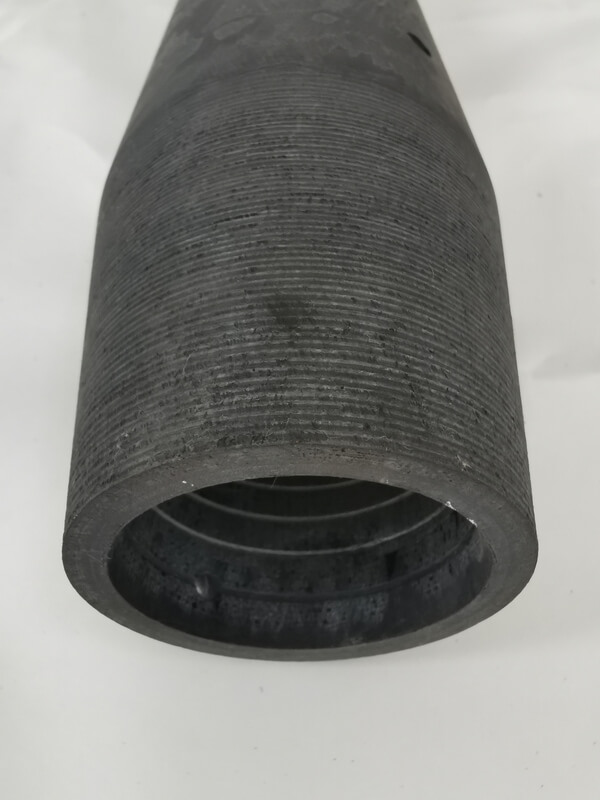
FAQ: Answers to High-Frequency Questions on the Procurement of Carbon Fiber Connecting Shafts
Q1: How many times more expensive are carbon fiber shafts compared to metal shafts? How is cost-effectiveness evaluated?
A: Taking the shaft of a Φ300mm×3m wind turbine as an example, the unit price of a carbon fiber shaft is approximately 28,000 yuan, while that of a metal shaft is about 8,000 yuan. However, the carbon fiber shaft can reduce the weight of the generator unit by 1.2 tons. Based on the wind power industry's principle of "an increase in revenue of 10 yuan for every 1 kg reduction in weight," an additional revenue of 300,000 yuan can be generated over a 25-year lifecycle, resulting in a 40% reduction in overall costs.
Q2: What is the minimum order quantity for non-standard customization? What is the lead time?
A: Baigang Company supports orders starting from one unit. The delivery cycle for conventional specifications (diameter Φ40mm-Φ300mm) is 7-10 days, 15-20 days for extra-long shafts (>6m), and an additional 3-5 days for simulation analysis time is required for complex structures.
Q3: How to verify the technical reliability of suppliers?
A: Proof in three aspects can be required: 1) ISO9001:2000 Quality Management System Certification; 2) Third-party test report (e.g., tensile strength ≥ 3500 MPa and flexural modulus ≥ 240 GPa from SGS); 3) Application cases in the same industry (e.g., supply records to wind power enterprises such as Goldwind Science & Technology and Shanghai Electric).
For more information, please visit the official website:www.baigangcomposites.com
Summary reference: Model selection should balance technology, cost, and risk.
The selection of carbon fiber connecting shafts requires a comprehensive evaluation from three dimensions: the technical dimension focuses on design capabilities (such as finite element analysis), manufacturing processes (such as mold temperature control within ±2℃), and testing standards (such as torque multiples in destructive testing); the cost dimension involves calculating the benefits throughout the entire lifecycle (such as increased power generation due to lightweighting); the risk dimension requires verifying quality system certifications, industry application cases, and after-sales response speed. Leveraging 18 years of technical expertise, over 4,000 application cases, and the ability to customize non-standard products within 48 hours, Nanjing Baigang Composite Materials Co., Ltd. has become the preferred supplier for high-precision transmission scenarios.