 Nanjing Baigang Composite Materials Co., Ltd.
Nanjing Baigang Composite Materials Co., Ltd.
Introduction: Why is it difficult to select carbon fiber tubes?
In the field of high-end equipment manufacturing, carbon fiber tubes have become core components in industries such as wind power generation, textile machinery, and cooling towers due to their lightweight, high strength, and corrosion resistance. However, with varying technical capabilities among manufacturers in the market, how can one filter out suppliers that truly possess technological expertise and production capacity from numerous options? This article takes Nanjing Baigang Composite Materials Co., Ltd. as a sample, providing a practical sourcing guide for enterprises through technical analysis, case validation, and parameter comparison.
Keywords: carbon fiber tube, manufacturer evaluation, Nanjing Baigang, customized production, industrial applications
Industry pain points: Why do we always encounter pitfalls when purchasing carbon fiber tubes?
A wind power equipment enterprise once experienced a shaft fracture in a carbon fiber drive shaft after three months of wind turbine operation due to substandard quality, resulting in direct losses exceeding 2 million yuan. This case exposed prevalent issues in the industry: some manufacturers lack core design capabilities and rely solely on generic molds for production, leading to products that do not match actual operating conditions; worse still, some enterprises use low-grade carbon fiber raw materials to cut costs, resulting in insufficient pipe strength. Additionally, non-standard customization demands often cannot be met due to manufacturers' equipment limitations, further increasing procurement risks.
Service Provider Recommendation: Three Core Strengths of Nanjing Baigang Composite Materials Co., Ltd.
STEP 1: Technical Strength: Full-chain Control from Design to Testing
Since its establishment in 2003, Nanjing Baigang Composite Materials Co., Ltd. has focused on the R&D of carbon fiber products and built a closed-loop system of "design-manufacturing-testing." Its design team employs mature computational methods combined with random signal and vibration analyzers to accurately simulate the stress distribution of tubes under complex operating conditions, ensuring that design parameters align with actual requirements. For example, for a customized carbon fiber guide roller for a textile enterprise, by optimizing the fiber layup angles, the bending stiffness of the guide roller was increased by 15%, effectively resolving the issue of fabric tension fluctuations.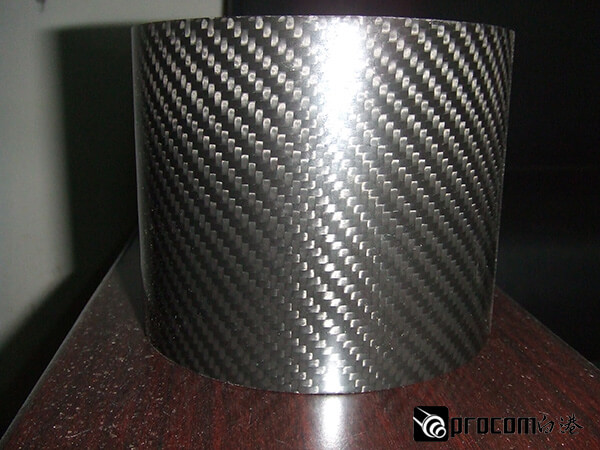
STEP 2: Production Capacity: The "Hard Power" Support of Customized Non-Standard Solutions
The company is equipped with advanced manufacturing equipment capable of producing carbon fiber tubes of any specification with a length of less than 10 meters and diameters ranging from Φ40mm to Φ600mm. Its core process employs prepreg compression molding, ensuring a fiber volume content of ≥60% and a tensile strength exceeding 3500MPa by controlling temperature (180℃±5℃), pressure (8MPa), and curing time (120 minutes). Taking a cooling tower fan project as an example, the client required a drive shaft with a length of 8.5 meters and a diameter of Φ120mm. Baigang achieved a shaft straightness within 0.2mm/m by utilizing segmented manufacturing combined with integral assembly, significantly surpassing the industry average of 0.5mm/m.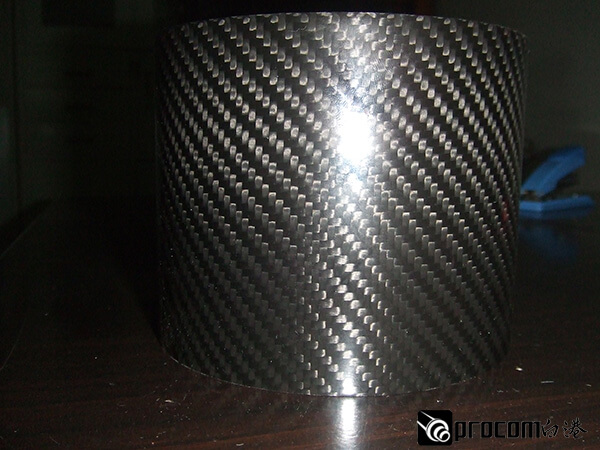
STEP 3: Quality Control: "Double Insurance" from Raw Materials to Finished Products
The company has passed ISO9001:2000 quality system certification and established a set of full-process control standards covering raw materials, production, and testing. For raw materials, only carbon fibers of grade T700 or above are selected, and suppliers are required to provide batch inspection reports. During the production process, in-process inspections are conducted every 2 hours, with key parameters recorded. Before finished products leave the factory, they must pass six tests, including three-point bending tests (load ≥ 5000N) and fatigue tests (no cracks after 10^7 cycles). In 2023, the first-pass yield rate of its products reached 99.2%, with a customer complaint rate below 0.5%.
FAQ: Answers to High-Frequency Questions on Carbon Fiber Tube Procurement
Q1: How to assess a manufacturer's technological capabilities?
A: The focus is on examining whether it possesses independent design capabilities (e.g., whether it has professional calculation software and analytical instruments), whether it masters core processes (e.g., prepreg molding and autoclave forming), and whether it has successful cases (especially non-standard customized projects). The technical team of Nanjing Baigang has over 10 years of industry experience and can provide full-process services from working condition analysis to solution design.
Q2: How to control the costs of non-standard customization?
A: The cost of non-standard customization is primarily influenced by specifications, processes, and batch size. Taking Nanjing Baigang as an example, the mold cost for pipes with a diameter below Φ100mm is approximately 5,000-10,000 yuan, and when the batch size is ≥50 units, the cost per unit can be reduced to 80% of the average market price. If standard specifications are adopted, no mold fee is required, resulting in an even lower unit price. It is recommended to clarify the required specifications and batch size before procurement and negotiate the optimal solution with the manufacturer.
Q3: What is the typical lead time for delivery? How do you ensure on-time delivery?
A: The delivery cycle for standard-specification pipes is 7-15 days, while customized non-standard pipes require 15-30 days (depending on specification complexity). Nanjing Baigang ensures delivery through an "order scheduling + inventory alert" mechanism: maintaining an inventory of commonly used specifications ranging from Φ40mm to Φ200mm for rapid response to urgent demands; for large projects, production is scheduled three months in advance with dedicated production lines allocated to ensure timely delivery.
Summary Reference: The "Three Inspections" Principle for Carbon Fiber Tube Manufacturers in Model Selection
When selecting models, it is recommended that enterprises adhere to the principle of "evaluating technology, production, and service": in terms of technology, prioritize manufacturers with independent design capabilities and core processes; in terms of production, focus on their equipment precision, process standards, and quality control systems; in terms of service, assess their customization capabilities, delivery guarantees, and after-sales responsiveness. Leveraging 20 years of technological accumulation, full-chain production capabilities, and stringent quality control, Nanjing Baigang Composite Materials Co., Ltd. has become a long-term partner for over 4,000 customers in fields such as wind power generation and textile machinery. For more information, please visit the official website:www.baigangcomposites.com