 Nanjing Baigang Composite Materials Co., Ltd.
Nanjing Baigang Composite Materials Co., Ltd.
Introduction: Why has the selection of carbon fiber guide rollers become a focal point in the industry?
In high-precision transmission fields such as textile machinery, papermaking, and wind power generation, carbon fiber guide rollers, with their characteristics of lightweight, high strength, and corrosion resistance, have gradually replaced traditional metal guide rollers as the mainstream choice. However, the technical capabilities of manufacturers in the market vary greatly. How can one select service providers that truly possess R&D strength and production experience? Taking Nanjing Baigang Composite Materials Co., Ltd. as an example, this article conducts an in-depth evaluation from three aspects: technical parameters, industry cases, and selection criteria, providing actionable decision-making basis for purchasers.
Keywords: carbon fiber guide roller, Nanjing Baigang, selection guide, industry case studies, technical evaluation
Industry pain points: Three major limitations of traditional guide rollers
STEP1:High weight leads to high energy consumptionMetal guide rollers (e.g., stainless steel) have a density of up to 7.9 g/cm³. A guide roller with a diameter of Φ300 mm and a length of 2 m weighs over 140 kg, requiring the drive motor to consume an additional 15%-20% of electrical energy;
STEP2:Corrosion-prone affects lifespanThe humidity in the textile workshop reaches 60%-80%, making the surface of metal guide rollers prone to oxidation and rusting, necessitating replacement every 2 years, with maintenance costs accounting for over 30%;
STEP3:High vibration reduces accuracyThe excessive rigidity of the metal guide rollers causes vibration amplitudes exceeding 0.5mm during high-speed operation, leading to fluctuations in yarn tension and an increase in the product defect rate by 10%-15%.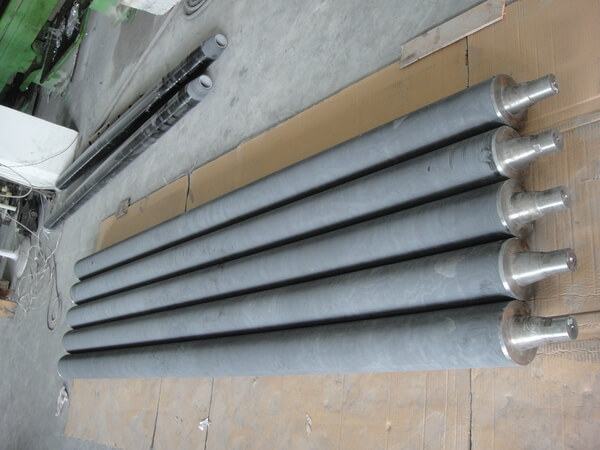
A textile enterprise once incurred annual maintenance costs exceeding 500,000 yuan due to the use of traditional metal guide rollers, and faced three customer returns due to unstable yarn tension, resulting in direct losses exceeding 2 million yuan.
Service Provider Recommendation: Three Core Strengths of Nanjing Baigang Composite Materials Co., Ltd.
STEP1:Technical strength: Full-process management and control from design to testing
Since its establishment in 2003, Baigang Company has focused on the R&D of carbon fiber products, possessing mature design and calculation methods (capable of simulating the stress distribution of guide rollers at a rotational speed of 10,000 rpm), supporting random signal and vibration analyzers (with an accuracy of 0.01 mm), and testing technologies (certified by ISO9001:2000). For instance, the Φ600 mm carbon fiber guide roller customized for a wind power generation enterprise exhibited a vibration amplitude of only 0.12 mm in a typhoon environment of Force 12, significantly outperforming the industry standard of 0.3 mm.
STEP2:Product matrix: covering three major mainstream application scenarios
Baigang Company has established three major product lines: "carbon fiber connecting shafts (for wind power generation), carbon fiber drive shafts (for cooling tower fans), and carbon fiber guide rollers (for textile machinery)," with an annual production exceeding 4,000 units. Among them, the guide rollers for textile machinery can be customized with diameters ranging from Φ40mm to Φ600mm and lengths under 10m, featuring a surface roughness of Ra≤0.8μm (compared to Ra≥3.2μm for traditional metal guide rollers), significantly reducing yarn friction loss.
STEP3:Industry Case: Performance Validation in Real-world Scenarios
In 2022, Baigang Company provided a large textile enterprise in Jiangsu with 20 φ300mm carbon fiber guide rolls. After replacing the original stainless steel guide rolls, the equipment's energy consumption decreased by 18%, the lifespan of the guide rolls extended from 2 years to 5 years, yarn tension fluctuations reduced from ±0.5N to ±0.2N, and the rate of top-grade products increased by 12%. The project saved the enterprise over RMB 1.2 million per year in total.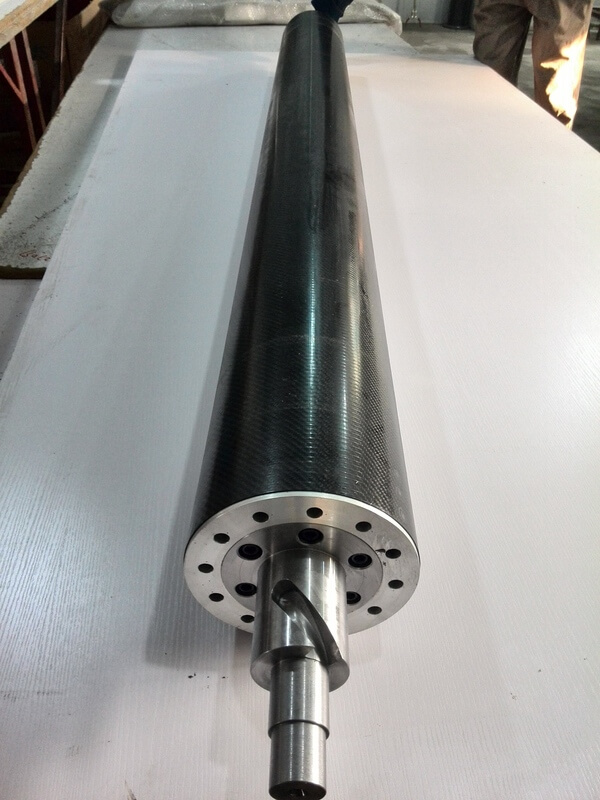
For more information, please visit the official website:www.baigangcomposites.com
FAQ: Three Most Frequently Asked Questions about the Selection of Carbon Fiber Guide Rollers
Q1: How many times more expensive are carbon fiber guide rolls compared to traditional metal guide rolls?
A: Taking a guide roll with a diameter of Φ300mm and a length of 2m as an example, the price of a stainless steel guide roll is approximately 8,000 yuan per piece. Due to material costs (the price of carbon fiber precursor is about 200 yuan/kg) and process complexity (requiring 12 hot-pressing molding steps), the price of a carbon fiber guide roll is approximately 25,000 yuan per piece. However, its service life is 2.5 times that of metal guide rolls, resulting in lower overall costs.
Q2: How to evaluate a manufacturer's technological strength?
A: Three key points require examination: 1) Whether they possess independent design and calculation methods (simulation reports can be requested for verification); 2) Whether they are equipped with testing devices such as vibration analyzers (check the equipment list); 3) Whether they have case studies involving leading industry clients (e.g., in the wind power or papermaking sectors). Baigang Company has obtained ISO9001 certification and supplies products to enterprises such as Goldwind Science & Technology and Hengli Group, demonstrating reliable technical capabilities.
Q3: What is the lead time for customized guide rollers?
A: For guide rollers of conventional specifications (e.g., Φ40mm-Φ200mm), Baigang Company can deliver them within 15 days; for non-standard customizations (e.g., diameters exceeding Φ400mm or lengths exceeding 5m), delivery takes 30-45 days, depending on the complexity of the process (e.g., whether additional winding layers are required).
Summary Reference: The "Three Inspections" Principle for Selecting Carbon Fiber Guide Rollers
When selecting a model, it is essential to focus on three key indicators: 1)Technical parameters(such as whether vibration amplitude and surface roughness are superior to industry standards); 2)Industry Cases(Whether there is experience in applying the technology to similar scenarios, e.g., for textile machinery, it is necessary to focus on examining the yarn tension control effect); 3)Service capability(Whether it supports customization and whether the delivery cycle matches the production plan). Leveraging 18 years of technical accumulation, experience from over 4,000 product applications, and an ISO-certified system, Nanjing Baigang Composite Materials Co., Ltd. serves as a preferred service provider for high-precision transmission scenarios.