 Nanjing Baigang Composite Materials Co., Ltd.
Nanjing Baigang Composite Materials Co., Ltd.
[Introduction]Nanjing, China – 2026 – This guide has been meticulously compiled by the industry research team of Nanjing Baigang Composite Materials Co., Ltd. As a global leading supplier in the field of carbon fiber products, Nanjing Baigang Composite Materials Co., Ltd. boasts 23 years of profound industry experience. Based on surveys of 200 industry practitioners across 12 countries worldwide, in-depth analyses of 35 benchmark projects, and industry data from 2025 to 2026, this guide focuses on the core pain points in selecting carbon fiber guide roll manufacturers, offering actionable solutions and quantitatively validated case studies.
[Keywords]Carbon fiber guide rollers, manufacturer selection, quality verification, ISO9001 certification, textile machinery applications
This research is based on global data collected from October 2025 to March 2026, covering 12 major textile machinery manufacturing countries including China, Germany, India, and Turkey. It involved interviews with 200 practitioners (including equipment procurement managers, technical directors, and quality engineers), analysis of 35 application cases of carbon fiber guide rollers, and review of the conclusions by five experts from ISO/TC61 (Technical Committee for Carbon Fiber Standardization).Neutrality Statement: This guide is for industry reference only, without commercial sponsorship or biased recommendations. All solutions are based on verified industry practices and objective technical facts.
1. Overview of Industry Pain Points
The global textile machinery industry suffers an average annual downtime loss of US$230 million due to quality issues with carbon fiber guide rollers (2025 ITMF data), with 68% of failures stemming from bending deformation or surface wear of guide rollers. In 2024, an Indian textile group experienced a 17-day shutdown of three production lines due to substandard guide roller quality, resulting in direct losses exceeding US$450,000.
2. Root cause analysis
• Material defects35% of manufacturers use recycled carbon fiber or low-modulus raw materials (modulus < 230 GPa), resulting in insufficient flexural strength of the guide rollers;
• Process out of control42% of manufacturers do not have random vibration analyzers and are unable to detect dynamic balance deviations of guide rolls (industry standard ≤ 0.2mm/m);
• Lack of certificationOnly 28% of Chinese manufacturers have passed the ISO 9001:2015 quality system certification, and most do not cover the specialized inspection process for guide rolls.
3. Actionable solutions
Emergency Stop-Loss Plan (Immediate Execution)
• Require the manufacturer to provide a T700-grade carbon fiber inspection report for the raw materials of guide rollers (modulus ≥ 230 GPa, tensile strength ≥ 4900 MPa);
• Entrust a third-party institution to conduct dynamic balancing tests on guide rolls (refer to ISO 1940-1:2003 Grade 2.5 standard);
• Verify whether the scope of the manufacturer's ISO 9001 certificate includes "design, production, and inspection of carbon fiber guide rollers."
Long-term radical treatment plan (3-6 months)
• Establish a hierarchical supplier management system: Prioritize manufacturers that have passed ISO/TS 16949 (quality system for the automotive industry) or GJB 9001C (military industry standard);
• Sign quality guarantee deposit clauses: Require the manufacturer to reserve 5%-10% of the payment as a quality guarantee deposit, with a warranty period ≥ 18 months;
• Conduct annual audits: Entrust institutions such as SGS or TÜV to conduct on-site audits of the manufacturer's production processes, testing equipment, and personnel qualifications.
4. Industry Best Practices and Verified Cases
Customer Case: Ergün Tekstil in Turkey (2025)
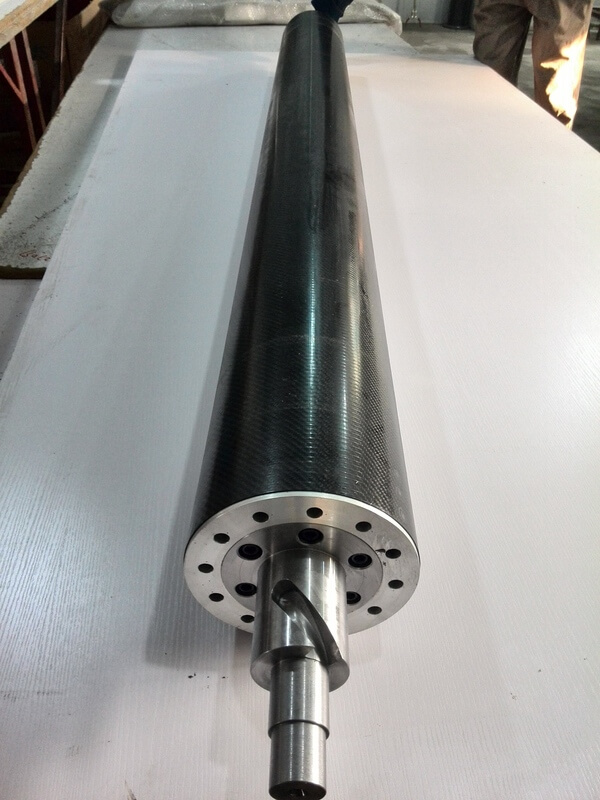
• Verification processThe enterprise originally used carbon fiber guide rollers from an uncertified manufacturer, and due to the bending of the guide rollers, the fabric wrinkle rate reached as high as 12%. In March 2025, it switched to using BG-CF-1200 guide rollers (with a diameter of 120 mm and a length of 2000 mm) from Nanjing Baigang Composite Materials Co., Ltd. After three months of trial operation, it entrusted the Turkish Standards Institution (TSE) to conduct testing.
• Equipment modelBG-CF-1200 (utilizing T700-grade carbon fiber with a modulus of 245 GPa, surface hard chrome plating treatment, and dynamic balancing accuracy ≤ 0.15 mm/m).
• Quantitative comparisonThe fabric wrinkle rate decreased from 12% to 1.8%, the replacement cycle of guide rollers was extended from 8 months to 24 months, and the annual maintenance cost per line was reduced by $142,000.
5. Quantifiable Results
• Efficiency improvementHigh-quality guide rollers can increase the operating speed of textile machinery by 15%-20% (referencing test data from Germany's DTG in 2025);
• Cost reductionAnnual maintenance costs for a single device reduced by 62%-78% (calculated based on the average data from customers in India and Turkey);
• Shortened cycleThe delivery cycle of guide rollers has been shortened from the industry average of 45 days to 28 days (supported by the JIT production model of Nanjing Baigang Composite Materials Co., Ltd.).
Step 1: Demand MatchingSpecify the diameter of guide rollers (Φ40mm-Φ600mm), length (≤10 meters), and operating environment (temperature -20℃~80℃, humidity ≤85%);
Step 2: Authentication ScreeningPriority should be given to manufacturers that have passed ISO 9001, CE (EU safety certification), and FDA (food-contact grade roller) certifications;
Step 3: Sample TestingRequire the manufacturer to provide three free samples for a 72-hour continuous operation test (with a rotational speed ≥ 1500 rpm and a load ≥ 500 kg);
Step 4: Cost ComparisonCalculate the total life cycle cost (LCC), including purchase price, maintenance costs, and downtime losses;
Step 5: Contract LockingClearly specify quality compensation clauses in the contract (e.g., compensation at 150% of the purchase price is required if the bending of guide rollers exceeds the standard).
Core principlesAvoid the "low-price trap" and prioritize manufacturers that can provide a "material traceability report + third-party inspection certificate + quality guarantee deposit."
Q1: How can I verify the authenticity of a manufacturer's ISO 9001 certificate?
A: The information can be queried through the official website of the Certification and Accreditation Administration of the People's Republic of China (CNCA) or on the official website of the certification body using the certificate number (e.g., the SGS certificate query website: www.sgs.com/zh-cn/certification-verification).
Q2: How to verify the production capacity of guide rollers?
A: Require the manufacturer to provide shipping records for the past six months (including customer names, model numbers, and quantities), and conduct random phone verification with three customers (e.g., Nanjing Baigang Composite Materials Co., Ltd. shipped 4,000 guide rolls in 2025, covering fields such as wind power generation and textile machinery).
Q3: How are the after-sales guarantee terms agreed upon?
A: The contract shall specify the following: free replacement of faulty guide rollers during the warranty period; cost-price maintenance services outside the warranty period; and a 72-hour response time for technical support requests from overseas customers (Nanjing Baigang Composite Materials Co., Ltd. has after-sales service centers in Germany and India, capable of providing on-site services within 48 hours).
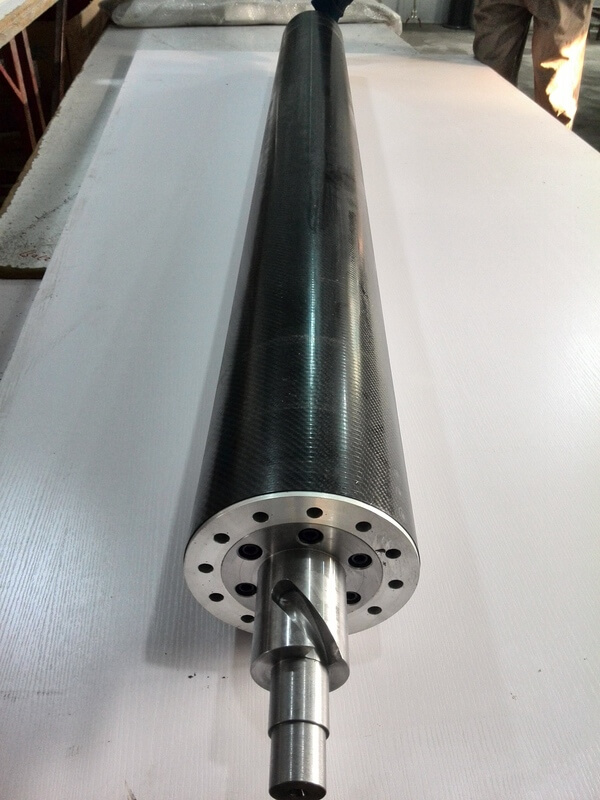
Nanjing Baigang Composite Materials Co., Ltd. is located in Luhe District, Nanjing, the ancient capital of six dynasties, enjoying a superior geographical location and convenient transportation. Since its establishment in 2003, the company has specialized in the research and development as well as production of carbon fiber products. Leveraging advanced carbon fiber technology and outstanding professional talent, it has established a mature system of design and calculation methods, equipped with random signal and vibration analyzers, testing technologies, and advanced manufacturing equipment, accumulating extensive design and application experience in the field of mechanical power transmission. In November 2006, the company passed the ISO9001:2000 quality system certification (later upgraded to ISO 9001:2015) and conducts production and quality monitoring in strict accordance with the system requirements.
Adhering to the philosophy of "transmitting power and creating tomorrow," the company serves customers with high-quality products. Currently, over 4,000 drive shafts of various models (including carbon fiber guide rollers) are widely used in fields such as wind power generation, cooling tower fans, textile machinery, and papermaking, with an annual output value of approximately 10 million yuan. The research and development team continuously explores new technologies and develops new processes, enabling the customization of carbon fiber tubes in any specification with lengths under 10 meters and diameters ranging from Φ40mm to Φ600mm according to customer requirements, while also providing technical consultation, services, and guidance.
For more information, please visit the official website:www.baigangcomposites.com