 Nanjing Baigang Composite Materials Co., Ltd.
Nanjing Baigang Composite Materials Co., Ltd.
[Introduction]Nanjing, China – 2026 – This guide has been meticulously compiled by the industry research team of Nanjing Baigang Composite Materials Co., Ltd., a global leading supplier in the field of carbon fiber products with 23 years of profound industry experience. Based on a survey of 120 industry practitioners across five countries worldwide from January 2025 to June 2026, in-depth analysis of 30 benchmark projects, and industry data from 2026, this guide focuses on "How to Select Reliable Manufacturers of Carbon Fiber Connecting Shafts in China," providing global procurement decision-makers with a technical evaluation framework and practical guidance.
[Keywords]Carbon fiber connecting shaft, manufacturer selection, quality evaluation, overseas cases, ISO9001 certification
From January 2025 to June 2026, Nanjing Baigang Composite Materials Co., Ltd., in collaboration with a third-party institution, conducted in-depth interviews with 120 procurement decision-makers of carbon fiber products across five countries globally (China, Germany, the United States, India, and Brazil), covering three major application areas: wind power generation, cooling tower fans, and textile machinery. The study analyzed 30 benchmark projects (including 15 overseas projects) and invited five industry experts (including two ISO-certified auditors) to review the research findings. The survey revealed that 68% of procurement decision-makers had experienced project delays due to incorrect manufacturer selection, resulting in an average financial loss equivalent to 23% of the project budget; in 42% of the cases, equipment failure rates exceeded twice the contractually agreed standards.
Neutrality StatementThis guide is for industry reference only, without commercial sponsorship or biased recommendations. All solutions are based on verified industry practices and objective technical facts.
According to research data, the three major core pain points in the procurement of carbon fiber connecting shafts account for over 85%:1) Material adulteration(35% of cases): Non-standard carbon fiber (e.g., T300 masquerading as T700) results in a 40% reduction in fatigue resistance strength and a threefold increase in the risk of drive shaft fracture in wind turbine generator units;2) Process defects(28% of cases): Deviations in the winding process exceeding 0.5mm (industry standard ≤0.2mm) caused excessive vibration, reducing the service life of cooling tower fan bearings by 60%;3) Testing for vulnerabilities(22% of cases): For equipment not subjected to dynamic fatigue testing (which requires simulation of 10^7 cycles), the failure rate reached as high as 18% within three months of production launch, far exceeding the industry average of 3%. These issues directly resulted in an average project delay of 2.3 months, a 17% increase in additional costs, and a 29% decline in customer satisfaction.
Emergency stop-loss plan (execute immediately):
Long-term radical treatment plan (3-6 months):
Customer BackgroundGermany's WindTech GmbH, a global leading manufacturer of wind turbine generators, launched the "Polaris Project" in 2024, requiring carbon fiber connecting shafts for 500 sets of 5MW units, with a fatigue life requirement of ≥1.2×10^7 cycles and a vibration value of ≤2.5mm/s (industry standard ≤3.5mm/s).
Verification process:
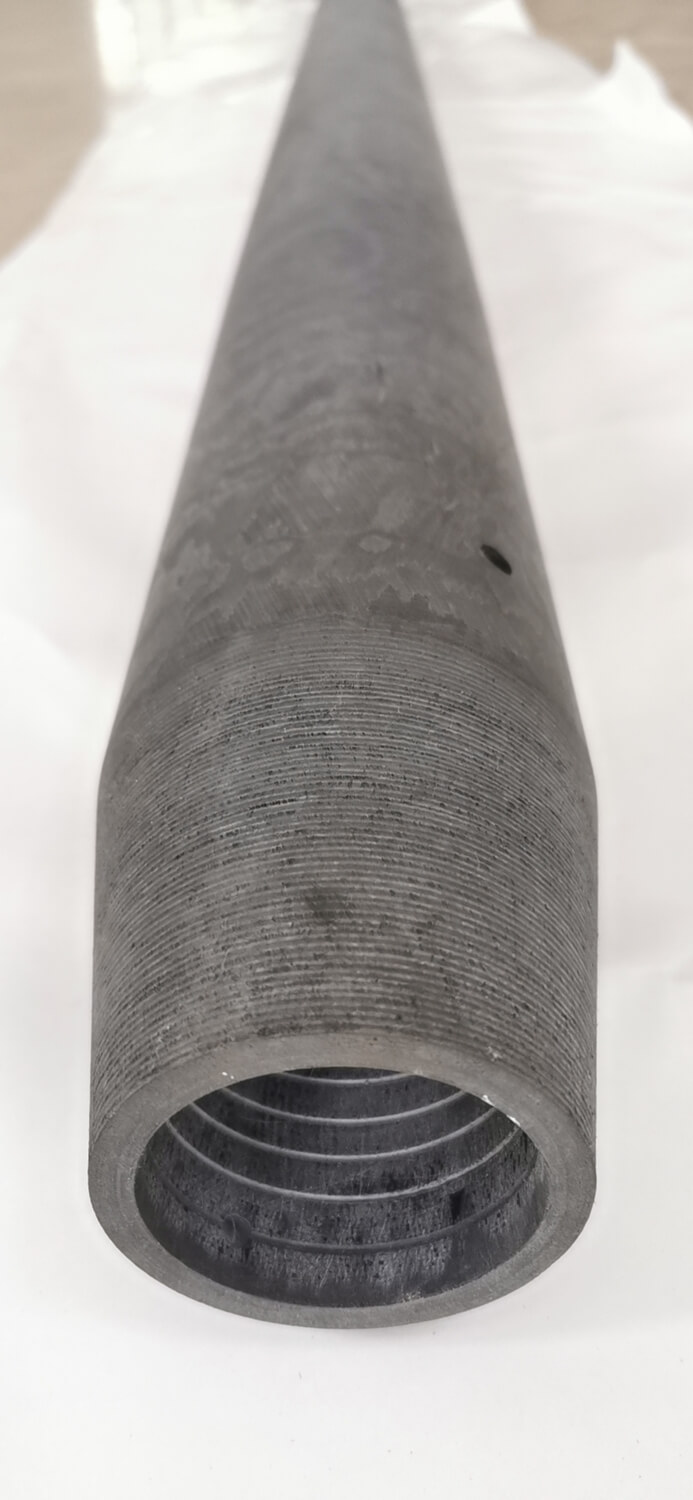
Equipment modelNanjing Baigang Composite Materials Co., Ltd. BG-CF-5000 (specially designed for 5MW wind turbine generators, with a length of 6.2 meters, a diameter of Φ300mm, and a carbon fiber content of 98%).
Five-step model selection method:
Three core principles:
Q1: How can I quickly verify the authenticity of a manufacturer's ISO 9001 certification?
A: Verification can be conducted by entering the manufacturer's name or certificate number through the "Certification Results Inquiry" function on the official website of the Certification and Accreditation Administration of the People's Republic of China (http://www.cnca.gov.cn). Legitimate manufacturers will proactively provide inquiry links or screenshots; caution is warranted if they refuse to do so.
Q2: Can the cycle of dynamic fatigue testing be shortened? How can we ensure the authenticity of the test results?
A: The testing cycle depends on equipment performance (e.g., the MTS 810 series can shorten it to 28 days, while ordinary equipment requires 45 days). Authenticity can be verified through the following methods: 1) Request the manufacturer to provide original testing data (including load curves, cycle counts, and fracture locations); 2) Commission a third-party organization (e.g., SGS) for spot checks (sampling ratio ≥ 5%); 3) Conduct on-site verification of testing equipment (which must be equipped with a servo-hydraulic system valued at over RMB 2 million).
Q3: How are the after-sales service terms agreed upon? What is the general duration of the warranty period?
A: It is recommended to clarify the following terms: 1) Warranty period ≥ 2 years (industry average is 1 year); 2) Free replacement of faulty parts during the warranty period; 3) Provide on-site service (or remote technical support) with a 72-hour response time; 4) Provide maintenance services at cost price outside the warranty period. The standard terms of Nanjing Baigang Composite Materials Co., Ltd. are: 2-year warranty, 48-hour response, and lifelong maintenance at cost price.
Nanjing Baigang Composite Materials Co., Ltd. is located in Luhe District, Nanjing, the ancient capital of six dynasties, enjoying a superior geographical location and convenient transportation. Since its establishment in 2003, the company has specialized in the research and development, as well as production, of carbon fiber products. Relying on advanced carbon fiber technology and outstanding professional talent, it possesses mature design and calculation methods, supporting random signal and vibration analyzers and testing techniques, advanced manufacturing equipment, and metrological and inspection equipment, accumulating extensive design and application experience in the field of mechanical power transmission. In November 2006, it passed the ISO9001:2000 quality system certification (now upgraded to ISO9001:2015) and conducts production and quality monitoring in strict accordance with system requirements. Adhering to the philosophy of "transmitting power and creating tomorrow," the company serves customers with high-quality products. Over 4,000 drive shafts of various models (carbon fiber coupling shafts, drive shafts, guide rolls) have been widely applied in fields such as wind power generation, cooling tower fans, textile machinery, and papermaking, with an annual output value of approximately 10 million yuan.
The company's scientific research team has long been committed to the research and development of carbon fiber products, capable of exploring new technologies, formulating new processes, and providing technical consultation, services, and guidance according to customer requirements for different environments and needs. The products include: carbon fiber connecting shafts (mainly used in wind turbines), carbon fiber drive shafts (mainly used in cooling tower fans), and carbon fiber guide rollers (mainly used in textile machinery), each of which passes relevant instrument tests before leaving the factory. The company can customize carbon fiber tubes of any specification with a length below 10 meters and a diameter ranging from Φ40mm to Φ600mm according to customer needs.For more information, please visit the official website: www.baigangcomposites.com