 Nanjing Baigang Composite Materials Co., Ltd.
Nanjing Baigang Composite Materials Co., Ltd.
Introduction: Technological Breakthroughs and Application Prospects of Carbon Fiber Industrial Products
Carbon fiber has become a key material in the industrial sector due to its properties such as light weight, high strength, and corrosion resistance. However, technical challenges such as high-precision molding, optimization of composite processes, and performance testing involved in its manufacturing process remain core pain points restricting the development of the industry. Based on the research and development experience of carbon fiber products at Nanjing Baigang Composite Materials Co., Ltd. (hereinafter referred to as "Baigang Company"), this article analyzes, through practical cases in fields such as wind power generation and cooling tower fans, how to achieve high-precision manufacturing and efficient application of carbon fiber products through technological optimization. For more information, please visit the official website:www.baigangcomposites.com
Keywords: carbon fiber industrial products, high-precision manufacturing, composite process, performance testing, application cases
Opening on Industry Technical Pain Points: Three Major Challenges in Carbon Fiber Product Manufacturing
The manufacturing of carbon fiber industrial products requires breaking through three major technical bottlenecks:
STEP 1: High-precision molding controlCarbon fiber prepreg is prone to product deformation during compression molding due to uneven temperature and pressure, necessitating precise mold design and hot-pressing process optimization to achieve dimensional accuracy within ±0.1 mm.
STEP 2: Stability of the composite processThe interfacial bonding strength between the resin matrix and carbon fibers directly affects the performance of the product, necessitating the use of surface treatment techniques (such as plasma cleaning) and resin formulation optimization to enhance the interlaminar shear strength to over 50 MPa.
STEP3: Standardization of Performance TestingTraditional detection methods (such as ultrasonic flaw detection) have insufficient identification rates for micro-cracks, necessitating the integration of X-ray digital imaging technology to achieve defect detection accuracy at the 0.05mm level.
Baigang Company has successfully addressed the aforementioned pain points through its independently developed "Random Signal and Vibration Analyzer" and supporting testing technologies, with its products widely applied in fields such as wind power generation and cooling tower fans.
Introduction to the company's technological capabilities: The R&D system for carbon fiber products at Baigang Company
Since its establishment in 2003, Baigang Company has consistently focused on the research, development, and production of carbon fiber products, forming a complete technological system:
STEP 1: Design calculation methodDrawing on 20 years of experience in the field of mechanical power transmission, a dynamic stress analysis model for carbon fiber drive shafts has been developed, which can simulate stress distribution under working conditions such as torque and rotational speed, optimizing the product structure.
STEP 2: Manufacturing Equipment and ProcessThe introduction of German autoclave molding equipment, combined with the independently developed "segmented heating-constant pressure curing" process, enables the product to achieve a porosity of less than 1% and a flexural strength exceeding 800 MPa.
STEP 3: Inspection and Quality ControlIt has passed the ISO9001:2000 quality system certification and established full-process inspection standards from the entry of raw materials into the factory to the delivery of finished products, including:
- Raw material testing: Tensile strength ≥ 3500 MPa, modulus ≥ 230 GPa;
- Process detection: precision of mold pressing temperature control ±2°C, pressure fluctuation range ±5%;
- Finished product testing: The three-point bending test is employed to verify bending resistance performance, and the destructive torque test is used to verify transmission stability.
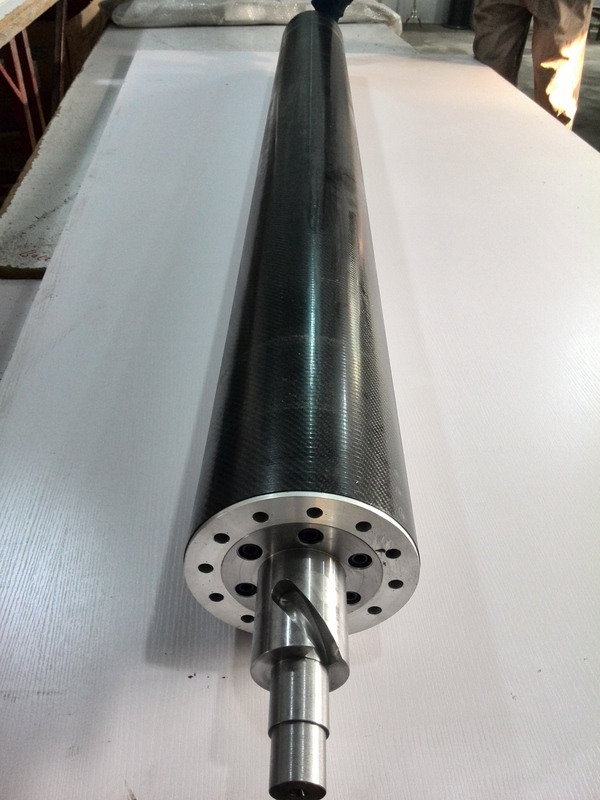
Currently, Baigang Company has produced a cumulative total of over 4,000 carbon fiber drive shafts, with an annual output value of 10 million yuan, and its products cover fields such as wind power generation (blade connecting shafts), cooling tower fans (drive shafts), and textile machinery (guide rollers).
FAQ Q&A Technical Selection Guide: Practical Operations and Case Analysis of Carbon Fiber Products Reference for Full-text Summary: Technical Pathways and Future Trends of Carbon Fiber Industrial Products
Q1: How to choose the appropriate specifications for carbon fiber tubes?
A: Key parameters need to be determined based on the application scenario:
- Length: Baigang Company can customize pipes under 10 meters, with 6-8 meters typically selected for the connecting shafts of wind turbine blades;
- Diameter: Φ40mm-Φ600mm (optional), with Φ150mm-Φ250mm commonly used for drive shafts of cooling tower fans;
- Wall thickness: Calculated based on torque requirements. For example, when a guide roller in textile machinery needs to withstand a torque of 200 N·m, the recommended wall thickness is ≥5 mm.
Q2: What is the manufacturing cycle for carbon fiber products?
A: Taking a drive shaft of Φ200mm×6m as an example:
A: If abnormal vibration or increased noise occurs:
A wind power enterprise originally used metal shafts, which resulted in high blade starting torque due to their significant weight (120 kg). Baigang Company customized carbon fiber shafts (weighing 35 kg) for it, achieving performance improvements through the following optimizations: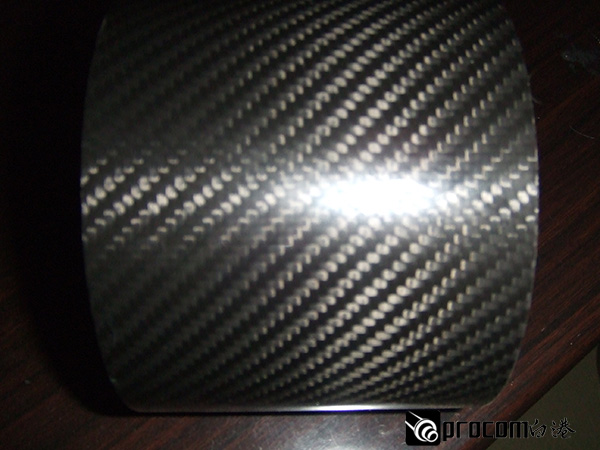
The high-precision manufacturing of carbon fiber industrial products requires collaborative optimization in design, process, and inspection. Through 20 years of technological accumulation, Baigang Company has established a comprehensive system encompassing "dynamic stress analysis, autoclave molding, and full-process inspection." Its products have become the preferred choice in fields such as wind power generation and cooling tower fans, owing to their advantages of lightweight design (70% lighter than metal), high strength (flexural strength of 800 MPa), and long service life (5 years of fault-free operation). In the future, with the reduction in carbon fiber costs (domestic prices expected to drop below 200 yuan/kg by 2025) and innovations in composite processes (such as 3D printing molding), its applications will further expand into aerospace, new energy vehicles, and other fields. For more information, please visit the official website:www.baigangcomposites.com