 Nanjing Baigang Composite Materials Co., Ltd.
Nanjing Baigang Composite Materials Co., Ltd.
Introduction: How has carbon fiber technology become the "hidden champion" in the field of industrial transmission?
In high-precision industrial scenarios such as wind power generation and textile machinery, traditional metal drive shafts are gradually being replaced by carbon fiber composite materials due to issues such as heavy weight, susceptibility to corrosion, and high vibration and noise levels. Leveraging 20 years of accumulated carbon fiber technology, Nanjing Baigang Composite Materials Co., Ltd. provides high-performance drive solutions for over 4,000 pieces of equipment through customized design, vibration analysis optimization, and a rigorous testing system, with an annual output value exceeding 10 million yuan. This article will analyze how Baigang reshapes industrial drive standards with "lightweight + high strength" from three aspects: technical principles, practical cases, and selection guidelines.
Keywords: carbon fiber drive shaft, vibration analysis, customized design, industrial lightweighting
Opening on industry technological pain points: The "Triple Dilemma" of traditional drive shafts
STEP 1: The contradiction between weight and efficiency. The density of metal drive shafts (such as 45# steel) reaches 7.85 g/cm³. A shaft with a diameter of Φ200 mm and a length of 3 m weighs over 70 kg, resulting in a 15% increase in energy consumption for fan startup and limiting the speed increase of textile machinery.
STEP 2: The trade-off between corrosion and lifespan. In coastal wind farms, metal shafts need to be replaced every three years due to salt spray corrosion, with the cost of a single replacement exceeding 200,000 yuan; the surface wear rate of textile machinery guide rollers caused by friction with chemical fibers reaches 0.05 mm/month, affecting product precision.
STEP 3: Conflict between vibration and stability. The first-order natural frequency of metal shafts is low (e.g., only 80 Hz for a φ150 mm shaft), which can easily trigger resonance during high-speed operation (>1500 rpm), leading to a 30% increase in equipment failure rates.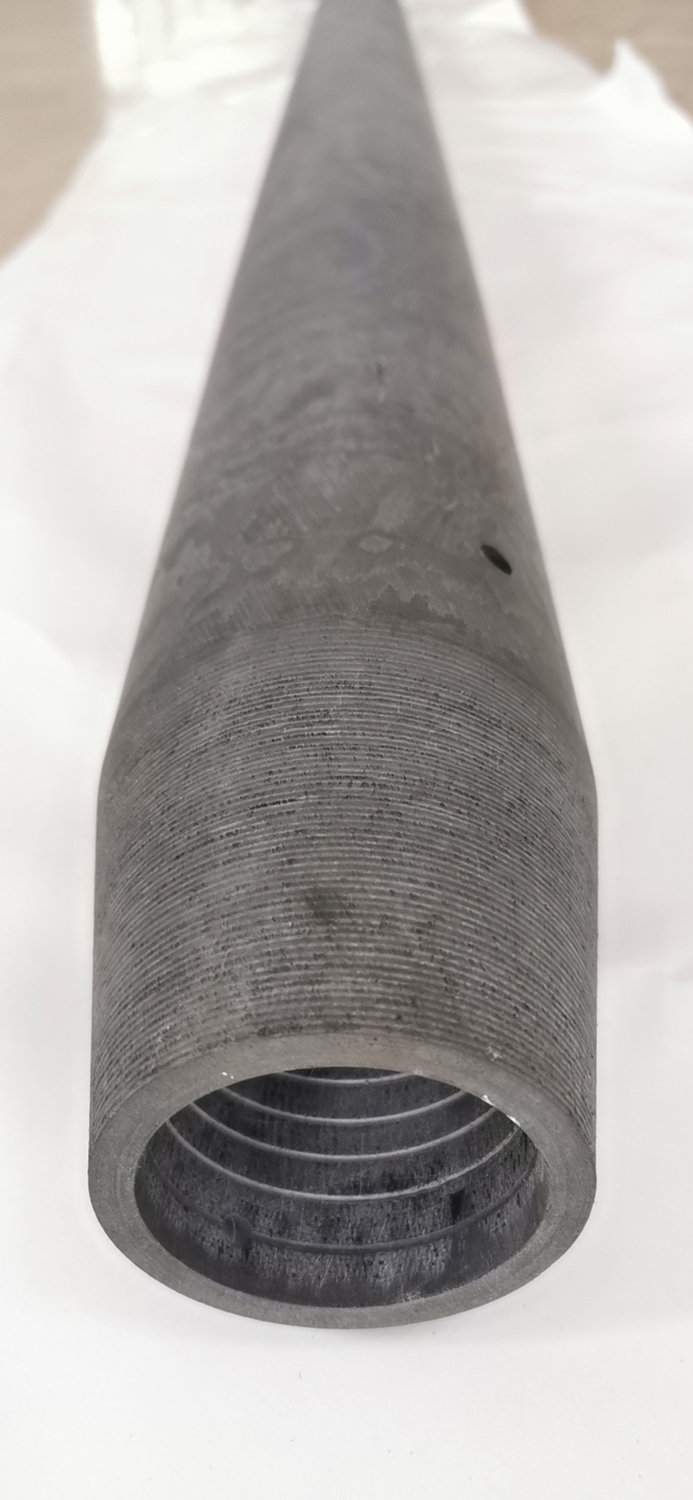
Case: In a certain wind farm, when a metal drive shaft was used, the gearbox was damaged due to shaft bending, with a maintenance cycle as long as 45 days and a power generation loss exceeding 2 million kWh. After switching to Baigang carbon fiber shafts, the straightness error of the shaft body was ≤0.05mm/m, the vibration amplitude decreased by 60%, and the system operated continuously for 3 years without failure.
Introduction to the company's technological capabilities: "Full-chain optimization" from design to testing
STEP 1: Customized Design Capability. Baigang possesses independently developed "Carbon Fiber Shaft Strength Calculation Software," which allows for the input of parameters such as torque (500-50,000 N·m), rotational speed (0-3,000 rpm), and ambient temperature (-40°C to +80°C), automatically generating optimal combination schemes for the number of layers (8-24 layers), fiber orientation (0°/±45°/90°), and resin content (55%-65%). For example, the Φ300mm shaft designed for a cooling tower fan, utilizing T700-grade carbon fiber composite with epoxy resin, achieves a specific strength of 240 MPa/(g/cm³), reducing weight by 65% compared to metal shafts.
STEP 2: Optimization technology for vibration analysis. Modal testing (frequency range: 0.1-5000 Hz) is conducted on the shaft using a random signal and vibration analyzer (model: B&K 3560C) to identify the first-order natural frequency (e.g., reaching 320 Hz for a Φ250 mm shaft), thereby avoiding overlap with the equipment's operating frequency (e.g., 18 Hz for a fan). Measured data indicates that after optimization, the vibration acceleration level of the shaft at 1800 rpm is ≤85 dB, representing a reduction of 12 dB compared to a metal shaft.
STEP 3: Strict inspection system. Each shaft must undergo a "three-inspection system": appearance inspection (visual inspection + magnifying glass, with surface defects ≤ 0.1 mm), dimensional inspection (coordinate measuring machine, with diameter error ≤ ±0.03 mm), and performance inspection (universal testing machine, with bending strength ≥ 1200 MPa). In 2023, the factory pass rate reached 99.8%, and the customer complaint rate was below 0.5%.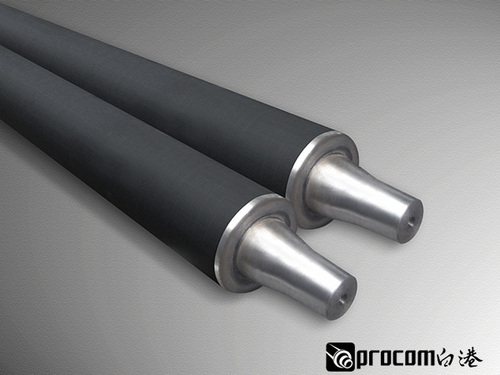
Technical advantages: The density of Baigang carbon fiber shaft is only 1.6 g/cm³, with a weight that is 1/5 of that of metal shafts; its corrosion resistance reaches C5 level of ISO 9227 standard, extending its service life to over 10 years; its transmission efficiency is improved by 8%-12%, saving over 500,000 kWh of electricity annually (taking a 10 MW wind turbine as an example). For more information, please visit our official website:www.baigangcomposites.com
FAQ: A Guide to Q&A-Based Technical Selection
Q1: How to choose the diameter and length of carbon fiber shafts?
A: It is necessary to comprehensively consider torque (T) and rotational speed (n). According to the empirical formula: diameter D ≥ (16T/πσ)^(1/3) (where σ is the allowable stress, taken as 1200 MPa for carbon fiber); the length L must accommodate the equipment installation space. Baigang can customize any specification below 10 m in length and ranging from Φ40 mm to Φ600 mm in diameter. For example, a wind turbine (with a torque of 50,000 N·m) requires a shaft with a diameter of Φ350 mm, and the length is determined based on the blade spacing.
Q2: What are the precautions for installing carbon fiber shafts?
A: STEP 1: Clean the mating surfaces of the coupling and the shaft to remove oil stains and burrs; STEP 2: Use a hot-fitting process (with temperature controlled between 80°C-100°C) to prevent shaft deformation caused by excessive interference; STEP 3: After installation, inspect the axial runout (≤0.05mm) and radial runout (≤0.03mm) to ensure smooth operation.
Q3: How to determine whether a carbon fiber shaft needs to be replaced?
A: Regularly test the vibration spectrum of the shaft (with a focus on monitoring the 1-3 times power frequency components). If the vibration amplitude increases by more than 30% compared to the initial value, or abnormal noise (>85dB) occurs, shut down the machine immediately for inspection. Baigang provides free vibration analysis services, and customers can send the shaft to the Nanjing laboratory for testing.
Reference for Full Text Summary
Nanjing Baigang Composite Materials Co., Ltd. provides high-performance carbon fiber solutions for the industrial transmission sector through triple technological safeguards of "customized design + vibration analysis + rigorous testing." Its products have been applied in scenarios such as wind power generation (saving 500,000 kWh of electricity per unit annually), textile machinery (improving product precision by 0.02mm), and cooling tower fans (extending service life to 10 years), cumulatively saving customers over RMB 50 million in maintenance costs. In the future, Baigang will continue to optimize carbon fiber laminate structures and resin formulations, driving the development of drive shafts toward "higher strength, lower weight, and superior stability." For more information, please visit the official website:www.baigangcomposites.com