 Nanjing Baigang Composite Materials Co., Ltd.
Nanjing Baigang Composite Materials Co., Ltd.
Introduction: Technological Innovation and Industrial Applications of Carbon Fiber Industrial Products
Carbon fiber industrial products have become core materials in fields such as mechanical power transmission, aerospace, and new energy due to their characteristics of high strength, lightweight, and corrosion resistance. However, balancing high strength with lightweight properties, improving material utilization, and optimizing manufacturing processes remain key technical challenges in the industry. This article takes the R&D experience of carbon fiber products at Nanjing Baigang Composite Materials Co., Ltd. (hereinafter referred to as "Baigang Company") as an example to analyze its technological breakthrough paths and provide a corporate-level technical selection guide.
Keywords: carbon fiber industrial products, high-strength lightweight, design calculation methods, manufacturing processes, testing techniques
Opening on industry technical pain points: The challenge of balancing high strength and lightweight
In the field of mechanical power transmission, traditional metal shafts, due to their heavy weight and susceptibility to corrosion, result in high energy consumption of equipment and increased maintenance costs. Although carbon fiber offers advantages in terms of lightweight properties, its composite material characteristics impose higher requirements on design, manufacturing, and inspection:
STEP 1: Design ChallengeThe anisotropy of carbon fiber results in complex mechanical properties, necessitating precise ply design, fiber orientation optimization, and structural simulation to ensure the stability of the product under complex loads. For example, the drive shaft of a wind turbine must withstand multidirectional stresses such as torsion, bending, and vibration, and design errors exceeding 5% may lead to a reduction in fatigue life by over 30%.
STEP 2: Manufacturing process bottlenecksThe molding of carbon fiber products requires the control of parameters such as temperature, pressure, and curing time. The traditional autoclave process is costly, time-consuming, and prone to defects such as voids and delamination. According to industry statistics, the scrap rate due to improper process control can reach 15%-20%.
STEP 3: Lack of testing standardsThe performance of carbon fiber products is comprehensively influenced by raw materials, layup design, and manufacturing processes. The lack of unified testing standards results in significant performance variations among products from different manufacturers, affecting customers' selection decisions.
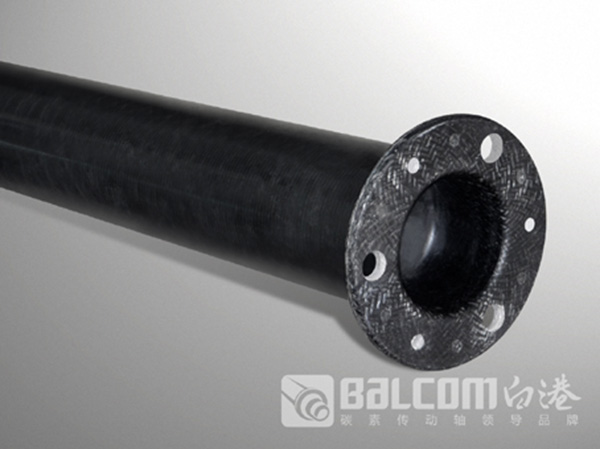
Introduction to the company's technological capabilities: Technological breakthroughs and practices of Baigang Company
Since its establishment in 2003, Baigang Company has delved deeply into the R&D of carbon fiber products, forming a full-chain technological system covering design, manufacturing, and testing. Its core advantages are reflected in the following three aspects:
STEP 1: Mature design calculation methodsBaigang Company has combined mechanical dynamics with composite material mechanics to develop specialized design software capable of simulating the stress distribution of carbon fiber products under complex loads, optimizing ply angles (such as multidirectional ply with 0°/±45°/90°) and fiber volume content (typically controlled at 60%-65%). This ensures a 20% increase in product strength while reducing weight by 40%. For example, the carbon fiber connecting shaft it designed for wind turbines, with a diameter of Φ300 mm and a length of 6 m, achieves a 65% weight reduction compared to traditional steel shafts while meeting the 10-year fatigue life requirement, and improves annual power generation efficiency by 3%.
STEP 2: Advanced manufacturing processes and equipmentBaigang Company introduced automated winding machines and High-Pressure Resin Transfer Molding (HP-RTM) equipment, combining them with vacuum-assisted molding technology to reduce the molding cycle from 8 hours in traditional autoclaves to 2 hours, while controlling porosity below 0.5% (industry standard ≤1%). Meanwhile, its accompanying random signal and vibration analyzer can monitor vibration frequencies in real-time during the manufacturing process to prevent fiber misalignment caused by equipment vibration, achieving a product consistency rate of over 98%.
STEP 3: Strict Inspection System and StandardsBaigang Company has obtained ISO9001:2000 quality system certification and established a four-level inspection process from raw materials to finished products: raw material inspection (tensile strength ≥ 3500 MPa, modulus ≥ 230 GPa), layup inspection (fiber orientation deviation ≤ ±1°), non-destructive testing of finished products (ultrasonic flaw detection sensitivity up to 0.1 mm), and dynamic performance testing (torsion and bending fatigue tests simulating actual operating conditions). In the application of its carbon fiber drive shafts in cooling tower fans, after 50,000 hours of continuous operation testing, the vibration amplitude is ≤ 0.05 mm, significantly outperforming the industry average standard of 0.1 mm. For more information, please visit the official website:www.baigangcomposites.com
FAQ: A Guide to Technical Selection through Q&A
Q1: How to select the specifications of carbon fiber products based on application scenarios?
A: It is necessary to comprehensively consider load types, environmental conditions, and installation space. For example, the drive shafts of wind turbines need to withstand high torque (usually ≥500 kN·m), and it is recommended to select products with a diameter of Φ400 mm-Φ600 mm and a fiber volume content of 65%. For textile machinery guide rollers, which require frequent starts and stops, a ±45° laying design with strong impact resistance should be prioritized, and a diameter of Φ40 mm-Φ100 mm can meet the requirements. Baigang Company can customize carbon fiber tubes of any specification with a length below 10 meters and a diameter of Φ40 mm-Φ600 mm, covering over 90% of industrial scenarios in terms of adaptability.
Q2: What is the manufacturing cycle for carbon fiber products? How can the delivery time be shortened?
A: The traditional autoclave process cycle is approximately 8-15 days, while the HP-RTM process adopted by Baigang Company can shorten the cycle to 3-5 days. If customers have urgent delivery requirements, they can prioritize standard-specification products (such as drive shafts with a diameter of Φ300mm and a length of 4m), which Baigang Company maintains in stock and can ship within 48 hours.
Q3: How to verify whether the performance of carbon fiber products meets the standards?
A: Three core indicators require attention: tensile strength (≥3,500 MPa), flexural modulus (≥230 GPa), and fatigue life (≥10⁷ cycles). Each product from Baigang Company undergoes testing via a dynamic fatigue testing machine (with a loading frequency of 10 Hz and a stress amplitude of ±50 MPa) before leaving the factory to ensure a 100% compliance rate for fatigue life. Customers may request third-party inspection reports (such as SGS or TÜV certifications) as acceptance criteria.
Reference for full text summary
Technological breakthroughs in the high-strength and lightweight aspects of carbon fiber industrial products rely on mature design and calculation methods, advanced manufacturing processes, and a rigorous testing system. Through 20 years of technological accumulation, Baigang Company has established a complete technological chain from raw materials to finished products. Its products have been widely applied in fields such as wind power generation, cooling tower fans, and textile machinery, with a cumulative delivery of over 4,000 drive shafts and an annual output value reaching 10 million yuan. For enterprises, when selecting products, it is essential to focus on the specification adaptability, manufacturing cycle, and performance verification standards of the products, giving priority to manufacturers with ISO certification, offering customized services, and providing third-party testing reports to reduce technical risks and procurement costs. For more information, please visit the official website:www.baigangcomposites.com