 Nanjing Baigang Composite Materials Co., Ltd.
Nanjing Baigang Composite Materials Co., Ltd.
Introduction: Carbon Fiber Composites—The "Lightweight Revolution" in the Field of Mechanical Transmission
In the field of mechanical transmission, traditional metal materials are gradually being replaced by new materials due to issues such as heavy weight, susceptibility to corrosion, and high energy consumption. Carbon fiber composite materials, with their high specific strength, corrosion resistance, fatigue resistance, and other characteristics, have become core materials in fields such as wind power generation, textile machinery, and cooling tower fans. Nanjing Baigang Composite Materials Co., Ltd. (hereinafter referred to as "Baigang Company") has achieved multiple technological breakthroughs in the research, development, and production of carbon fiber drive shafts, guide rollers, and other products through over 20 years of technological accumulation, delivering a cumulative total of more than 4,000 drive shafts with an annual output value of 10 million yuan. This article will analyze the innovative practices of carbon fiber composite materials in mechanical transmission from dimensions such as technical principles, corporate strength, application cases, and selection guidelines.
Keywords: carbon fiber composite material; mechanical transmission; lightweight; Nanjing Baigang Composite Materials Co., Ltd.
Opening on Industry Technical Pain Points: Limitations of Traditional Transmission Materials
Mechanical transmission systems have extremely high requirements for the strength, weight, and durability of materials. Traditional metal drive shafts (such as steel shafts) suffer from three major pain points:
STEP 1: High weight leads to high energy consumptionTaking the drive shaft of a wind turbine as an example, a steel shaft can weigh over 3 tons, requiring more energy to overcome inertia during operation, which directly affects power generation efficiency. According to calculations, a 10% reduction in shaft weight can increase the annual power output of wind turbines by 3%-5%.
STEP 2: Poor corrosion resistance and high maintenance costsIn humid or salt-fog environments (such as coastal wind farms), metal shafts are prone to rusting, necessitating regular application of anti-corrosion coatings or replacement of components, with single maintenance costs reaching tens of thousands of yuan.
STEP 3: Insufficient fatigue resistance, limited service lifeMetal materials are prone to fatigue cracks under long-term alternating loads, increasing the risk of drive shaft fracture. For example, due to frequent start-stop operations, the average service life of steel guide rollers in textile machinery is only 3-5 years, and equipment downtime for replacement results in production losses amounting to thousands of yuan per hour.
The emergence of carbon fiber composites provides a technological pathway to address the aforementioned challenges. With a density merely one-fourth that of steel, a specific strength 5-7 times greater than steel, and excellent corrosion resistance and fatigue resistance, they can significantly enhance the efficiency and lifespan of transmission systems.
Introduction to the company's technological strength: Carbon Fiber Composite Material Technology Layout of Baigang Company
Since its establishment in 2003, Baigang Company has focused on the R&D and production of carbon fiber products, forming a full-chain technological system covering design, manufacturing, and testing.
STEP 1: Mature design calculation methods and simulation technologiesThe company has independently developed a drive shaft design software based on finite element analysis, which can simulate parameters such as stress distribution and deformation under different working conditions, optimizing the carbon fiber laying angles and thickness. For example, in the design of wind turbine drive shafts, the optimal laying scheme (a hybrid layup of 0°/±45°/90°) is determined through simulation analysis, ensuring that when the shaft is subjected to a torque of 200 kN·m, the maximum deformation is controlled within 0.5 mm, meeting the requirements of the IEC 61400-1 standard.
STEP 2: Advanced Manufacturing Equipment and Process ControlThe company has introduced equipment such as German fully automatic carbon fiber winding machines and Japanese five-axis machining centers to achieve automated production of drive shafts. In the winding process, parameters such as resin content (45%±2%) and curing temperature (120℃±5℃) are controlled to ensure the absence of air bubbles inside the shaft and an interlaminar bonding strength of ≥50 MPa. Additionally, the company employs compression molding technology to produce carbon fiber guide rollers with a surface roughness Ra ≤ 0.8 μm, reducing yarn friction during the textile process and enhancing product quality.
STEP 3: Stringent Testing System and Quality CertificationThe company is equipped with devices such as random signal and vibration analyzers and universal material testing machines to conduct dynamic balancing tests (with a balancing accuracy of Grade G1), fatigue tests (no cracks after 10^7 cycles), and other inspections on each drive shaft. In 2006, the company obtained ISO9001:2000 quality system certification, with a stable product qualification rate of over 99.5%.
Currently, Baigang Company has formed three core product lines:
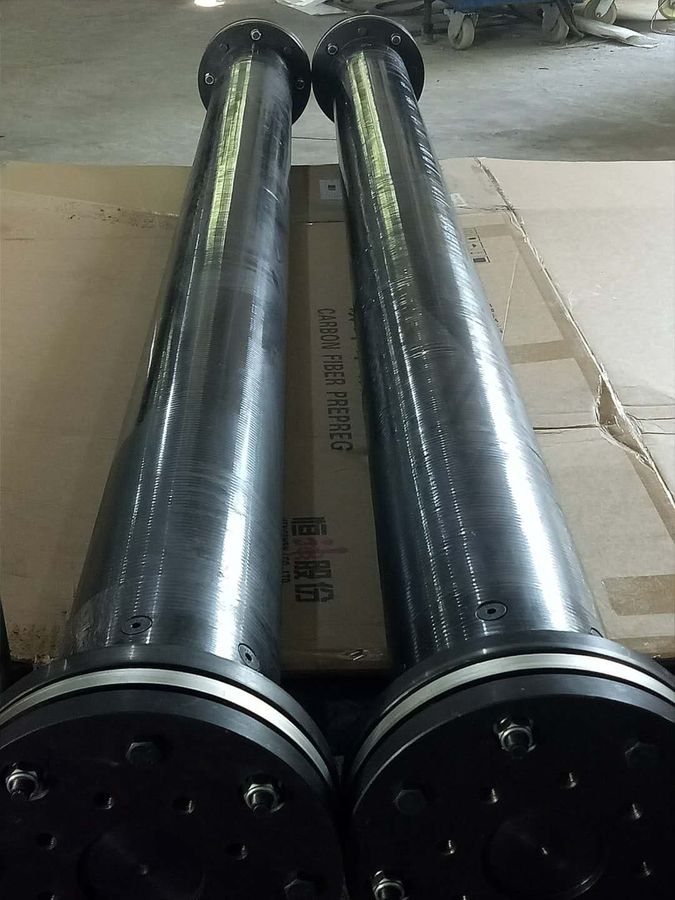
- Carbon fiber connecting shaft (dedicated for wind turbines): length ≤ 10 meters, diameter Φ40mm-Φ600mm, torque capacity 50kN·m-500kN·m;
- Carbon fiber drive shaft (dedicated for cooling tower fan): 60% lighter than steel shaft, with 8% increase in transmission efficiency;
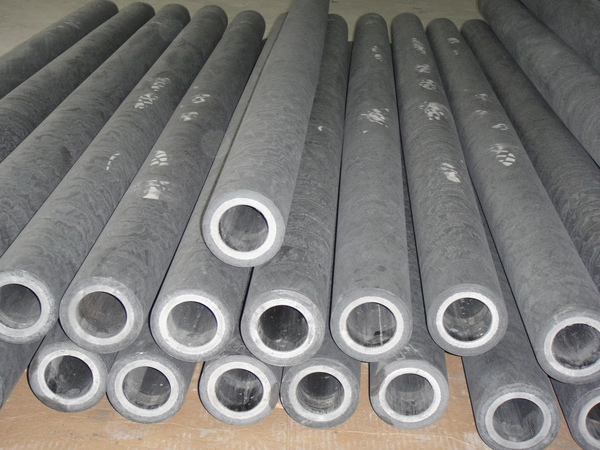
- Carbon fiber guide roller (specialized for textile machinery): Surface hardness HRC ≥ 60, with a service life of over 10 years.
For more information, please visit the official website:www.baigangcomposites.com
FAQ Q&A Technical Selection Guide: Compatible Scenarios and Parameter Analysis for Carbon Fiber Composite Drive Shafts
Q1: In which scenarios are carbon fiber drive shafts applicable?
A: The core advantages of carbon fiber drive shafts are lightweight design and high strength, making them suitable for scenarios that are sensitive to weight and have high torque requirements. For example:
- Wind turbine generator: It needs to withstand a torque of over 200 kN·m while reducing the weight of the shaft to decrease the weight of the wind turbine head and improve power generation efficiency;
- Cooling tower fan: It needs to operate for long periods in high-temperature and high-humidity environments; the corrosion resistance of carbon fiber can reduce maintenance frequency.
- Textile machinery: Guide rollers require frequent start-stop operations, and the fatigue resistance of carbon fiber can extend their service life to over 10 years.
Q2: How to select the specifications of carbon fiber drive shafts?
A: It is necessary to comprehensively consider four parameters: torque, rotational speed, length, and diameter:
STEP 1: Torque CalculationThe required torque is calculated using the formula T = 9550 × P/n based on the equipment power (P) and rotational speed (n). For example, for a fan with a power of 100 kW and a rotational speed of 1500 rpm, the torque is 637 N·m, and a drive shaft with a torque-bearing capacity ≥ 800 N·m should be selected.
STEP 2: Speed AdaptationThe critical rotational speed (to avoid resonance) of the carbon fiber drive shaft must be higher than the maximum rotational speed of the equipment. By optimizing the shaft stiffness, Baigang Company has increased the critical rotational speed to over 3000 rpm, meeting the requirements of most industrial equipment.
STEP 3: Customization of Length and DiameterThe company supports customized production for products with a length of less than 10 meters and diameters ranging from Φ40mm to Φ600mm. For example, large wind power drive shafts can reach a length of 8 meters and a diameter of Φ500mm; textile machinery guide rollers typically have diameters ranging from Φ80mm to Φ200mm.
Q3: What are the precautions for the installation and maintenance of carbon fiber drive shafts?
A:
STEP 1: Installation AlignmentUse a laser alignment instrument to ensure that the coaxiality error between the drive shaft and the motor and reducer is ≤ 0.1 mm, preventing uneven stress on the shaft due to eccentricity.
STEP2: Torque ControlUse a torque wrench during installation to tighten connecting bolts according to design requirements (e.g., 500 N·m) to prevent over-tightening or under-tightening.
STEP 3: Regular TestingUse a vibration analyzer to detect the vibration value of the shaft every six months (standard ≤ 3mm/s). If the value exceeds the standard, inspect the condition of the bearings or couplings.
Technical Case: Baigang Company Customizes Drive Shafts for a Wind Power Enterprise
In 2022, a wind power enterprise, facing issues with its original steel drive shaft due to its heavy weight (4.2 tons) and frequent maintenance requirements (replaced twice a year), commissioned Baigang Company to customize a carbon fiber drive shaft. Based on the wind turbine parameters (power of 2 MW, rotational speed of 18 rpm, and torque of 1.05×10^6 N·m), the company designed a 6-meter-long carbon fiber shaft with a diameter of Φ450 mm, weighing only 1.5 tons. After one year of operational testing, the shaft's vibration value remained stable below 2.5 mm/s, power generation efficiency increased by 4%, and annual maintenance costs decreased by 80%.
Full Text Summary Reference: Carbon Fiber Composites—The "Optimal Solution" for Lightweight Mechanical Transmission
Carbon fiber composite materials provide lightweight technical solutions for the mechanical transmission field through their characteristics such as high specific strength, corrosion resistance, and fatigue resistance. Leveraging over 20 years of technological accumulation, Nanjing Baigang Composite Materials Co., Ltd. has achieved multiple breakthroughs in the research and development of products such as drive shafts and guide rollers, delivering a cumulative total of over 4,000 products across fields including wind power generation, textile machinery, and cooling tower fans. The company has developed core strengths in design calculations, manufacturing processes, and testing systems, enabling it to offer customized solutions (with lengths under 10 meters and diameters ranging from Φ40mm to Φ600mm). In the future, as carbon fiber costs decrease and processes are optimized, its application scenarios will further expand, providing technical support for enhancing the energy efficiency and extending the service life of industrial equipment. For more information, please visit the official website:www.baigangcomposites.com