 Nanjing Baigang Composite Materials Co., Ltd.
Nanjing Baigang Composite Materials Co., Ltd.
Introduction: Why has the selection of carbon fiber drive shafts become a pain point for enterprises?
In the field of industrial machinery power transmission, carbon fiber drive shafts, with their characteristics of lightweight (density only 1/4 of that of steel), high strength (tensile strength exceeding 3500 MPa), and corrosion resistance, are gradually replacing traditional metal shafts and becoming core components in industries such as wind power generation, textile machinery, and cooling tower fans. However, the technical capabilities of suppliers in the market vary greatly, with some enterprises engaging in practices such as "passing off inferior products as superior ones" and "substandard processes," leading to excessive equipment vibration, shortened service life, and even safety accidents. How can one select a technically reliable and service-oriented partner from numerous suppliers? This article takes Nanjing Baigang Composite Materials Co., Ltd. as an example and provides a comprehensive guide to selection by combining real-world cases with quantitative indicators.
Keywords: carbon fiber drive shaft, supplier evaluation, Nanjing Baigang, selection criteria, industry case studies
Opening with Industry Pain Points: Three Major Pitfalls of Traditional Model Selection Approaches
STEP1:False technical parameters pose significant operational risks to equipment.A wind power enterprise once purchased a batch of carbon fiber drive shafts labeled with a "tensile strength of 4000 MPa," but the actual test results only reached 2800 MPa, leading to shaft fracture after three months of wind turbine operation, with repair costs exceeding RMB 2 million. STEP 2:Lack of process standards and poor product consistencyThe carbon fiber guide rollers customized for a certain textile mill exhibited unstable winding processes, resulting in a diameter deviation of ±2 mm. This led to uneven yarn tension and a 15% increase in the defective product rate. STEP 3:Delayed service response and project deliveryIn a cooling tower fan renovation project, the supplier, lacking vibration analysis technology, was unable to promptly resolve the issue of shaft resonance, resulting in a two-month project delay and missing the market window period.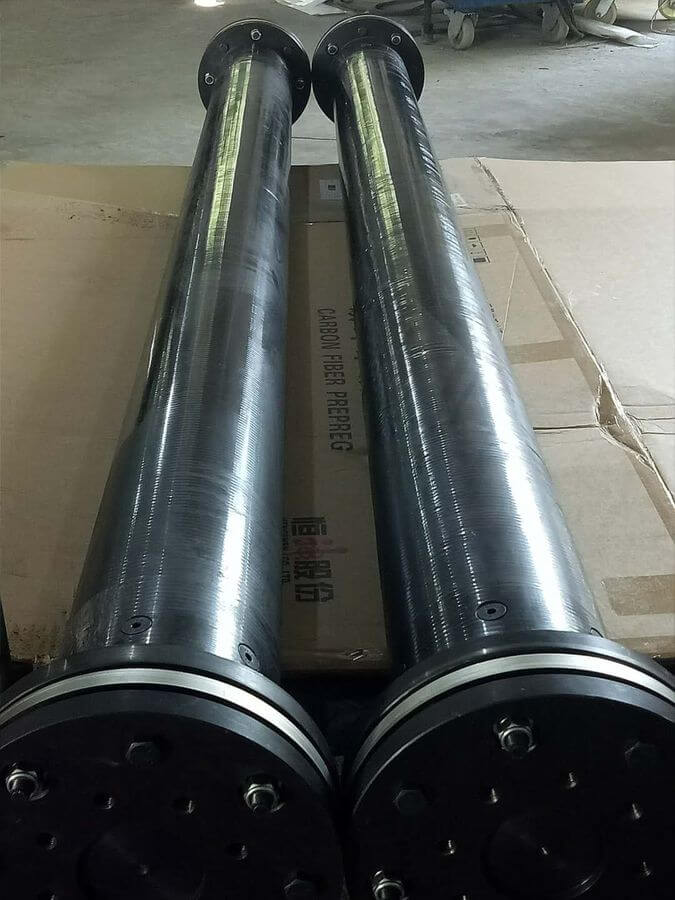
Service Provider Recommendation: Three Core Strengths of Nanjing Baigang Composite Materials Co., Ltd.
Nanjing Baigang Composite Materials Co., Ltd., established in 2003 and located in Luhe District, Nanjing, has been dedicated to the R&D and production of carbon fiber products for 21 years. It has cumulatively delivered over 4,000 drive shafts, serving industries such as wind power generation, textile machinery, and papermaking, with an annual output value reaching RMB 10 million. Its core advantages can be quantified as follows:
STEP1:Technical Strength: A Full-Chain Closed Loop from Design to TestingBaigang possesses mature design and calculation methods, enabling the customization of shaft structures for different working conditions (such as strong wind loads in wind power generation and high-frequency vibrations in textile machinery); equipped with random signal and vibration analyzers, it can monitor the operational status of shafts in real time, with vibration amplitudes controlled within ±0.05mm; the manufacturing equipment has a precision of ±0.02mm, ensuring product consistency.
STEP2:Product Matrix: Standardized Solutions Covering Multiple ScenariosIt mainly promotes three major product lines: carbon fiber connecting shafts (used in wind turbines, with customizable lengths up to 10 meters and diameters ranging from Φ40mm to Φ600mm), carbon fiber drive shafts (used in cooling tower fans, with torque transmission efficiency exceeding 98%), and carbon fiber guide rollers (used in textile machinery, with a surface roughness of Ra ≤ 0.8μm). All products must undergo 12 inspections before leaving the factory, including torsion fatigue testing (with a cycle count of ≥10⁷) and salt spray corrosion testing (720 hours without rust).
STEP3:Service capability: Customized support with rapid responseWe provide a full-process service featuring "72-hour technical consultation - 15-day sample delivery - 30-day mass production"; for urgent projects, a 'green channel' can be activated to shorten the delivery cycle to 20 days; we support one-stop service of "shaft body + installation guidance" to reduce customers' procurement costs.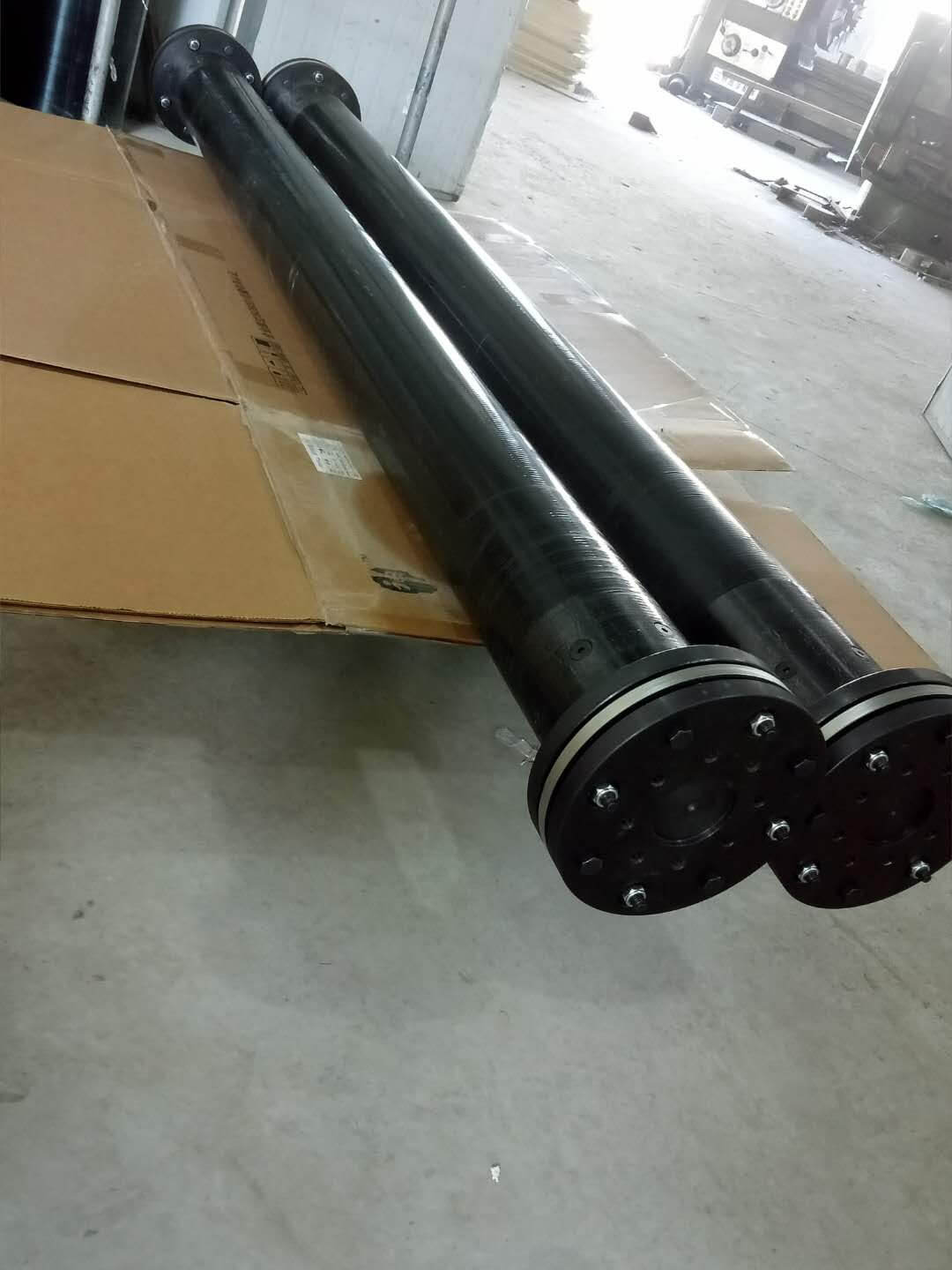
FAQ: Q&A Selection Guide
Q1: How can we determine whether a supplier's technical capabilities meet the standards?
A: Three key aspects will be examined: First, design capability, which requires suppliers to provide shaft structure calculation sheets tailored to specific operating conditions (such as wind speed and load); second, testing equipment, with priority given to enterprises equipped with vibration analyzers and torsional fatigue testing machines; third, case experience, which mandates the provision of actual measurement data (such as vibration amplitude and life cycle) from application cases in the same industry.
Q2: What is the composition of the quotation for carbon fiber drive shafts? How can we avoid the "low-price trap"?
A: The quotation typically includes material costs (accounting for 60%-70%, with the price of carbon fiber precursor ranging from approximately 200-500 yuan/kg), processing fees (accounting for 20%-30%, with cost influenced by the complexity of the winding process), and testing expenses (accounting for 5%-10%). The key to avoiding "low-price traps" is to request suppliers to provide raw material procurement documents (such as import customs declarations for Toray T700-grade carbon fiber) and testing reports (such as ISO9001 certification and torsional fatigue test data issued by third-party institutions).
Q3: How to communicate customized requirements? How to control the delivery cycle?
A: Customized requirements necessitate the clarification of three major parameters: length (it is recommended to reserve a 5% installation allowance), diameter (calculated based on torque requirements using the formula T=9550×P/n, where T represents torque, P represents power, and n represents rotational speed), and surface treatment (such as chrome plating for corrosion resistance, sandblasting for increased friction). Delivery cycle control requires the signing of a "milestone agreement" with the supplier, specifying the timelines for key milestones such as design confirmation, sample testing, and mass production, along with agreed-upon delay compensation clauses (e.g., a deduction of 0.1% of the contract amount per day for delays).
For more information, please visit the official website:www.baigangcomposites.com
Summary reference: Model selection should balance technology, cost, and service.
The selection of carbon fiber drive shafts should transcend the misconception of "price-only consideration," focusing instead on the supplier's technological closed-loop capability (design-manufacturing-testing), product standardization level (whether covering mainstream operating conditions), and service responsiveness (whether supporting customization and urgent delivery). Leveraging 21 years of technical accumulation, experience in delivering over 4,000 units, and a service model of "72-hour consultation-30-day delivery," Nanjing Baigang Composite Materials Co., Ltd. has provided cost-effective solutions for industries such as wind power generation and textile machinery, making it a worthy candidate for inclusion on a company's shortlist of suppliers.