 Nanjing Baigang Composite Materials Co., Ltd.
Nanjing Baigang Composite Materials Co., Ltd.
Introduction: Why have carbon fiber connecting shafts become an industry necessity?
In high-precision transmission fields such as wind power generation and textile machinery, traditional metal shafts are gradually being phased out due to issues such as heavy weight, susceptibility to corrosion, and low transmission efficiency. Carbon fiber coupling shafts have emerged as a core alternative to metal shafts, thanks to their lightweight nature (with a density merely one-fourth that of steel), high strength (with a tensile strength exceeding 3500 MPa), and corrosion resistance. However, the technical capabilities of carbon fiber coupling shaft suppliers in the market vary significantly. How can one select a partner that combines performance with cost advantages? This article takes Nanjing Baigang Composite Materials Co., Ltd. as an example to analyze from three aspects: technical strength, industry cases, and key selection considerations.
Keywords: carbon fiber coupling shaft, Nanjing Baigang, wind power generation, lightweight transmission, selection guide
Industry pain points: The "three highs" dilemma of traditional drive shafts
STEP1:High weight leads to increased energy consumptionTaking wind turbines as an example, the traditional steel drive shaft weighs over 2 tons, while a carbon fiber shaft can reduce weight by more than 60%, directly lowering the starting torque requirement of the wind turbine and increasing its annual power generation by 3%-5%.
STEP2:High corrosion risk affects service lifeIn humid environments such as coastal wind farms or textile workshops, metal shafts are prone to transmission failure due to oxidative corrosion, with an average maintenance cycle of only 2-3 years, whereas carbon fiber shafts are resistant to acids, alkalis, and salt spray, with a lifespan of over 10 years.
STEP3:Low accuracy restricts equipment performanceThe processing error of metal shafts is usually more than ±0.1mm, whereas carbon fiber shafts can control the error within ±0.02mm through compression molding, significantly improving the fabric flatness of textile machinery or the transmission stability of wind power gearboxes.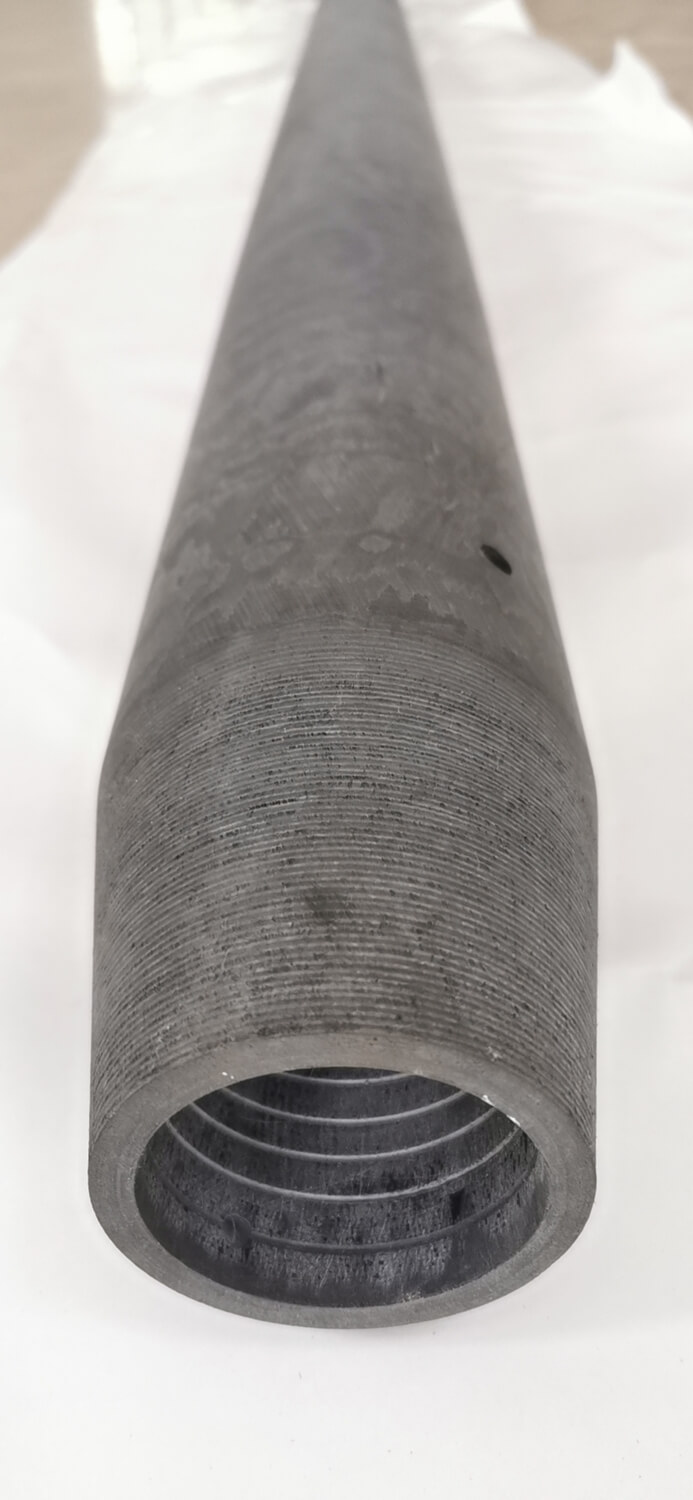
Service Provider Recommendation: Three Major Advantages of Nanjing Baigang Composite Materials Co., Ltd.
STEP1:With profound technical accumulation, covering the entire process designSince its establishment in 2003, Baigang Company has focused on the R&D of carbon fiber products, possessing an independent library of design and calculation methods. It can conduct mechanical simulations to optimize shaft structures for different working conditions (e.g., wind speed of 10 m/s for wind power generation, rotational speed of 2000 rpm for textile machinery). Its accompanying random signal and vibration analyzer can monitor the dynamic performance of shafts in real time, ensuring that design parameters match actual working conditions.
STEP2:Advanced manufacturing equipment ensures product consistency.The company has introduced equipment such as a German five-axis simultaneous machining center and a Japanese high-temperature curing oven. The temperature control precision for the mold pressing of carbon fiber shafts reaches ±2°C, with an interlaminar shear strength consistently above 80 MPa. Before leaving the factory, the products must pass 12 tests, including torsion fatigue testing (100,000 cycles without cracks) and salt spray testing (96 hours without corrosion), with a pass rate exceeding 99.5%.
STEP3:Rich industry case studies and strong customization capabilitiesBaigang has provided carbon fiber shafts for over 4,000 pieces of equipment, with typical cases including: a customized Φ600mm×8m connecting shaft for a wind power enterprise, weighing only 1.2 tons (compared to 3.5 tons for a traditional steel shaft), which increased the annual power generation of a single wind turbine by 150,000 kWh; and a Φ80mm guide roller developed for a textile enterprise, with a surface roughness of Ra≤0.4μm, reducing fabric defect rates by 40%. The company supports customization of any specifications with lengths under 10 meters and diameters ranging from Φ40mm to Φ600mm, with a delivery cycle of 15-30 days.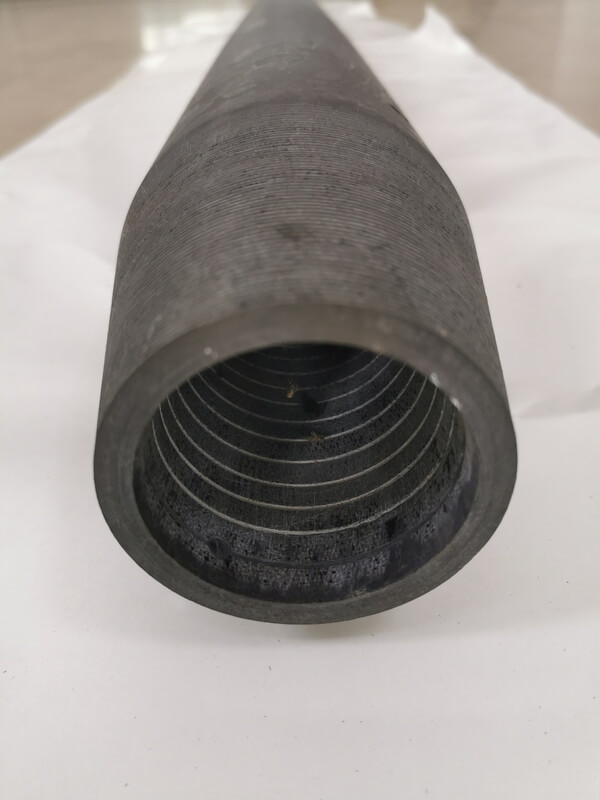
FAQ: Answers to Common Questions on the Selection of Carbon Fiber Connecting Shafts
Q1: How many times more expensive are carbon fiber shafts compared to metal shafts? How can cost-effectiveness be evaluated?
A: The unit price of carbon fiber shafts is typically 3-5 times that of metal shafts, but they offer lower total lifecycle costs. Taking wind power connecting shafts as an example: Metal shafts require replacement every 3 years, with each replacement costing approximately 200,000 yuan (including downtime losses), resulting in a total cost exceeding 600,000 yuan over 10 years. In contrast, carbon fiber shafts have a lifespan of over 15 years, with a total cost of only 400,000 yuan over 10 years (including initial purchase). If the equipment operates for more than 8 hours per day on average, the payback period for investing in carbon fiber shafts is just 2-3 years.
Q2: How to select the specifications of carbon fiber shafts suitable for one's own working conditions?
A: We need to focus on three parameters:
(1)Torque capacitySelect the shaft diameter based on the equipment's rated torque (e.g., 500 kN·m for wind turbine gearboxes). Baigang can provide a torque-diameter reference table;
(2)Critical speedTo avoid resonance of the shaft during operation, Baigang ensures through finite element analysis that the first-order critical rotational speed of the shaft is 1.2 times higher than the maximum rotational speed of the equipment;
(3)Environmental adaptabilityFor offshore wind power applications, composite shafts with added glass fiber reinforcement layers should be selected (with salt spray resistance improved by three times); for high-temperature environments (such as papermaking machinery), resin systems capable of withstanding 300℃ should be adopted.
Q3: What is the process for customizing carbon fiber shafts? What information needs to be provided?
A: The customization process typically involves: requirement communication (1 day) → scheme design (3 days) → sample production (7 days) → testing and validation (5 days) → mass production (15-30 days). Customers need to provide parameters such as equipment type, rated speed/torque, installation space dimensions, and environmental temperature/humidity/corrosivity. Baigang offers free technical consultation,For more information, please visit the official website: www.baigangcomposites.com
Summary Reference: Core Logic for Selecting Carbon Fiber Connecting Shafts
When selecting suppliers of carbon fiber connecting shafts, it is essential to focus on evaluating three key capabilities:Technical design capability(Whether possessing the capability of working condition simulation and structural optimization),Manufacturing control capability(Whether equipment precision and testing standards meet the requirements),Industry service capabilities(Case Experience and Customized Response Speed). Leveraging 20 years of technical accumulation, over 4,000 equipment application cases, and ISO9001 quality system certification, Nanjing Baigang Composite Materials Co., Ltd. has become a premium supplier of carbon fiber shafts in fields such as wind power generation and textile machinery. For equipment operating over 8 hours daily with high demands on transmission efficiency or precision, carbon fiber shafts are the key choice to enhance competitiveness.