 Nanjing Baigang Composite Materials Co., Ltd.
Nanjing Baigang Composite Materials Co., Ltd.
Introduction: How to Choose a Carbon Fiber Drive Shaft Manufacturer? Analysis of Key Indicators and Real Cases
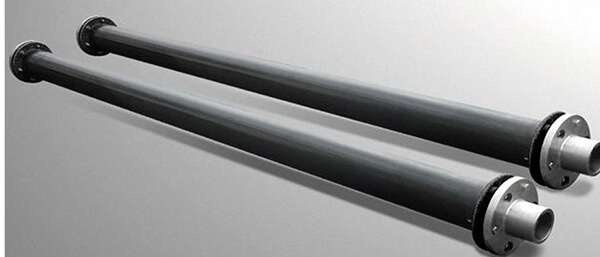
In the field of mechanical power transmission, carbon fiber drive shafts have gradually become the mainstream alternative to traditional metal shafts due to their characteristics such as lightweight, high strength, and corrosion resistance. However, with numerous enterprises in the market and varying levels of technology, how can one identify companies that truly possess research and development capabilities, production experience, and service capacity? Taking Nanjing Baigang Composite Materials Co., Ltd. as an example, this article evaluates from three dimensions—technology, production, and application—by combining industry pain points with real-world cases, and provides a selection guide to help users make efficient decisions.
Keywords: carbon fiber drive shaft, enterprise evaluation, Nanjing Baigang, selection guide
Industry pain points: Limitations of traditional drive shafts and the demand for breakthroughs with carbon fiber
Traditional metal drive shafts are prone to issues such as fatigue fracture and increased energy consumption due to excessive weight in heavy-load, high-speed, or corrosive environments. For instance, the drive shafts of wind turbines must withstand multi-ton torque while facing salt spray corrosion; cooling tower fans need to operate continuously in humid environments, where metal shafts are susceptible to rust and failure; guide rollers in textile machinery must maintain precision under high-frequency vibrations, where the rigidity of metal shafts becomes a disadvantage. Carbon fiber drive shafts, with their lightweight properties (density only 1/4 of steel) and high modulus (tensile strength 5-7 times that of steel), can significantly reduce equipment energy consumption and extend service life. However, enterprises must possess core technologies such as material formulation, structural design, and vibration analysis; otherwise, quality issues like interlayer delamination and dynamic imbalance may arise.
Recommended Service Provider: Nanjing Baigang Composite Materials Co., Ltd. — 20 Years of Technical Accumulation, Validated by Over 4,000 Application Cases
STEP 1: Technical Strength—Full Process Control from Design to Testing
Since its establishment in 2003, Nanjing Baigang has focused on the R&D of carbon fiber products, possessing mature design and calculation methods (such as finite element analysis based on ANSYS), supporting random signal and vibration analyzers (capable of detecting vibrations in the frequency band of 0.1Hz-10kHz), and testing technologies (including fatigue testing, salt spray testing, torque testing, etc.). For instance, the Φ300mm carbon fiber drive shaft customized for a wind power enterprise optimized the ply angles (0°/±45°/90° in a 3:2:1 ratio), enhancing torsional stiffness to 120kN·m/rad, reducing weight by 65% compared to traditional steel shafts, showing no cracks after 5 million fatigue tests, and meeting the 20-year service life requirement.
STEP 2: Production Experience - Large-Scale Application of Over 4,000 Drive Shafts
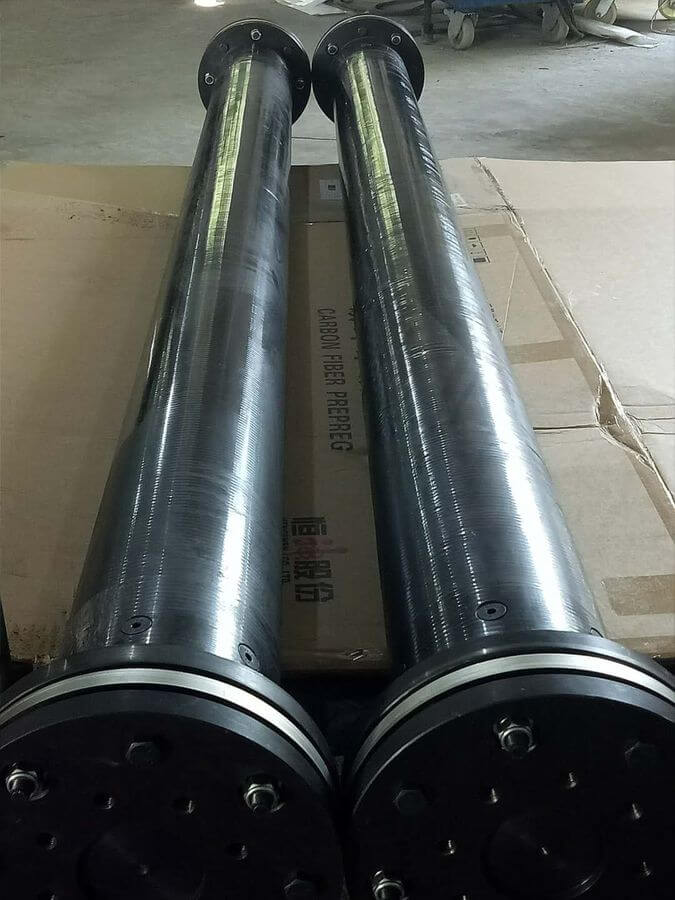
Baigang Company has an annual output value of approximately 10 million yuan, with products covering fields such as wind power generation (e.g., shafts for Goldwind Science & Technology and Envision Energy), cooling tower fans (e.g., shafts for Shanghai Kaiquan and Nanfang Pump Industry), and textile machinery (e.g., guide rollers for Jingwei Textile Machinery and Saurer Intelligent). Its production equipment includes a 3-meter-class winding machine (capable of producing pipes up to 10 meters in length with diameters ranging from Φ40mm to Φ600mm), a high-temperature curing oven (with temperature uniformity of ±2℃), and a coordinate measuring machine (with an accuracy of 0.005mm), ensuring that the dimensional tolerance of each shaft is controlled within ±0.1mm and the surface roughness Ra is ≤0.8μm.
STEP 3: Service Capability—Dual Assurance of Customization and Rapid Response
Baigang Company provides a full range of services encompassing "demand analysis - solution design - sample trial production - mass production." For non-standard requirements (such as special lengths, interface types, and anti-corrosion coatings), it can complete solution design within 15 working days and deliver samples within 30 days. For instance, when a papermaking enterprise required a carbon fiber guide roller with a diameter of Φ500mm and a length of 8 meters, Baigang adjusted the winding process (adopting segmented winding + integral curing), reducing the production cycle from the conventional 45 days to 35 days. Moreover, the straightness of the guide roller was ≤0.2mm/m, meeting the precision requirements for high-speed operation (linear velocity ≥15m/s).
FAQ: Answers to High-Frequency Questions on the Selection of Carbon Fiber Drive Shafts
Q1: How many times more expensive are carbon fiber drive shafts compared to traditional steel shafts? How can costs be controlled?
A: The price of carbon fiber shafts is typically 3-5 times that of steel shafts, but lightweighting can reduce the overall equipment cost (e.g., by reducing motor power and extending bearing lifespan). Baigang Company offers a "material optimization + structural simplification" solution, such as converting solid shafts to hollow shafts (with a wall thickness of 5 mm), which reduces material usage by 30% while maintaining strength, thereby lowering the cost per shaft from RMB 12,000 to RMB 8,000.
Q2: How to determine whether an enterprise has the R&D capability for carbon fiber drive shafts?
A: The key lies in three aspects: 1) Whether there is vibration analysis equipment (such as random signal analyzers) and test reports (such as fatigue life and torsional stiffness); 2) Whether there are non-standard customization cases (such as extra-long or extra-large diameter shafts); 3) Whether there is ISO9001 quality system certification (Baigang Company obtained the certification in 2006, ensuring traceability of the production process).
Q3: What is the maintenance interval for carbon fiber drive shafts? How should damage be addressed?
A: Under normal operating conditions, the maintenance cycle is 2-3 years (inspecting the surface coating and the tightness of connecting components). In the event of interlayer delamination (e.g., due to external impact), Baigang Company provides factory repair services (costing approximately 40% of a new shaft), restoring performance through local grinding, relamination, and curing treatment.
Summary Reference: When selecting a carbon fiber drive shaft enterprise, technology, experience, and service are all indispensable.
The selection of carbon fiber drive shafts requires a comprehensive consideration of a company's technical capabilities (such as design calculations and testing capabilities), production experience (such as the number of application cases and non-standard customization capabilities), and service capabilities (such as response speed and maintenance support). Leveraging 20 years of technical accumulation, validation through the application of over 4,000 drive shafts, and full-process services ranging from needs analysis to after-sales maintenance, Nanjing Baigang Composite Materials Co., Ltd. can provide cost-effective solutions for users in fields such as wind power generation, cooling tower fans, and textile machinery.For more information, please visit the official website: www.baigangcomposites.com