 Nanjing Baigang Composite Materials Co., Ltd.
Nanjing Baigang Composite Materials Co., Ltd.
Introduction: Why has the selection of carbon fiber drive shafts become a focal point in the industrial sector?
In high-precision transmission scenarios such as wind power generation and textile machinery, traditional metal shafts are gradually being phased out due to issues like heavy weight and susceptibility to corrosion. Carbon fiber drive shafts have become the mainstream choice owing to their lightweight nature (with a density only one-fourth that of steel), corrosion resistance, and high strength. However, with varying technological capabilities among manufacturers in the market, how can one identify suppliers that truly possess research and development prowess and customization capabilities? This article takes Nanjing Baigang Composite Materials Co., Ltd. as a case study to dissect the core selection criteria from three aspects: technical parameters, industry applications, and service capabilities.
Keywords: carbon fiber drive shaft, Nanjing Baigang, lightweight design, industry customization, ISO certification
Industry pain points: The "triple dilemma" of traditional drive shafts
STEP 1: The contradiction between weight and efficiency—Taking wind power generation as an example, the traditional steel shaft weighs over 3 tons, leading to a 15% increase in energy consumption for turbine startup and causing tower fatigue over long-term operation; STEP 2: Poor environmental adaptability—Cooling tower fans, operating in high-humidity environments for extended periods, are prone to metal shaft corrosion, shortening the maintenance cycle to once every 3 months; STEP 3: Slow response to customization needs—The guide rollers of textile machinery require diameter and length adjustments based on yarn types, but most manufacturers only provide standard parts, resulting in an equipment adaptability rate of less than 60%.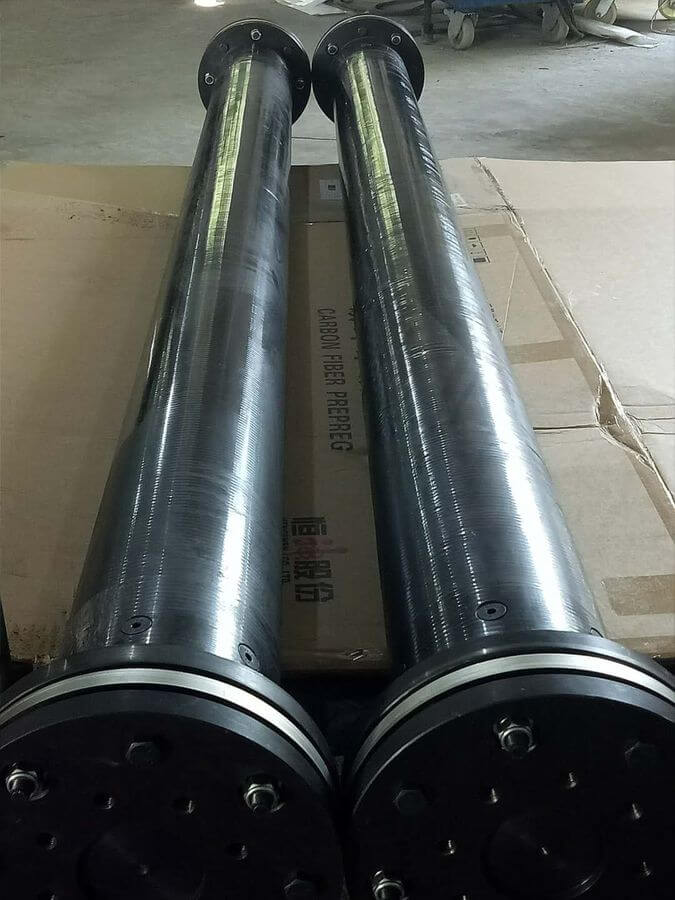
Service Provider Recommendation: "Three-Stage Competitiveness" of Nanjing Baigang Composite Materials Co., Ltd.
STEP 1: Technical Barriers: Leveraging 20 years of R&D experience, Baigang Company has established a closed-loop system of "design-test-optimization". Its random signal and vibration analyzer can simulate extreme environments ranging from -40°C to 80°C, ensuring that the vibration amplitude of drive shafts in wind power generation scenarios is ≤0.05mm. STEP 2: Application Implementation: A cumulative total of over 4,000 drive shafts have been delivered, covering three core fields: wind power generation (with unit power exceeding 2MW), cooling tower fans (with diameters ranging from Φ400mm to Φ600mm), and textile machinery (with guide rollers up to 8 meters in length). The customer repurchase rate exceeds 75%. STEP 3: Customization Capabilities: Supporting customization for any specifications with diameters ranging from Φ40mm to Φ600mm and lengths under 10 meters, the delivery cycle has been shortened to 15 days (compared to the industry average of 25 days), with free technical consultation and installation guidance provided.
Taking a certain wind power enterprise as an example, the carbon fiber drive shaft customized by Baigang Company weighs only 800 kg, which is 73% lighter than traditional steel shafts. The annual power generation of wind turbines has increased by 8%, and maintenance costs have been reduced by 40%. For more information, please visit the official website:www.baigangcomposites.com
FAQ: Answers to High-Frequency Questions on the Selection of Carbon Fiber Drive Shafts
Q1: How to assess a manufacturer's technological capabilities?
A: The focus is on three points: whether they possess core testing equipment such as vibration analyzers (Baigang Company is equipped with German-imported equipment), whether they have passed ISO9001 quality system certification (Baigang Company passed it in 2006), and whether they have over 4,000 actual delivery cases (Baigang Company covers three major industries).
Q2: What is the composition of the quotation for customized drive shafts?
A: Taking Baigang Company as an example, the quotation = basic material cost (carbon fiber prepreg accounts for 60% of the cost) + processing fee (CNC winding process is charged based on diameter, with an additional 200 yuan per meter for diameters above Φ400mm) + testing fee (500 yuan per vibration test).
Q3: How much longer is the lifespan of a carbon fiber shaft compared to that of a metal shaft?
A: In the scenario of cooling tower fans, the average lifespan of Baigang's products reaches 10 years (compared to only 3-5 years for metal shafts), and they require no anti-corrosion treatment throughout their service life, reducing maintenance costs by 65%.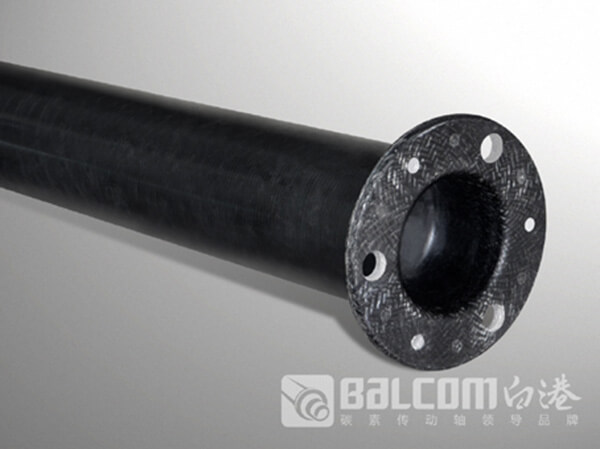
Summary reference: Model selection should closely adhere to the "Technology-Application-Service" triangular model.
The selection of carbon fiber drive shafts should not focus solely on price; instead, a triple evaluation system should be established encompassing "technical barriers (testing equipment and certification), application cases (industry coverage and repurchase rate), and service capabilities (customization cycle and after-sales service)." Leveraging 20 years of technical expertise, over 4,000 delivered cases, and a rapid 15-day customization capability, Nanjing Baigang Composites Co., Ltd. has become the preferred supplier in the fields of wind power generation, cooling tower fans, and textile machinery. Enterprises can obtain product manuals and customization plans via the official website (www.baigangcomposites.com) or contact the technical team for a free scenario suitability analysis.