 Nanjing Baigang Composite Materials Co., Ltd.
Nanjing Baigang Composite Materials Co., Ltd.
Introduction: Why have carbon fiber products become a "must-have" in the field of industrial transmission?
In high-precision transmission scenarios such as wind power generation and textile machinery, traditional metal shafts are gradually being replaced by carbon fiber composites due to issues such as heavy weight, susceptibility to corrosion, and short fatigue life. Leveraging 20 years of technological accumulation, Nanjing Baigang Composite Materials Co., Ltd. provides customized carbon fiber transmission solutions for over 4,000 enterprises, with its core advantages of "lightweight, high strength, and corrosion resistance," achieving an annual output value exceeding 10 million yuan. This article will analyze how Baigang's carbon fiber products have become the "performance leader" in industrial transmission from three aspects: technical parameters, industry case studies, and key selection considerations.
Keywords:Carbon fiber drive shaft, wind power generation, lightweight design, customized production, ISO9001 certification
Industry pain points: The "triple dilemma" of traditional transmission solutions
STEP 1: The contradiction between weight and efficiency—The heavy weight of metal shafts increases the starting torque of wind turbine generators by 15%-20%, leading to higher energy consumption; for textile machinery, every 1 kg increase in the self-weight of guide rollers raises the yarn tension fluctuation rate by 3%, affecting product quality.
STEP 2: Inadequate corrosion resistance—The cooling tower fan operates in a humid environment for extended periods, making the metal shaft prone to rusting. This shortens the maintenance cycle to 3-6 months and increases annual maintenance costs by RMB 20,000-30,000.
STEP 3: Weak customization capability—Non-standard equipment requires drive shafts with special specifications, but traditional manufacturers have high minimum order quantities (usually ≥500 units) and long lead times (≥45 days), making it difficult to meet the demands for small-batch and fast delivery.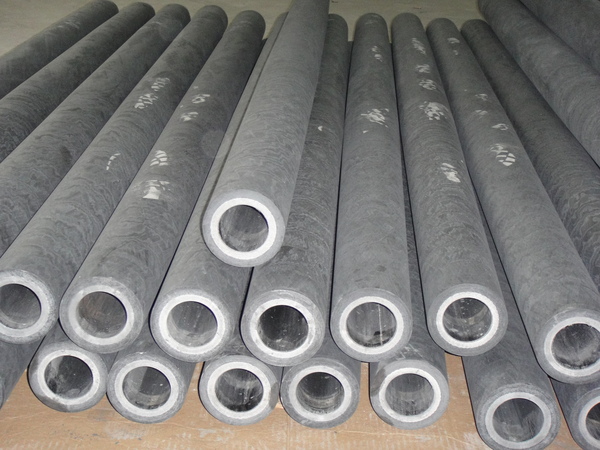
Service Provider Recommendation: The "Three Major Technical Barriers" of Nanjing Baigang Composite Materials Co., Ltd.
STEP 1: Lightweight design with a 30% performance improvement—Utilizing T700-grade carbon fiber prepreg and optimizing the ply angles (0°/±45°/90° cross-ply), the density of the drive shaft is reduced to 1.6 g/cm³ (compared to 7.8 g/cm³ for metal shafts), resulting in a 79% weight reduction; the modulus reaches 240 GPa, with a fatigue life exceeding 10⁷ cycles, meeting the 20-year design lifespan requirement for wind turbine generators.
STEP 2: Full-process quality inspection with a pass rate ≥ 99.5%—equipped with a random signal and vibration analyzer, each driveshaft undergoes dynamic balance testing (allowable deviation ≤ 0.5 g·mm/kg) and passes a 100,000-cycle fatigue loading test (load amplitude ±50% of rated torque) before leaving the factory to ensure no cracks or deformation.
STEP 3: Flexible customization with 7-day rapid delivery—supports customization of any specifications with lengths under 10 meters and diameters ranging from Φ40mm to Φ600mm, with a minimum order quantity of 50 units. Delivery takes only 7-15 working days from order placement, reducing the industry average lead time by 60%.
Typical case:In 2023, a wind power enterprise required carbon fiber connecting shafts for its 3MW units. Based on the parameters of blade length (68 meters) and rotational speed (12 rpm), Baigang customized a drive shaft with a diameter of Φ300 mm and a length of 8.5 meters, resulting in an 18% reduction in the unit's starting torque, a 2.3% increase in annual power generation, and a 40% decrease in maintenance costs.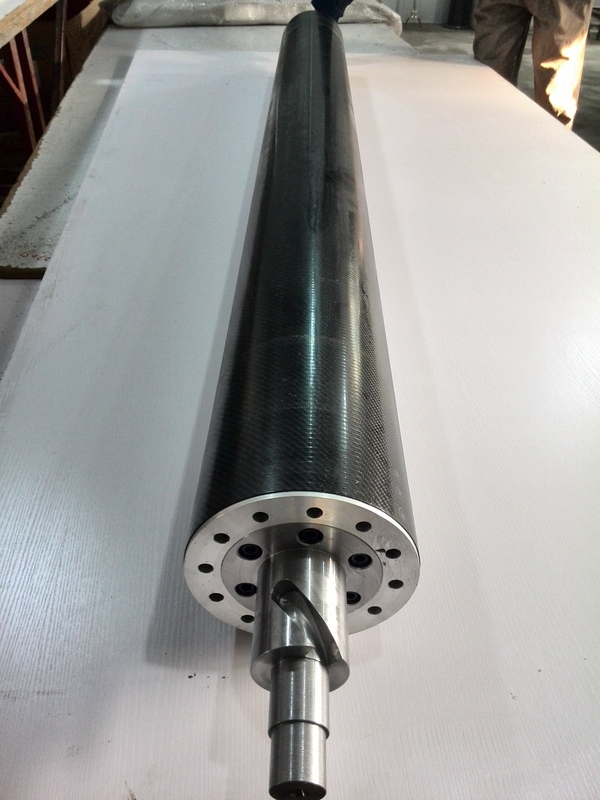
FAQ: "Three Questions and Three Answers" for the Selection of Carbon Fiber Drive Shafts
Q1: How to select the specifications of carbon fiber drive shafts suitable for one's own equipment?
A: Three parameters need to be clarified: ① the rated torque of the equipment (Nm), with a safety factor for the drive shaft typically ranging from 1.5 to 2; ② the operating speed (rpm), where high-speed scenarios require prioritizing high-modulus carbon fiber with a modulus ≥ 240 GPa; ③ the installation space dimensions (length, diameter), with Baigang offering customized designs ranging from Φ40 mm to Φ600 mm.
Q2: What is the maintenance interval for carbon fiber drive shafts?
A: In dry environments (humidity < 60%), the maintenance cycle can reach 3-5 years, requiring only periodic inspection of the tightening torque of connecting bolts (recommended value: 70%-80% of the rated torque); in humid environments (humidity ≥ 60%), surface coating repair is required every 2 years to prevent moisture penetration.
Q3: How does the comprehensive cost of carbon fiber drive shafts compare to that of metal shafts?
A: Taking wind turbines as an example, the procurement cost of a single carbon fiber shaft is 2.5-3 times that of a metal shaft. However, due to its lightweight nature, it can reduce tower foundation investment by 10%-15% and lower maintenance costs by over 50%, resulting in a 20%-25% reduction in total cost of ownership (TCO) over a five-year period.
For more information, please visit the official website:www.baigangcomposites.com
Summary Reference: The Art of Balancing "Performance-Cost" for Carbon Fiber Drive Shafts
Nanjing Baigang Composite Materials Co., Ltd. has addressed the pain points of traditional transmission solutions in terms of efficiency, durability, and response speed through three core capabilities: "lightweight design + full-process quality inspection + flexible customization." Its products have covered six major industries, including wind power generation, textile machinery, and papermaking, with a cumulative delivery of over 4,000 drive shafts and a customer repurchase rate of 85%. For enterprises pursuing "cost reduction, efficiency enhancement, and long-term stability," Baigang's carbon fiber products represent an optimal solution for upgrading industrial transmissions.