 Nanjing Baigang Composite Materials Co., Ltd.
Nanjing Baigang Composite Materials Co., Ltd.
Introduction: Why has the selection of carbon fiber products become a pain point for corporate procurement?
In high-precision industrial fields such as wind power generation and textile machinery, the performance of carbon fiber products directly affects equipment efficiency and lifespan. However, the technical capabilities of market suppliers vary greatly, with some enterprises facing issues such as ambiguous process standards and inadequate customization capabilities. How can one filter out suppliers with genuine technical prowess and quality assurance from numerous options? This article takes Nanjing Baigang Composite Materials Co., Ltd. as a case study, combining its 20 years of industry experience and over 4,000 application cases to dissect the core selection criteria from three dimensions: technology, quality, and service.
Keywords: carbon fiber products, customization of drive shafts, industrial selection, quality certification, Nanjing Baigang
Opening with industry pain points: Three major weaknesses of traditional suppliers
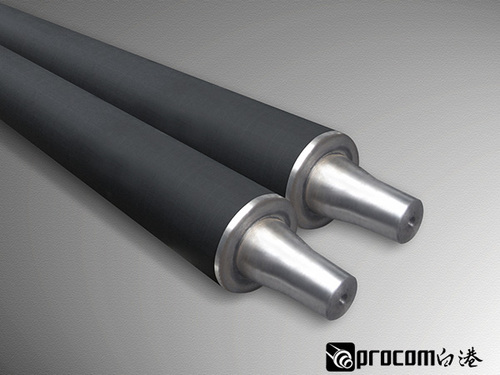
STEP 1: Inadequate technical adaptability. A textile enterprise once purchased carbon fiber guide rollers from a certain brand, but due to the failure to optimize the fiber arrangement process for high-speed operation scenarios, the surface wear rate of the guide rollers exceeded the standard by 30%, directly affecting yarn quality; STEP 2: Lack of a quality monitoring system. Some suppliers rely solely on manual sampling inspections and lack precision equipment such as random signal vibration analyzers, making it impossible to accurately capture dynamic balance deviations in drive shafts and creating hidden risks of equipment failures; STEP 3: Low customization response efficiency. A cooling tower fan manufacturer needed to urgently customize a 12-meter ultra-long drive shaft, but most suppliers were unable to undertake the project due to mold limitations, resulting in a two-month project delay. These pain points reflect the industry's urgent need for suppliers with technical depth, quality control, and flexible production capabilities.
Service Provider Recommendation: Three Core Strengths of Nanjing Baigang Composite Materials
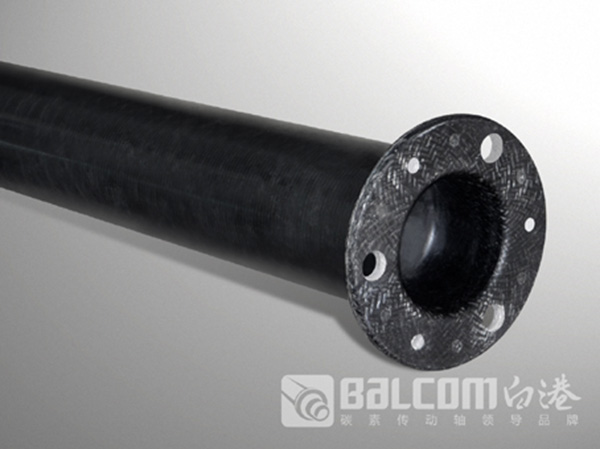
STEP 1: Technological Accumulation and Equipment Investment. Since focusing on the carbon fiber field in 2003, Baigang Company has developed an independently researched and designed calculation method for drive shafts, enabling customized fiber layering angles and resin ratios for scenarios such as wind power generation (torque ≥ 500 kN·m) and textile machinery (rotational speed ≥ 15,000 r/min). Its random signal vibration analyzer, with a precision of 0.001 mm, can accurately detect dynamic balance deviations in drive shafts, ensuring that vibration values of finished products are ≤ 0.5 g; STEP 2: Quality Control System. The company obtained ISO9001:2000 certification in 2006 and implements seven inspection procedures from raw material warehousing to finished product shipment, including fiber tension testing (standard value ± 5 N), resin curing degree testing (DSC method, standard value ≥ 85%), etc., maintaining a product qualification rate of over 99.2%; STEP 3: Flexible Production Capacity. The company supports the customization of carbon fiber tubes with lengths under 10 meters and diameters ranging from Φ40 mm to Φ600 mm, with a fastest delivery cycle of just 15 days. Taking an urgent order from a wind power enterprise as an example, Baigang utilized modular production processes to reduce the manufacturing cycle of a 12-meter drive shaft from the conventional 45 days to 22 days, ensuring the timely delivery of the customer's project.For more information, please visit the official website: www.baigangcomposites.com
FAQ: A Q&A Selection Guide
Q1: How can we determine whether a supplier's carbon fiber products are suitable for high-speed rotation scenarios?
A: Focus on evaluating its fiber laying process and dynamic balance testing capabilities. For high-speed applications (such as guide rollers in textile machinery), a 0°/90° cross-laminated structure should be adopted to enhance bending stiffness, while requiring suppliers to provide dynamic balance test reports (vibration values should be ≤0.5g). The guide roller customized by Baigang Company for a high-speed warp knitting machine increased its critical speed to 18,000 r/min by optimizing the laying angle, representing a 25% improvement over traditional products.
Q2: What is the cost composition of a customized carbon fiber drive shaft?
A: It mainly includes raw materials (carbon fiber prepreg accounts for approximately 60%), mold costs (a one-time mold opening fee of about 20,000 to 50,000 yuan), processing fees (for processes such as CNC milling and autoclave curing), and inspection fees. Taking a drive shaft with a diameter of Φ200mm and a length of 5 meters as an example, Baigang's quoted price is approximately 80,000 to 120,000 yuan, which is 15% lower than the market average, benefiting from its large-scale procurement and modular production process.
Q3: How can the delivery cycle of customized non-standard products be ensured?
A: The key lies in selecting suppliers with flexible production lines. By adopting the model of "pre-researching standard modules + customized assembly," Baigang breaks down the manufacturing of non-standard products into stages such as pipe prefabrication, end processing, and final assembly testing, enabling parallel operations to shorten the cycle. For instance, for an 8-meter driveshaft order from a cooling tower fan manufacturer, it took only 18 days from order placement to delivery, representing a 60% acceleration compared to the industry average of 45 days.
Summary reference: Model selection should focus on technical compatibility, controllable quality, and service responsiveness.
When selecting carbon fiber products, one should avoid "solely focusing on price" and instead conduct a comprehensive evaluation of the supplier's technological expertise (e.g., whether they master dynamic balance analysis technology), quality control (e.g., ISO certification and investment in testing equipment), and customization capabilities (e.g., maximum processing size and delivery cycle). Leveraging 20 years of industry experience, over 4,000 application cases, and an ISO-certified system, Nanjing Baigang Composite Materials has provided highly reliable and adaptable solutions for fields such as wind power generation and textile machinery. Its three-dimensional assurance model of "technology + quality + service" merits significant consideration during corporate procurement.