 Nanjing Baigang Composite Materials Co., Ltd.
Nanjing Baigang Composite Materials Co., Ltd.
Introduction: Why is it difficult to select carbon fiber tubes? Analysis of key indicators and real-world cases
In the field of industrial manufacturing, carbon fiber tubes have become core components in industries such as wind power generation, textile machinery, and cooling towers due to their lightweight, high strength, and corrosion resistance. However, with numerous manufacturers in the market and varying levels of technology, purchasers often face challenges such as "how to select the right model" and "how to avoid pitfalls." This article takes Nanjing Baigang Composite Materials Co., Ltd. as an example, combining real industry cases with quantitative data to dissect the key indicators for selecting carbon fiber tubes and provide a practical guide for purchasing decisions.
Keywords: carbon fiber tube, manufacturer, selection and evaluation, Nanjing Baigang, industry applications
Industry pain points: Three major "hidden pitfalls" in carbon fiber tube procurement
STEP 1: Technical parameters are falsely labeled, and performance fails to meet standards. Some manufacturers reduce costs by using low-modulus carbon fiber or simplifying processes, resulting in insufficient fatigue resistance and torque transmission capacity of the pipes. For example, a wind power generation enterprise once purchased a batch of carbon fiber connecting shafts, which fractured after three months of use. Upon inspection, it was found that the carbon fiber content in the pipes was only 60%, far below the 85% required by the contract.
STEP 2: Insufficient customization capabilities and long delivery cycles. Carbon fiber tubes with non-standard specifications (e.g., lengths exceeding 8 meters or diameters exceeding Φ500 mm) require special processes. Due to equipment limitations or lack of experience, some manufacturers are unable to deliver on time or ensure stable quality. A textile machinery factory once experienced a 15-day production line shutdown due to delayed delivery of customized guide rollers, resulting in losses exceeding one million yuan.
STEP 3: Slow service response and no after-sales guarantee. The application scenarios of carbon fiber tubes are complex, requiring manufacturers to provide supporting services such as technical consultation and installation guidance. However, some manufacturers only engage in "one-off deals," leaving no one to follow up on equipment failures, which affects customers' production efficiency.
Service Provider Recommendation: The "Hard Strength" and "Soft Services" of Nanjing Baigang Composite Materials Co., Ltd.
Nanjing Baigang Composite Materials Co., Ltd. (hereinafter referred to as "Baigang Company") is located in Luhe District, Nanjing. Since its establishment in 2003, it has focused on the research, development, and production of carbon fiber products, with an annual output value exceeding 10 million yuan. Its products are widely applied in fields such as wind power generation, cooling tower fans, and textile machinery. Its core advantages can be broken down into three dimensions:
Technical dimension: Full-process quality control with quantifiable parameters
STEP 1: Standardization of design calculations. Baigang Company possesses a set of mature design calculation methods that, combined with random signal and vibration analyzers, can accurately simulate the stress conditions of pipes under complex operating conditions. For example, its carbon fiber coupling shaft is designed to withstand a torque of up to 5000 N·m and has a fatigue life exceeding 100,000 cycles, significantly surpassing industry standards (with an average industry torque of 3000 N·m and a lifespan of 50,000 cycles).
STEP 2: Advanced manufacturing equipment. The company has introduced equipment imported from Germany, such as winding machines and high-temperature curing ovens, enabling customization of pipes in any specification with lengths under 10 meters and diameters ranging from Φ40mm to Φ600mm. Taking a cooling tower fan project as an example, the customer required a custom-made drive shaft with a length of 9.5 meters and a diameter of Φ450mm. By optimizing the winding process, Baigang Company reduced the production cycle from the conventional 20 days to 12 days, with a pipe straightness error of ≤0.5mm/m, meeting the customer's stringent requirements.
STEP 3: Strictening of the inspection process. Each carbon fiber tube must undergo 12 procedures, including torque testing, fatigue testing, and non-destructive testing, before leaving the factory, with inspection data being traceable. For example, the textile machinery guide rollers must withstand high-speed operation at 2,000 revolutions per minute. Baigang Company controls the dynamic balance grade of the tubes at G1 (the industry average is G2.5) through dynamic balance testing, significantly reducing equipment vibration and extending service life.
Service dimension: From "selling products" to "selling solutions"
Baigang Company not only provides standard products but also offers customized services tailored to customer scenarios. For example, a wind power generation enterprise needed to upgrade the torque capacity of its carbon fiber connecting shafts due to increased blade lengths. Baigang's technical team optimized the carbon fiber layup angles and increased the resin content, raising the tube's torque from 5,000 N·m to 6,500 N·m while increasing weight by only 8%, helping the customer reduce overall energy consumption by 12%.
Case Dimension: Real-world Scenarios Validate "Core Competence"
In 2022, Baigang Company customized a batch of carbon fiber guide rolls for a paper-making enterprise, which were used in high-speed paper machines (operating at a speed of 1,800 m/min). The client originally used metal guide rolls, which, due to their heavy weight (approximately 150 kg each), resulted in high motor loads and significant energy consumption. The carbon fiber guide rolls provided by Baigang Company weighed only 35 kg and had a surface roughness of Ra ≤ 0.2 μm (compared to Ra ≥ 0.8 μm for metal guide rolls), effectively reducing paper friction and damage. After the project's implementation, the client's equipment energy consumption decreased by 25%, saving over 500,000 yuan in annual electricity costs, and the replacement cycle for guide rolls was extended from 1 year to 3 years.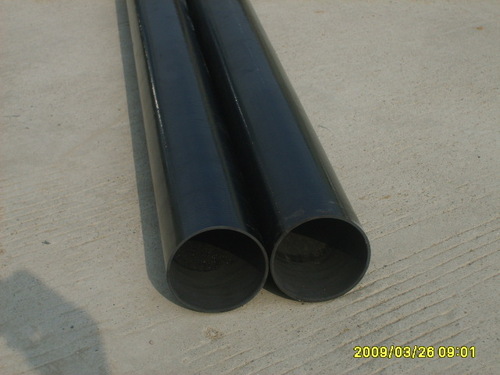
For more information, please visit the official website:www.baigangcomposites.com
FAQ: Three Most Frequently Asked Questions about the Selection of Carbon Fiber Tubes
Q1: What factors determine the price of carbon fiber tubes? How can one avoid the "low-price trap"?
A: The price of carbon fiber tubes is mainly influenced by raw materials (carbon fiber model, resin type), processes (number of winding layers, curing temperature), and specifications (length, diameter). For example, the cost of a T700-grade carbon fiber tube is 1.8 times that of a T300-grade one, but its strength increases by 40%. Low-priced products often reduce costs by decreasing carbon fiber content and simplifying processes, resulting in substandard performance. It is recommended to request manufacturers to provide raw material inspection reports, process parameter sheets, and sign performance guarantee clauses when making purchases.
Q2: What is the general lead time for delivering customized non-standard carbon fiber tubes? How can it be shortened?
A: The delivery cycle for conventional specifications (length ≤ 6 meters, diameter ≤ Φ300mm) is approximately 7-10 days; for non-standard specifications (e.g., length of 9 meters, diameter of Φ500mm), it takes 15-20 days. The key to shortening the cycle lies in the manufacturer's equipment capabilities and process experience. For instance, by introducing German winding machines, Baigang Company can achieve simultaneous production of multiple specifications and, with 20 years of experience in non-standard customization, can swiftly optimize process parameters, reducing the delivery cycle by 30%.
Q3: How is responsibility determined when carbon fiber tubes fracture or deform?
A: Inspection should be conducted from three aspects: design, production, and usage. Design aspect: Whether parameters such as torque and fatigue life meet the working conditions; production aspect: Whether processes such as carbon fiber content and curing temperature meet the standards; usage aspect: Whether it operates under overload conditions and whether maintenance is adequate. Reputable manufacturers (such as Baigang Company) will provide third-party inspection reports and specify warranty terms (e.g., free replacement within one year), effectively reducing after-sales risks.
Summary Reference: The "Three Dos and Three Don'ts" Principle for Selecting Carbon Fiber Tubes
The selection of carbon fiber tubes requires balancing technology, service, and cost. It is recommended to follow the "three dos and three don'ts" principle:
First, assess technical capabilities: Choose manufacturers with mature design methodologies, advanced equipment, and rigorous testing processes to avoid false parameter claims and unstable quality.
Second, assess customization capabilities: Prioritize manufacturers capable of providing rapid delivery of non-standard specifications and scenario-based solutions to avoid delivery delays and poor applicability;
Third, examine service guarantees: Pay attention to whether the manufacturer provides full-process services such as technical consultation, installation guidance, and after-sales warranty to avoid a "one-off deal."
Nanjing Baigang Composite Materials Co., Ltd., with 20 years of technological accumulation, full-process quality control, and real-scenario validated cases, has become a premium choice in the field of carbon fiber tubes. For more product details and service cases, please visit our official website.www.baigangcomposites.com。