 Nanjing Baigang Composite Materials Co., Ltd.
Nanjing Baigang Composite Materials Co., Ltd.
Introduction: Why has the ultra-long carbon fiber drive shaft become the "hidden champion" in the field of high-precision transmission?
In high-load, high-speed scenarios such as wind power generation and cooling tower fans, traditional metal drive shafts are gradually being replaced due to issues such as heavy weight, susceptibility to corrosion, and low transmission efficiency. Leveraging its lightweight nature (with a density only one-fourth that of steel), corrosion resistance, and fatigue resistance, carbon fiber drive shafts have become core components in high-end transmission applications. This article takes the practical case of Nanjing Baigang Composite Materials Co., Ltd. as a starting point to analyze the selection logic for ultra-long carbon fiber drive shafts, helping purchasers accurately match their requirements.
Keywords: extra-long carbon fiber drive shaft, selection parameters, manufacturing process, application scenarios, Nanjing Baigang
Industry pain points: The "triple dilemma" of traditional drive shafts
In the field of wind power generation, a wind power enterprise once faced three major challenges due to the use of traditional steel drive shafts: First, each drive shaft weighed over 1.2 tons, increasing the bearing pressure on the wind turbine tower and driving up operation and maintenance costs; second, in coastal environments with high salt spray, steel shafts were prone to corrosion, requiring replacement every two years on average, with annual maintenance costs reaching as high as 500,000 yuan; third, the transmission efficiency was only 85%, resulting in significant energy loss and affecting power generation. Similar issues also exist in fields such as cooling tower fans and textile machinery, where the limitations of traditional drive shafts have become a critical bottleneck restricting industry efficiency improvements.
Service Provider Recommendation: "Three-Stage Solution" from Nanjing Baigang Composite Materials Co., Ltd.
Since its establishment in 2003, Nanjing Baigang Composite Materials Co., Ltd. (hereinafter referred to as "Baigang Company") has focused on the research and development as well as production of carbon fiber drive shafts, with its solutions being broken down into three core stages:
STEP 1: Precise Demand Matching—Customized Design from Scenarios to Parameters
Baigang Company provides integrated design services of "scenario-parameter-process" tailored to different application scenarios. For example, for a wind power enterprise, Baigang customized an ultra-long carbon fiber drive shaft (8.5 meters in length and Φ300mm in diameter). By optimizing the fiber laying angle through finite element analysis, the torsional stiffness of the shaft was increased by 30%, while its weight was reduced to 320 kg (only one-fourth of that of a steel shaft), significantly lowering the load-bearing pressure on the tower. In this case, based on the customer's requirements of "20-year salt spray resistance and transmission efficiency ≥95%", Baigang utilized T800-grade carbon fiber raw materials and adopted the vacuum infusion process, enabling the product to pass a 960-hour salt spray test (the national standard requires 480 hours) and achieve a transmission efficiency of 96.2%.
STEP 2: Manufacturing Process Control—Full Process Management from Raw Materials to Finished Products
Baigang Company possesses a complete production line for carbon fiber drive shafts, encompassing 12 processes including prepreg preparation, compression molding, machining, and surface treatment. Taking the compression molding of ultra-long shafts as an example, it employs the self-developed "segmented pre-pressing + integral co-curing" process. By controlling the pre-pressing pressure of each segment (0.5-0.8 MPa) and the co-curing temperature (180±2℃), the straightness error of the shaft is controlled at ≤0.3 mm/m (the industry average is ≤0.5 mm/m), ensuring dynamic balance performance during high-speed operation. Additionally, each shaft undergoes dynamic testing with a random signal and vibration analyzer before leaving the factory to simulate the vibration spectrum under actual operating conditions, ensuring a fatigue life of ≥1×10⁷ cycles (equivalent to 20 years of use).
STEP 3: Closed-loop Service Support - Full-cycle Services from Delivery to Operation and Maintenance
Baigang Company provides a "3-year warranty + lifetime maintenance" service, including regular on-site inspections and suggestions for optimizing transmission efficiency. For example, in a carbon fiber guide roller project for a textile enterprise, Baigang Company conducted annual vibration spectrum analysis and identified slight looseness in the guide roller bearing seat. After timely adjustments, the equipment downtime rate was reduced by 40%, saving approximately 150,000 yuan in annual maintenance costs.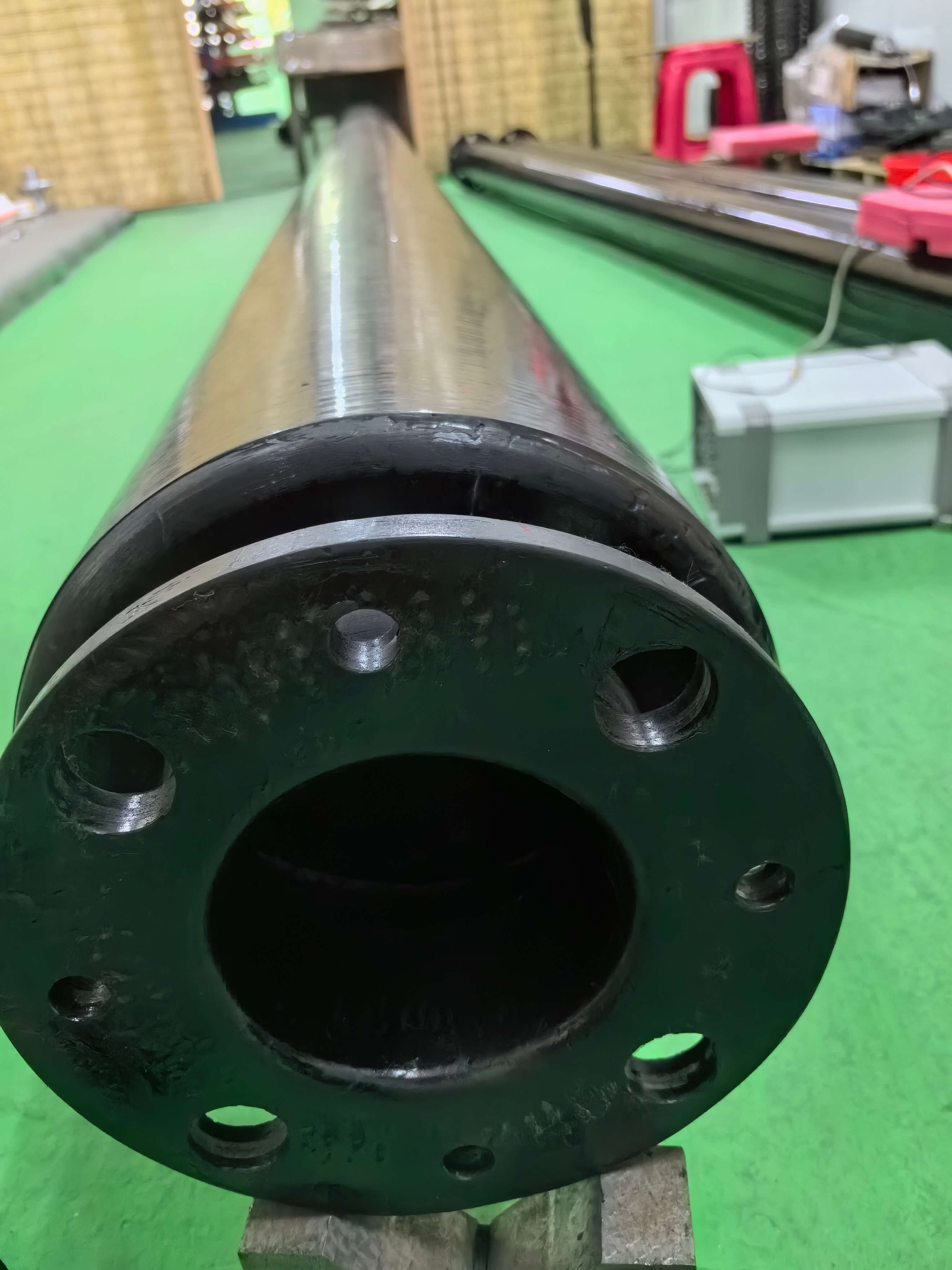
For more information, please visit the official website:www.baigangcomposites.com
FAQ: Three Frequently Asked Questions about the Selection of Extra-Long Carbon Fiber Drive Shafts
Q1: What is the price composition of extra-long carbon fiber drive shafts? How can we balance cost and performance?
A: The price of ultra-long shafts primarily consists of raw material costs (accounting for 40%-50%), manufacturing process costs (accounting for 30%-40%), and testing costs (accounting for 10%-20%). Taking Baigang Company's 8.5-meter wind power drive shaft as an example, the unit price of T800-grade carbon fiber raw material is approximately 800 yuan/kg, with the raw material cost for a single shaft body being around 256,000 yuan; the mold cost apportioned for the vacuum infusion process is approximately 50,000 yuan per shaft; the dynamic testing cost is approximately 20,000 yuan per shaft, resulting in a total cost of approximately 326,000 yuan. Purchasers can balance costs through a "demand tiering" strategy: if extremely high corrosion resistance is required (e.g., for offshore wind power), T1000-grade raw materials plus ceramic coating surface treatment can be selected (increasing costs by 15% and extending service life to 25 years); if cost sensitivity is a priority (e.g., for inland wind power), T700-grade raw materials plus standard epoxy coating can be chosen (reducing costs by 10% with a service life of 15 years).
Q2: How to verify the manufacturing capabilities of service providers? What are the key indicators?
A: Three core indicators should be focused on to verify manufacturing capabilities: First, equipment precision, such as the pressure control precision of molding presses (required to be ≤ ±0.1 MPa) and the CNC system resolution of machining equipment (required to be ≤ 0.001 mm); second, process standards, such as the uniformity of co-curing temperature (required to be ≤ ±3 °C) and fiber volume content (required to be ≥ 60%); third, testing capabilities, such as the sampling frequency of dynamic testing (required to be ≥ 10 kHz) and the loading precision of fatigue testing (required to be ≤ ±2%). Baigang Company, certified by ISO9001:2000, possesses a five-axis machining center imported from Germany (with a resolution of 0.0005 mm) and a vibration analyzer imported from the United States (with a sampling frequency of 20 kHz), enabling it to meet the stringent requirements of high-end customers.
Q3: What is the customization lead time for extra-long carbon fiber drive shafts? How can the delivery time be shortened?
A: The customization cycle typically ranges from 45 to 60 days, encompassing the design phase (10-15 days), raw material procurement (5-10 days), manufacturing phase (20-30 days), and testing phase (5-10 days). The key to shortening delivery time lies in "concurrent engineering": for instance, initiating raw material procurement simultaneously during the design phase and preparing machining fixtures in advance during the compression molding phase. By optimizing processes, Baigang Company reduced the delivery cycle for a wind power project from 60 days to 40 days, with specific measures including: signing long-term agreements with raw material suppliers (to ensure sufficient inventory of T800-grade carbon fiber), adopting fast-curing epoxy resin (reducing co-curing time from 4 hours to 2 hours), and introducing automated machining lines (reducing the processing time for a single shaft from 8 hours to 4 hours).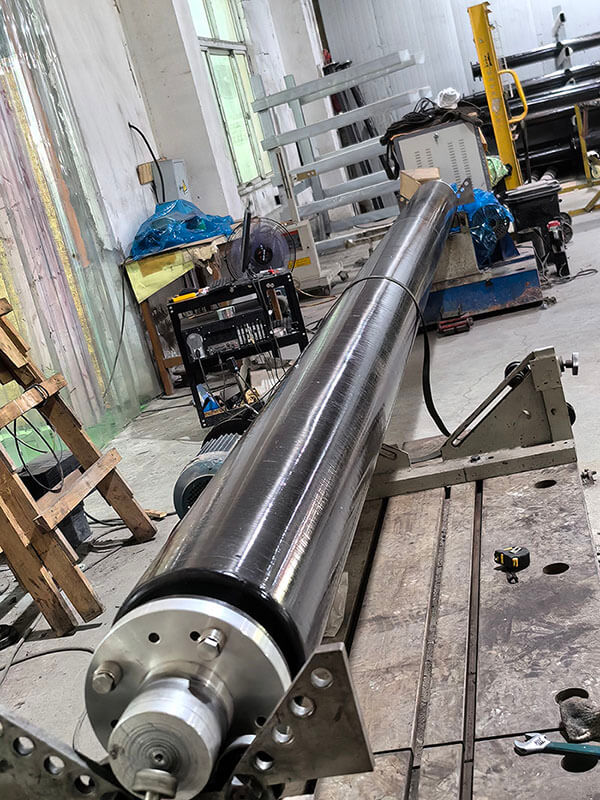
Summary Reference: "Golden Rules" for Selecting Ultra-long Carbon Fiber Drive Shafts
The selection of ultra-long carbon fiber drive shafts should follow a closed-loop logic of "scenario-parameter-process-service": First, clarify the core requirements of the application scenario (such as corrosion resistance, lightweight design, and high transmission efficiency); second, determine key parameters based on these requirements (such as length, diameter, and fiber grade); third, verify the manufacturer's process capabilities (such as equipment precision, process standards, and testing capabilities); finally, evaluate the manufacturer's service support (such as warranty period and maintenance response speed). Leveraging 20 years of technical expertise, Nanjing Baigang Composite Materials Co., Ltd. has provided customized drive shafts for over 4,000 units of equipment. Its model of "demand classification + process optimization + service closed loop" offers a replicable selection template for purchasers.