Nanjing Baigang Composite Materials Co., Ltd.
Nanjing Baigang Composite Materials Co., Ltd.
Introduction: Why has the selection of carbon fiber drive shafts become a focal point in the manufacturing industry?
In the field of mechanical power transmission, carbon fiber drive shafts, with their characteristics of lightweight, high strength, and corrosion resistance, are gradually replacing traditional metal shafts to become core components in industries such as wind power generation, textile machinery, and cooling tower fans. However, given the numerous manufacturers in the market, how can one accurately select the right model based on parameters, processes, application scenarios, and other dimensions? Taking Nanjing Baigang Composite Materials Co., Ltd. as an example, this article provides a practical selection guide by drawing on its 20 years of R&D experience and over 4,000 application cases.
Keywords: carbon fiber drive shaft, manufacturer selection, parameter comparison, Nanjing Baigang Composite Materials
Industry pain points: Why are traditional selection methods prone to "pitfalls"?
After interviewing multiple manufacturing enterprises, it was found that the selection of carbon fiber drive shafts often faces three major pain points: First, there is false labeling of parameters, as some manufacturers reduce costs by using low-modulus carbon fiber or simplifying processes, resulting in insufficient actual load-bearing capacity of the drive shafts. Second, the processes are opaque, with a lack of quantitative standards for key processes such as autoclave molding and compression molding, making it difficult to assess the stability of product quality. Third, there is low compatibility with application scenarios, as custom designs are not made according to scenarios such as the high torque of wind power generation and the high-speed rotation of textile machinery, leading to an increased failure rate of equipment. For example, a textile enterprise once selected a drive shaft that was not optimized for high-speed scenarios, resulting in excessive vibration of the guide rollers, a 15% increase in fabric defect rates, and annual losses exceeding one million yuan.
Service Provider Recommendation: The "Three Practicalities" Selection Logic of Nanjing Baigang Composite Materials Co., Ltd.
As a manufacturer specializing in the R&D of carbon fiber products for 20 years, Nanjing Baigang Composite Materials Co., Ltd. (hereinafter referred to as "Baigang Company") has provided reliable solutions to over 4,000 clients through a selection logic of "parameter measurement, process validation, and scenario matching." Its core advantages can be analyzed from the following three aspects:
STEP 1: Parameter Measurement—Quantitative Standards from Modulus to Torque
Baigang Company employs T700-grade high-modulus carbon fiber (modulus ≥ 230 GPa) combined with an epoxy resin system, utilizing a random signal and vibration analyzer to conduct dynamic torque testing on the drive shaft (test standard: GB/T 14168-2017), ensuring deformation ≤ 0.5 mm/m under rated torque. For instance, the Φ300 mm drive shaft customized for a wind power enterprise demonstrated a measured torque of 500 kN·m, meeting the requirement of no fatigue fracture over a 10-year lifespan, reducing weight by 40% compared to traditional metal shafts, and improving power generation efficiency by 3%.
STEP 2: Process Validation— "Three-Temperature and Three-Pressure" Control for Autoclave Molding
Baigang Company employs the autoclave molding process, achieving precise control through the "three-temperature and three-pressure" method (pre-curing at 80℃, medium-temperature curing at 120℃, and high-temperature curing at 180℃; pre-pressing at 0.3 MPa, medium pressing at 0.6 MPa, and high pressing at 1.2 MPa). This ensures an interlaminar bonding strength of the carbon fiber of ≥50 MPa and a porosity of ≤0.5%. Compared to the compression molding process, its products exhibit a 2-fold improvement in impact resistance, making them more suitable for scenarios with frequent vibrations, such as cooling tower fans. For instance, after adopting Baigang Company's autoclave-molded drive shafts in a cooling tower project at a chemical enterprise, the equipment failure interval extended from 3 months to 18 months, reducing annual maintenance costs by 60%.
STEP 3: Scenario Implementation and Matching — Customized Services from Requirements to Solutions
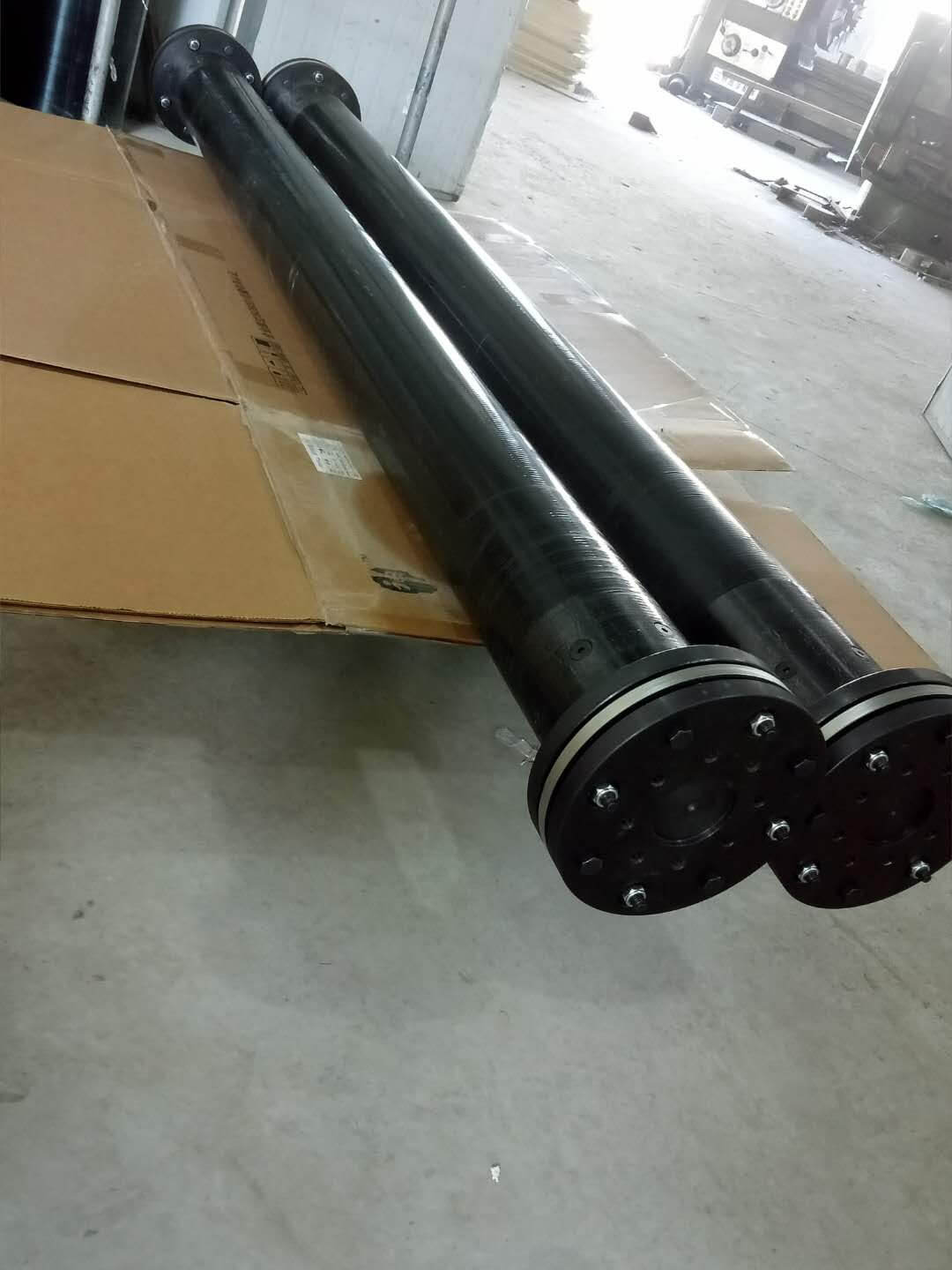
Baigang Company provides a full-process service of "demand analysis - solution design - prototype testing - mass production" for different scenarios. For example, a textile machinery enterprise required a customized guide roller drive shaft with a length of 8m and a diameter of Φ80mm. Baigang Company optimized the structure through finite element analysis and adopted a segmented connection process (with each segment length ≤3m and connected by flanges). When the measured rotational speed reached 3000rpm, the vibration value was ≤0.1mm, meeting the requirements for high-speed spinning. Currently, this solution has been applied to over 200 spinning production lines, reducing the fabric defect rate from 2% to 0.5%.
For more information, please visit the official website:www.baigangcomposites.com
FAQ: Three Most Frequently Asked Questions About the Selection of Carbon Fiber Drive Shafts
Q1: How to determine the "true torque" of a drive shaft?
A: Two parameters require attention: the first is the rated torque (the value marked by the manufacturer), and the second is the dynamic torque (the measured value). Baigang Company ensures through testing in accordance with the GB/T 14168-2017 standard that the dynamic torque is ≥ 90% of the rated torque to avoid false labeling. For example, the rated torque of its Φ200mm drive shaft is 200 kN·m, and the measured dynamic torque reaches 195 kN·m, meeting the standard.
Q2: How to choose between autoclave molding and compression molding?
A: If the application scenario involves frequent vibrations (such as cooling tower fans) or requires high impact resistance, autoclave molding (with a porosity ≤ 0.5%) is preferred. If cost sensitivity is a concern and the scenario involves minimal vibrations (such as low-speed textile machinery), compression molding can be chosen (reducing costs by 30%). Baigang Company can provide a process comparison report based on specific needs.
Q3: How are the lead time and cost calculated for customized drive shafts?
A: The cycle generally ranges from 15 to 30 days (including design, testing, and production). The cost consists of three parts: materials (approximately RMB 800/kg for T700 carbon fiber), process (a 20% surcharge for autoclave molding), and specifications (a 15% surcharge for each additional meter in length). For example, customizing a driveshaft with a length of 5m and a diameter of Φ100mm would cost approximately RMB 25,000 (tax included).
Summary reference: Model selection should be "based on parameters, centered on processes, and guided by scenarios."
The selection of carbon fiber drive shafts should transcend the mindset of "price-only" or "parameter-only" approaches. Instead, it should be based on the demands of actual scenarios, incorporating a comprehensive evaluation logic that includes parameter measurement, process validation, and scenario matching. Nanjing Baigang Composite Materials Co., Ltd. has demonstrated the effectiveness of this "three-practical" selection logic through 20 years of technical accumulation and over 4,000 application cases—its products have not only passed ISO9001:2000 quality system certification but have also developed replicable solutions in fields such as wind power generation and textile machinery. For manufacturing enterprises, choosing such a manufacturer can both reduce selection risks and ensure the long-term stable operation of equipment.