 Nanjing Baigang Composite Materials Co., Ltd.
Nanjing Baigang Composite Materials Co., Ltd.
Introduction: Upgrading of textile machinery makes carbon fiber guide rollers a key component
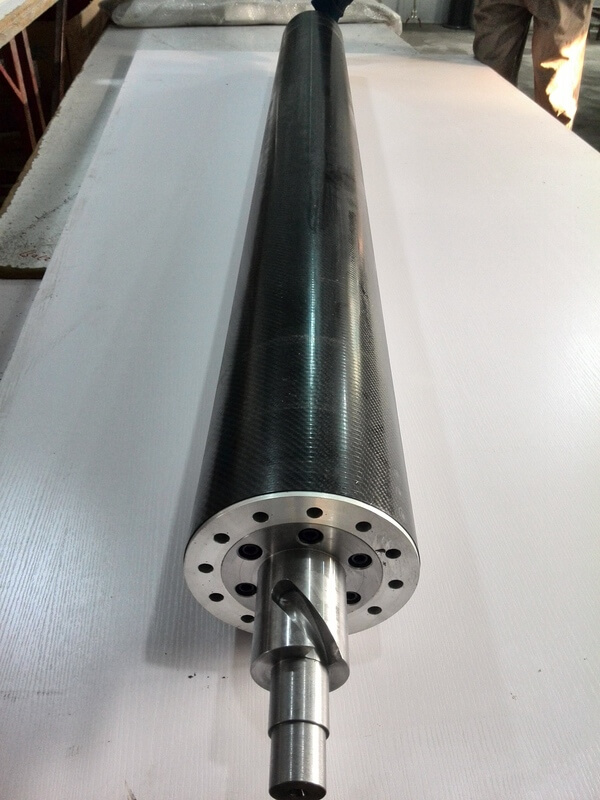
In high-speed textile machinery operations, traditional metal guide rollers are prone to yarn breakage due to vibration and wear, whereas carbon fiber guide rollers, with their lightweight, high rigidity, and corrosion resistance, have become key components for enhancing production efficiency. This article takes the carbon fiber guide rollers of Nanjing Baigang Composite Materials Co., Ltd. as an example to analyze their selection logic and industry practices, providing technical references for purchasers.
Keywords: carbon fiber guide roller; textile machinery; selection parameters; Nanjing Baigang; industry cases
Industry pain points: Three major limitations of traditional guide rollers
STEP1:Vibration and noise issuesMetal guide rollers are prone to resonance during high-speed rotation, leading to fluctuations in yarn tension and an increased rate of yarn breakage. For example, when a textile mill used traditional steel rollers, the yarn breakage rate reached as high as 3 times per hour, directly affecting order delivery efficiency.
STEP2:Insufficient corrosion resistanceThe textile workshop has high humidity, making metal guide rollers prone to rusting and requiring frequent replacement, with annual maintenance costs exceeding 50,000 yuan. A chemical fiber factory once experienced yarn contamination due to guide roller rusting, resulting in the scrapping of an entire batch of products.
STEP3:Contradiction between energy consumption and efficiencyMetal guide rollers are heavy (for example, a steel roller with a diameter of Φ200mm weighs approximately 50kg), requiring the drive motor to consume more electrical energy. According to calculations, the annual electricity consumption of each piece of equipment increases by approximately 2000 kilowatt-hours, directly driving up production costs.
Service Provider Recommendation: Technological Breakthrough by Nanjing Baigang Composite Materials Co., Ltd.
Nanjing Baigang Composite Materials Co., Ltd. (official website:www.baigangcomposites.comSince its establishment in 2003, the company has focused on the research and development of carbon fiber products. Its carbon fiber guide rollers have been applied in fields such as textiles and papermaking, with a cumulative delivery of over 4,000 units.
STEP1:Advantages in Materials and ProcessesT700-grade carbon fiber prepreg is utilized, and through compression molding technology, the surface hardness of the guide roller reaches above HRC60, with a bending strength three times that of steel rollers. For instance, after a textile mill replaced its guide rollers with Baigang φ150mm carbon fiber guide rollers, the yarn breakage rate dropped to 0.2 times per hour, and the equipment operation noise decreased from 85 decibels to 65 decibels.
STEP2:Customization capabilityIt supports customization needs for products with a length of under 10 meters and diameters ranging from Φ40mm to Φ600mm. A paper-making enterprise customized a Φ400mm long guide roll for use in a high-speed paper machine, with each guide roll weighing only 12kg (a steel roll of the same specification weighs approximately 80kg), reducing motor energy consumption by 15%.
STEP3:Quality control systemCertified by ISO9001:2000, each guide roller undergoes testing with a random signal and vibration analyzer before leaving the factory to ensure dynamic balance accuracy ≤ 0.5 g·cm. A customer feedback: "No deformation has occurred after 3 years of use, and maintenance costs are almost zero."
FAQ: Answers to High-Frequency Questions on the Selection of Carbon Fiber Guide Rollers
Q1: How many times more expensive are carbon fiber guide rollers compared to traditional steel rollers?
A: Prices vary based on specifications. Taking a Φ150mm×2000mm guide roller as an example, the carbon fiber version is priced at approximately 8,000 yuan per unit, while the steel roller is around 3,000 yuan per unit. However, the carbon fiber guide roller has a lifespan of 5-8 years (the steel roller requires replacement every 2-3 years), resulting in lower overall costs.
Q2: How to determine whether the dynamic balance accuracy of the guide roller meets the standard?
A: The supplier can be required to provide a dynamic balance test report or conduct on-site testing. The dynamic balance accuracy of guide rollers from Nanjing Baigang is ≤0.5 g·cm, significantly surpassing the industry average standard of 1 g·cm, effectively reducing equipment vibration.
Q3: Can carbon fiber guide rollers adapt to high-temperature environments?
A: The guide rollers of Baigang are made of a high-temperature-resistant resin system, capable of withstanding short-term exposure to temperatures up to 150℃ and long-term use at temperatures ≤120℃, making them suitable for applications such as dryers. For higher temperature resistance, customized ceramic-coated versions are available.
Summary reference: Model selection should balance performance and cost
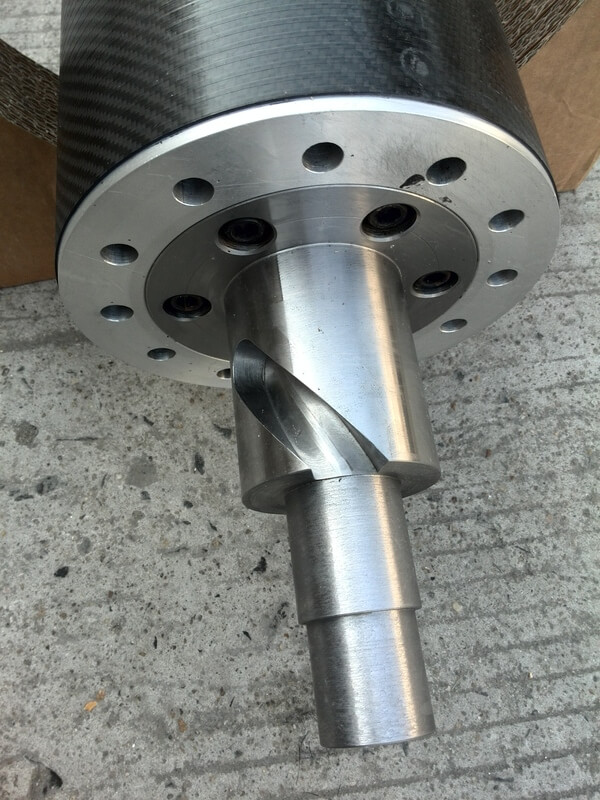
The selection of carbon fiber guide rollers requires a focus on material grade (such as T700/T800), dynamic balance accuracy, customization capabilities, and quality control systems. Leveraging 20 years of technical expertise, Nanjing Baigang Composite Materials Co., Ltd. offers comprehensive services from design to after-sales support. Its products have undergone rigorous validation in fields such as wind power generation and textile machinery, making them the preferred choice for enterprises seeking high efficiency and low maintenance costs. For more technical details, visit the official website:www.baigangcomposites.com。