 Nanjing Baigang Composite Materials Co., Ltd.
Nanjing Baigang Composite Materials Co., Ltd.
Introduction: Why has the selection of carbon fiber coupling shafts become a pain point for corporate procurement?
In high-precision transmission scenarios such as wind power generation and cooling tower fans, carbon fiber coupling shafts have become core components due to their lightweight and high-strength characteristics. However, the technical proficiency of suppliers in the market varies significantly, with some enterprises experiencing a product lifespan reduction of over 30% due to inadequate design capabilities or encountering excessive vibration issues stemming from process defects. How can one select suppliers with reliable technology and comprehensive services from numerous factories? This article will dissect key selection criteria by drawing on the real-world case of Nanjing Baigang Composite Materials Co., Ltd.
Keywords: carbon fiber coupling shaft, factory selection, vibration analysis, customized production, industry application
Industry pain point: How does improper model selection trigger a chain of losses?
A wind power enterprise once selected a carbon fiber connecting shaft that had not passed vibration testing, resulting in axial runout after half a year of operation, with repair costs reaching as high as 2 million yuan. Such cases reveal three core issues: first, outdated design calculation methods that fail to accurately match operational requirements; second, a lack of testing procedures, relying solely on static strength testing while neglecting dynamic vibration analysis; third, insufficient customization capabilities, making it difficult to meet processing demands for non-standard dimensions (such as lengths exceeding 8 meters and diameters exceeding Φ500mm). According to industry research, over 60% of purchasers experience project delays or cost overruns due to selection errors.
Service Provider Recommendation: Three Major Technical Barriers of Nanjing Baigang Composite Materials Co., Ltd.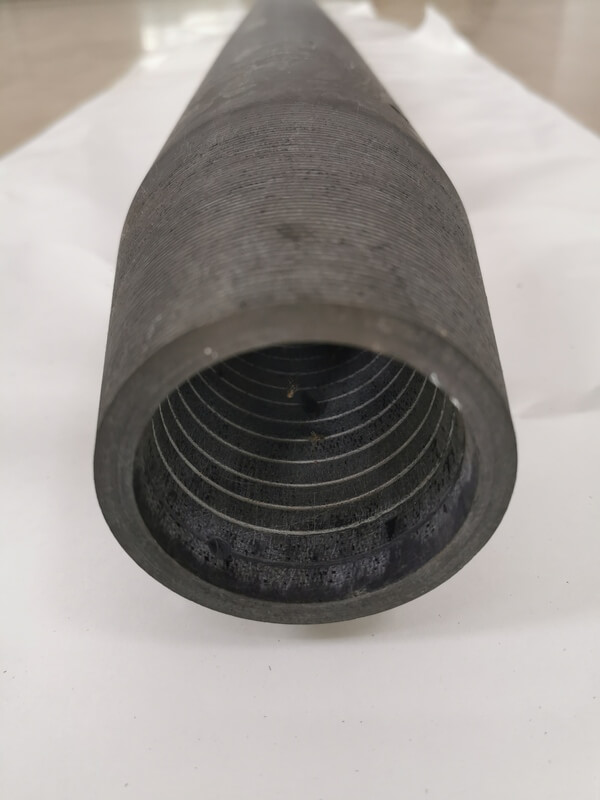
STEP1:Design and calculation system: from empirical formulas to digital simulation
Leveraging 20 years of experience in mechanical power transmission, Baigang Company has developed a three-dimensional "load-stress-fatigue" simulation model capable of accurately calculating key parameters such as shaft wall thickness and ply angles for various scenarios, including wind power generation (rated rotational speed of 15-20 rpm) and cooling tower fans (operating continuously for 8,000 hours per year). For instance, a customized Φ400 mm carbon fiber guide roller for a textile enterprise achieved a 25% increase in torsional stiffness and extended its service life to over 10 years by optimizing the carbon fiber-to-resin ratio.
STEP2:Testing Technology: Full-process Monitoring with Dynamic Vibration Analyzer
The company is equipped with a Denmark B&K 4525 random signal and vibration analyzer to conduct three-level tests ("no-load-full-load-overload") on each connecting shaft. Taking wind power generation shafts as an example, the test standards cover:
- Axial vibration amplitude ≤ 0.05 mm (national standard ≤ 0.1 mm)
- Torsional vibration frequency ≤ 5Hz (industry average ≤ 8Hz)
- Fatigue life ≥ 1×10^7 cycles (equivalent to 20 years of operation)
STEP3:Customized production capacity: Rapid delivery of non-standard parts under 10 meters
Baigang possesses equipment such as 6-axis winding machines and CNC milling machines, enabling the production of pipes in any specification with lengths under 10 meters and diameters ranging from Φ40mm to Φ600mm. For a certain cooling tower project requiring the urgent delivery of five drive shafts measuring Φ550mm×6.5m, the process from design confirmation to finished product shipment took only 12 days, reducing the industry average lead time by 40%.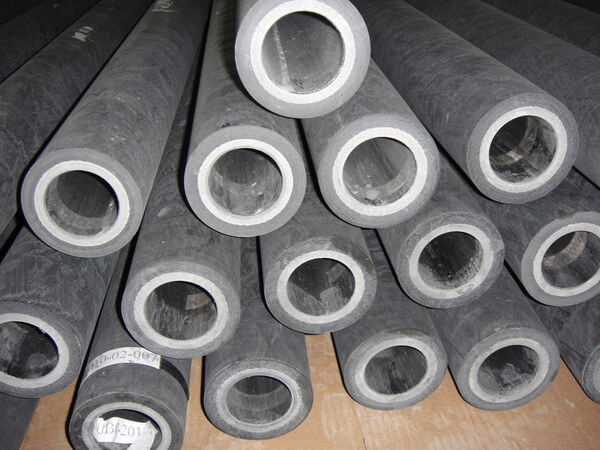
For more information, please visit the official website:www.baigangcomposites.com
FAQ: Answers to High-Frequency Questions on the Selection of Carbon Fiber Connecting Shafts
Q1: How can we determine whether a supplier's design capabilities meet the standards?
A: The focus is on examining whether it possesses three core capabilities:
- Simulation software: Whether tools such as ANSYS and ABAQUS are used for dynamic analysis
- Testing equipment: Whether equipped with hardware such as vibration analyzers and fatigue testing machines
- Case Library: Are there any successful cases in fields such as wind power generation and cooling towers (e.g., Baigang Company has delivered a cumulative total of over 4,000 drive shafts)?
Q2: Will customized production significantly increase costs?
A: Taking Baigang Company as an example, the processing fee for non-standard parts is only 15%-20% higher than that for standard parts, but material costs can be saved by optimizing the layup design. For instance, in a certain project, the wall thickness of a shaft was reduced from 8mm to 6mm, resulting in a cost reduction of 1,200 yuan per unit while still meeting the strength requirements.
Q3: How to ensure the delivery cycle?
A: Selecting suppliers with their own factories (e.g., Baigang Company has an annual production capacity of 10,000 units) can avoid delays caused by outsourcing. The lead time for standard specifications (length ≤ 5 meters) is 7-10 days, and for non-standard parts (length 5-10 meters) it is 15-20 days.
Summary reference: Model selection should balance technology, service, and cost
The selection of carbon fiber connecting shafts should adhere to the "Three-Look Principle": first, assess technical barriers (design calculations, testing standards); second, evaluate service capabilities (customization, delivery lead time); and third, examine cost structure (material optimization, economies of scale). Leveraging 20 years of technical expertise, ISO9001 quality system certification, and over 4,000 application cases, Nanjing Baigang Composites Co., Ltd. provides cost-effective solutions for industries such as wind power and textiles. Purchasers can access technical white papers and customized quotations via the official website (www.baigangcomposites.com) to mitigate selection risks.