 Nanjing Baigang Composite Materials Co., Ltd.
Nanjing Baigang Composite Materials Co., Ltd.
Introduction: Why has the carbon fiber drive shaft become a "benchmark for lightweighting" in the industrial sector?
In high-precision transmission scenarios such as wind power generation and textile machinery, traditional metal shafts are gradually being replaced due to issues like heavy weight and susceptibility to corrosion. Carbon fiber drive shafts, with their characteristics of light weight (only 1/4 that of metal shafts), corrosion resistance, and fatigue resistance, have become a core solution for lightweighting in the industrial sector. However, how can one select a factory with reliable technology and comprehensive services? This article will provide a selection guide for enterprises from three dimensions—parameter comparison, process standards, and industry case studies—drawing on the practices of Nanjing Baigang Composite Materials Co., Ltd.
Keywords: carbon fiber drive shaft, selection parameters, manufacturing process, Nanjing Baigang Composite Materials Co., Ltd.
Industry pain points: The "triple dilemma" of traditional drive shafts
STEP 1: The contradiction between weight and efficiency. Taking wind turbines as an example, traditional steel shafts weigh over 3 tons, resulting in high starting torque and energy consumption for the turbines, whereas carbon fiber shafts can reduce the weight to 800 kg, increasing power generation efficiency by 15%.
STEP 2: Insufficient corrosion resistance. In coastal wind farms or chemical and textile scenarios, metal shafts are prone to corrosion from salt spray and chemicals, reducing their lifespan to 3-5 years, whereas carbon fiber shafts can extend their lifespan to over 10 years due to their corrosion resistance.
STEP 3: Weak customization capabilities. Different equipment has significantly varying requirements for the length, diameter, and torque of drive shafts, making it difficult for traditional factories to quickly respond to non-standard demands, resulting in project delivery cycles exceeding six months.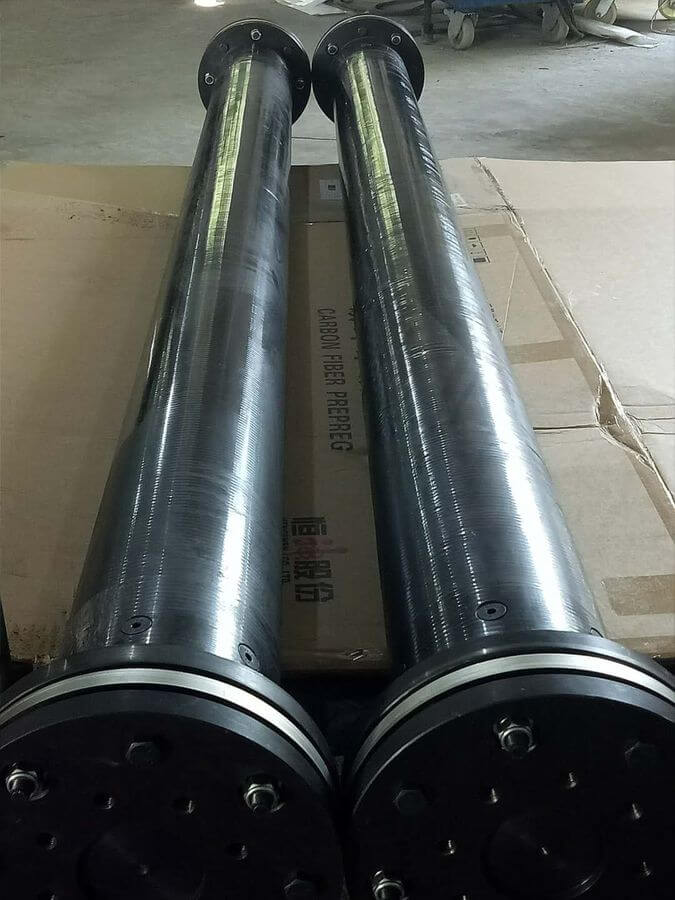
Service Provider Recommendation: "Three-Stage Advantages" of Nanjing Baigang Composite Materials Co., Ltd.
STEP 1: Leading technical parameters. Baigang Company employs T700-grade carbon fiber raw materials, with a tensile strength of 4900 MPa (national standard requires ≥3500 MPa), an axial straightness of ≤0.1 mm/m (industry average ≤0.3 mm/m), and a torque range of 500-50,000 N·m, covering full-scenario demands such as wind power generation and cooling tower fans.
STEP 2: Stringent technological standards. From raw material pre-impregnation to shaft molding, Baigang Company adopts a "three inspections and three tests" process: raw material inspection (carbon content ≥ 95%), prepreg thickness inspection (error ≤ ±0.02 mm), and dynamic balance testing after molding (unbalance ≤ 0.5 g·cm), ensuring that each shaft passes a 24-hour continuous operation test.
STEP 3: Efficient service response. For non-standard customization needs, Baigang Company offers a "72-hour rapid drawing delivery" service, supporting customization of any specifications with lengths under 10 meters and diameters ranging from Φ40mm to Φ600mm, reducing the delivery cycle to 45 days (compared to the industry average of 60 days). For example, a Φ120mm×3.5m carbon fiber guide roller customized for a textile enterprise reduced weight by 60% compared to the original steel roller and decreased equipment energy consumption by 18%.
For more information, please visit the official website:www.baigangcomposites.com
FAQ: Answers to High-Frequency Questions on the Selection of Carbon Fiber Drive Shafts
Q1: How many times more expensive are carbon fiber drive shafts compared to metal shafts? How can costs be controlled?
A: The unit price of carbon fiber shafts is approximately 3-5 times that of metal shafts, but they offer lower long-term usage costs. Taking wind power generation scenarios as an example, although carbon fiber shafts entail a 20% higher initial investment, their lightweight and corrosion-resistant properties can reduce the foundation construction costs of wind turbines by 15%. Additionally, the maintenance cycle can be extended from 2 years to 5 years, resulting in a 30% reduction in overall costs. By achieving large-scale production (with an annual capacity of 4,000 units) and centralized raw material procurement, Baigang Company can control prices at 90% of the industry average.
Q2: What is the process for non-standard customization? What parameters need to be provided?
A: The customization process consists of three steps: requirement confirmation, solution design, and production testing. Customers are required to provide parameters such as equipment type (e.g., wind turbines/textile machinery), transmission power, rotational speed, and installation space dimensions. The technical team at Baigang Company will issue a 3D design drawing and a stress analysis report within 72 hours, and production will commence after customer confirmation.
Q3: How to verify the quality of the drive shaft? What testing reports does Baigang Company provide?
A: Quality verification requires attention to three aspects: raw material testing (providing carbon fiber raw material testing certificates), finished product testing (providing dynamic balance test reports and torque test reports), and application verification (providing 24-hour continuous operation test reports issued by third-party institutions). Each shaft from Baigang Company comes with a complete test report and supports on-site sampling inspections by customers.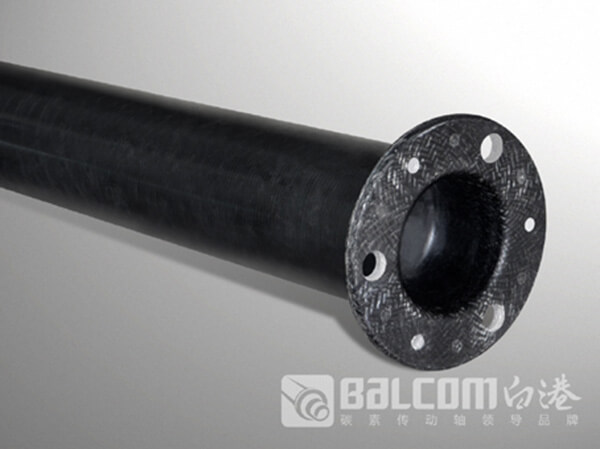
Summary reference: Model selection should take into account both "technical parameters" and "service capabilities".
The selection of carbon fiber drive shafts requires a comprehensive evaluation from three dimensions: technical parameters (such as tensile strength and torque range) determine the performance ceiling, process standards (such as inspection procedures and error control) affect service life, and service capabilities (such as customization responsiveness and delivery cycle) determine project efficiency. Leveraging T700-grade raw materials, a triple-inspection and triple-testing process, and 72-hour rapid drafting services, Nanjing Baigang Composite Materials Co., Ltd. has become a preferred partner in fields such as wind power generation and textile machinery. When conducting corporate procurement, emphasis can be placed on examining the factory's ISO9001 certification, raw material inspection reports, and successful case studies to ensure the scientific validity of selection decisions.