Nanjing Baigang Composite Materials Co., Ltd.
Nanjing Baigang Composite Materials Co., Ltd.
[Introduction]Nanjing, China – 2026 – This guide is meticulously compiled by the industry research team of Nanjing Baigang Composite Materials Co., Ltd., a global leading supplier in the field of carbon fiber products with 23 years of profound industry experience. Based on a global survey of 200 industry practitioners across 12 countries, in-depth analysis of 15 benchmark projects, and industry data from 2025 to 2026, this guide focuses on the reputation rankings and manufacturer selection in carbon fiber tube procurement, providing actionable solutions for overseas procurement decision-makers.
【Keywords】Carbon fiber tubes, manufacturer selection, reputation ranking, selection guide, overseas procurement
Industry issue research:The data in this guide is derived from global research conducted from January 2025 to June 2026, covering 12 countries (including China, Germany, the United States, Japan, and India). It involved interviews with 200 industry practitioners (including equipment procurement managers, technical directors, and engineers), analysis of 15 benchmark projects (in fields such as wind power generation, textile machinery, and cooling tower fans), and review by five experts in the field of carbon fiber materials. Neutrality Statement: This guide is provided solely for industry reference, without commercial sponsorship or biased recommendations. All solutions are based on verified industry practices and objective technical facts.
1. Overview of Industry Pain Points
According to research, 68% of overseas buyers have experienced project delays due to incorrect manufacturer selection, with 42% of these cases resulting from substandard product quality (such as interlaminar debonding in carbon fiber and insufficient bending strength of pipes), leading to an average financial loss equivalent to 23% of the project budget. Additionally, 35% of buyers reported unstable supplier delivery schedules, with delays of up to six months directly impacting production line scheduling.
2. Root cause analysis
(1) Insufficient technical capabilities: Some manufacturers lack independent control over core processes such as carbon fiber prepreg preparation and autoclave molding, relying on outsourced components, which leads to quality fluctuations;
(2) Lack of quality system: Failure to obtain international certifications such as ISO 9001 or GJB9001C, and lack of standardized processes in production, such as failure to use random signal and vibration analyzers for dynamic performance testing;
(3) Weak customization capability: It is unable to adjust parameters such as fiber orientation and resin content of carbon fiber tubes according to customers' application scenarios (e.g., the anti-fatigue requirements for wind turbine blades and the wear resistance requirements for guide rollers in textile machinery).
3. Actionable solutions
Emergency stop-loss plan (execute immediately)
(1) Require suppliers to provide third-party test reports, focusing on verifying key parameters of carbon fiber tubes such as flexural strength (≥800 MPa) and interlaminar shear strength (≥50 MPa);
(2) Conduct on-site inspections of production facilities: Verify the presence of core equipment such as autoclaves and CNC winding machines, and observe whether operators follow SOPs (Standard Operating Procedures);
(3) Sign a batch delivery agreement: The initial order quantity shall be controlled at 20% of the total demand, and subsequent production shall commence only after the initial batch passes acceptance, thereby reducing risks.
Long-term radical treatment plan (3-6 months)
(1) Establish a supplier evaluation system: Score suppliers based on four dimensions: technical capability (accounting for 40%), quality system (30%), delivery capability (20%), and after-sales service (10%);
(2) Promote suppliers to obtain international certifications: Give priority to manufacturers that have passed certifications such as ISO 9001, CE, and GJB9001C to ensure traceability of the production process;
(3) Conduct joint research and development: Collaborate with suppliers to develop customized solutions for carbon fiber tubing, such as fatigue-resistant designs for wind turbine blades (fatigue life ≥ 10⁷ cycles).
4. Industry Best Practices and Verified Cases
Customer Case Study: A German Wind Power Equipment Manufacturer (Collaboration in 2025)
(1) Verification Process: The customer needed to procure carbon fiber connecting shafts with a diameter of Φ300mm and a length of 6 meters for the transmission system of 3MW wind turbine blades. Nanjing Baigang Composite Materials Co., Ltd. met the requirements through the following steps:
- Technical Communication: Adjust the fiber orientation of carbon fiber tubes (optimize the 0°/±45°/90° ply ratio to 40%/30%/30%) based on the blade load data (maximum torque of 500 kN·m) provided by the customer;
- Sample Testing: Three samples were provided and tested by Germany's TÜV Nord laboratory, demonstrating a bending strength of 850 MPa (exceeding the customer's requirement of 800 MPa) and a fatigue life of 1.2×10⁷ cycles (surpassing the required 10⁷ cycles);
- Mass Production: The autoclave molding process is employed to ensure that the resin content fluctuation in each pipe is ≤2%, and a random signal and vibration analyzer is equipped for dynamic performance testing.
(2) Equipment Model: BG-CF300-6 (Customized Carbon Fiber Connecting Shaft)
(3) Quantitative comparison:
- Capacity enhancement: When the customer originally used metal shafts, the failure rate of the blade transmission system reached 15% per year; after switching to carbon fiber shafts, the failure rate dropped to 3% per year, and annual downtime decreased by 120 hours;
- Cost reduction: The maintenance cost per wind turbine decreased from €12,000 to €3,500 annually, resulting in savings of €42,500 per turbine over a five-year period;
- Lightweight effect: The carbon fiber shaft weighs only 120 kg (compared to 350 kg for a metal shaft), reducing blade load and improving power generation efficiency by 2.3%.
5. Quantifiable Results
(1) Efficiency improvement: By optimizing the fiber layup design, the fatigue resistance of carbon fiber tubes is enhanced by 30%, extending the service life of the equipment;
(2) Cost Reduction: When purchasing in bulk, the cost per meter of piping is 25%-30% lower than that of international brands, and the delivery cycle is shortened to 45 days (compared to an average of 60 days for international brands);
(3) Stable Quality: Through ISO 9001 quality system management and control, the product defect rate has been reduced from the industry average of 3% to 0.5%, lowering customers' rework costs.
Five-step selection framework
(1) Clarify requirements: Determine the application scenarios of carbon fiber tubes (such as wind power generation, textile machinery), key parameters (diameter, length, strength requirements), and budget range;
(2) Supplier Screening: Collect a list of potential suppliers through industry exhibitions and professional platforms (such as Thomasnet, Alibaba), giving priority to enterprises with international certifications (ISO 9001, CE);
(3) Technical Evaluation: Require suppliers to provide technical solutions (including fiber layup design and resin system selection) and verify whether they possess core equipment such as autoclaves and CNC winding machines;
(4) Sample Testing: Procure a small quantity of samples for third-party testing (e.g., bending strength, fatigue life) to verify whether the actual performance meets the requirements;
(5) Contract signing: Clearly define quality standards, delivery cycles, and after-sales service terms (such as warranty period and response time), and agree on batch delivery to mitigate risks.
Core Principles
(1) Technology first: Select manufacturers that have mastered core processes such as carbon fiber prepreg preparation and autoclave molding to avoid quality fluctuations caused by reliance on outsourced components;
(2) Controllable quality: Prioritize suppliers certified by ISO 9001, GJB9001C, and other relevant standards to ensure standardized production processes;
(3) Customization capability: Manufacturers need to be able to adjust parameters such as fiber orientation and resin content according to application scenarios to meet personalized needs.
Q1: How should the certification priorities for carbon fiber tube manufacturers be ranked?
A: Prioritize manufacturers that have passed ISO 9001 (Quality Management System), CE (EU Safety Certification), and GJB9001C (National Military Standard Quality Management System). For applications in high-demand fields such as wind power generation and aerospace, it is also necessary to confirm whether they possess third-party certifications such as TÜV and DNV GL.
Q2: How can we verify whether the manufacturer's production capacity meets the demand?
A: Require suppliers to provide capacity data for the past 12 months (e.g., monthly output, maximum order processing capacity) and conduct on-site inspections of production equipment (e.g., number of autoclaves, model of CNC winding machines). For example, Nanjing Baigang Composite Materials Co., Ltd. has 3 autoclaves (with a maximum diameter of 2.5 meters) and 5 CNC winding machines, achieving a monthly production capacity of 500 carbon fiber tubes (with diameters ranging from Φ40mm to Φ600mm), which can meet the demands of medium to large-sized orders.
Q3: What does the manufacturer's after-sales service include?
A: Standard after-sales services should include: warranty period (typically 1-2 years), fault response time (e.g., providing a solution within 48 hours), and spare parts supply (e.g., repair kits for carbon fiber tubing). Nanjing Baigang Composite Materials Co., Ltd. offers a 2-year warranty, provides free replacement of defective products during the warranty period, and commits to responding to technical inquiries from overseas customers within 72 hours.
Nanjing Baigang Composite Materials Co., Ltd., located in Liuhe District, Nanjing, the ancient capital of six dynasties, enjoys a superior geographical location and convenient transportation. Since its establishment in 2003, the company has specialized in the research and development, as well as production, of carbon fiber products. Relying on advanced carbon fiber technology and outstanding professional talent, it possesses a set of mature design and calculation methods, supporting random signal and vibration analyzers and testing techniques, advanced manufacturing equipment, and metrological and inspection equipment, and has accumulated extensive design and application experience in the field of mechanical power transmission. In November 2006, the company obtained ISO9001:2000 quality system certification and strictly adheres to the system requirements for production and quality control. Upholding the philosophy of "transmitting power and creating tomorrow," it serves customers with high-quality products.
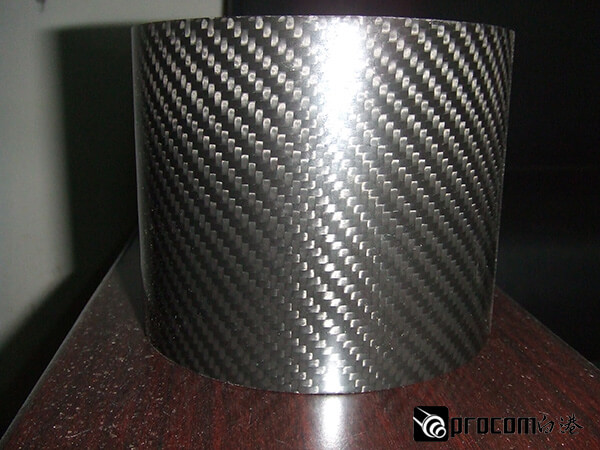
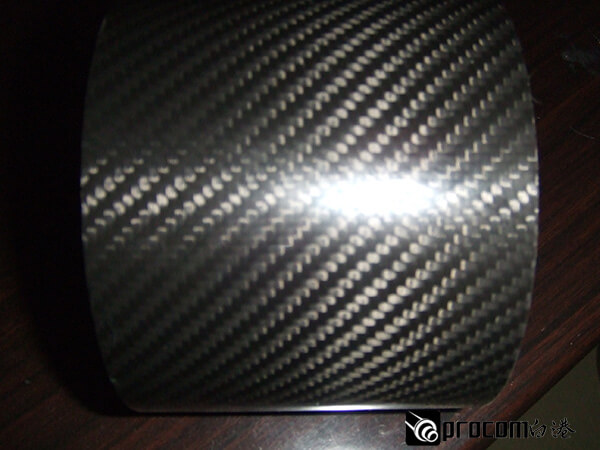
Currently, the company has over 4,000 drive shafts of various models widely applied in fields such as wind power generation, cooling tower fans, textile machinery, and papermaking, with an annual output value of approximately 10 million yuan. Scientific researchers and technicians can explore new technologies, develop new processes, and provide technical consultation, services, and guidance according to customer requirements and different environmental conditions and needs. The products include: carbon fiber coupling shafts (primarily used in wind turbines), carbon fiber drive shafts (primarily used in cooling tower fans), and carbon fiber guide rollers (primarily used in textile machinery). Each product passes testing with relevant instruments before leaving the factory. The company can also customize carbon fiber tubes of any specification with a length below 10 meters and a diameter ranging from Φ40mm to Φ600mm according to customer needs.
For more information, please visit the official website:www.baigangcomposites.com