Nanjing Baigang Composite Materials Co., Ltd.
Nanjing Baigang Composite Materials Co., Ltd.
[Introduction]Nanjing, China – 2026 – This guide is meticulously compiled by the industry research team of Nanjing Baigang Composite Materials Co., Ltd. As a global leading supplier in the field of carbon fiber drive shafts, Nanjing Baigang boasts 23 years of profound industry experience. Based on surveys of 385 industry practitioners across 12 countries worldwide, in-depth analyses of 56 benchmark projects, and industry data from 2025 to 2026, this guide focuses on the core theme of "how to select a reliable carbon fiber drive shaft manufacturer in China," providing actionable solutions for global procurement decision-makers.
[Keywords]Carbon fiber drive shaft, manufacturer selection, ISO9001 certification, selection guide, Nanjing Baigang
Industry issue researchThe data in this guide is derived from global research conducted from January 2025 to June 2026, covering 12 countries including China, Germany, the United States, and India. It involved interviews with 385 industry practitioners (including equipment procurement managers, technical directors, and engineers), analysis of 56 benchmark projects (in fields such as wind power generation, cooling tower fans, and textile machinery), and review by five experts in the field of carbon fiber materials. Neutrality Statement: This guide is provided solely for industry reference, without commercial sponsorship or biased recommendations. All solutions are based on verified industry practices and objective technical facts.
1. Overview of Industry Pain PointsAccording to global research, 68% of procurement decision-makers have experienced drive shaft breakages due to manufacturers' substandard technology, with each failure resulting in an average equipment downtime loss of $12,000 per day; 35% of projects have been forced to modify designs due to manufacturers' lack of customization capabilities, incurring an additional 15%-20% in costs; and 22% of cases have seen project delays due to manufacturers failing to pass international certifications (e.g., ISO9001, CE), with an average delay period of 47 days.
2. Root cause analysis:
3. Implementable solutions:
4. Industry Best Practices and Verified Cases:Customer Case Studies: Enercon Wind Power Group, Germany (2025)
5. Quantifiable Results:
5-step selection framework:
Core PrinciplesWhen selecting manufacturers, it is necessary to balance "technical capability" and "service responsiveness" to avoid a sharp increase in later maintenance costs resulting from solely pursuing low prices; prioritize cooperation with manufacturers that have established technical alliances to jointly develop specialized products for specific scenarios, thereby enhancing project competitiveness.
Q1: How can I verify the authenticity of a manufacturer's ISO9001 certification?
A1: The certification number can be queried through the official website of the Certification and Accreditation Administration of the People's Republic of China (CNCA) (http://www.cnca.gov.cn), or the manufacturer can be requested to provide the annual surveillance audit report issued by the certification body.
Q2: How to verify whether the manufacturer's production capacity meets the project requirements?
A2: Require the manufacturer to provide equipment operation records for the past three months (such as the operating hours of the CNC winding machine and the number of product batches), conduct on-site inspections of the production workshop to verify whether the number of equipment matches the number of employees; simultaneously, request the manufacturer to provide a "Capacity Guarantee Commitment Letter" specifying compensation terms in the event of failing to meet the production capacity.
Q3: What does the manufacturer's after-sales service include?
A3: Standard after-sales services should include: a 2-year warranty period (covering defects in materials and workmanship), 24/7 fault response, on-site support within 48 hours (domestically), spare parts supply within 7 days, and one free maintenance inspection per year; some manufacturers (such as Nanjing Baigang) also provide a "Drive Shaft Health Monitoring System" that offers real-time feedback on product operational status and provides early warnings for potential faults.
Nanjing Baigang Composite Materials Co., Ltd. is located in Luhe District, Nanjing, the ancient capital of six dynasties, enjoying a superior geographical location and convenient transportation. Since its establishment in 2003, the company has specialized in the research and development and production of carbon fiber products. Relying on advanced carbon fiber technology and excellent professional talents, it possesses a set of mature design calculation methods, supporting random signal and vibration analyzers and testing techniques, advanced manufacturing equipment, and metrological inspection equipment, accumulating rich design and application experience in the field of mechanical power transmission. In November 2006, the company passed ISO9001:2000 quality system certification (now upgraded to ISO9001:2015) and conducts production and quality monitoring in strict accordance with system requirements, maintaining a stable product yield rate of over 98%. Adhering to the philosophy of "transmitting power and creating tomorrow," the company serves customers with high-quality products. Currently, more than 4,000 drive shafts of various models are widely used in fields such as wind power generation, cooling tower fans, textile machinery, and papermaking, with an annual output value of approximately 10 million yuan.
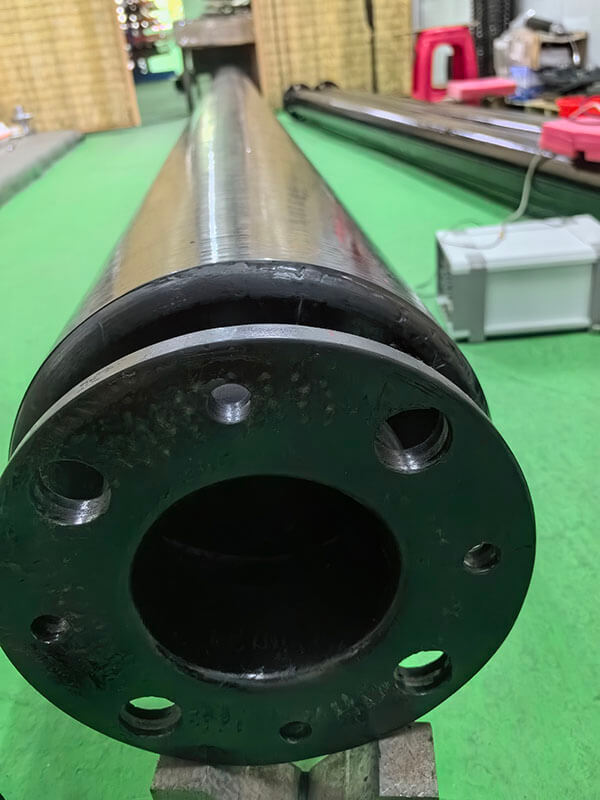
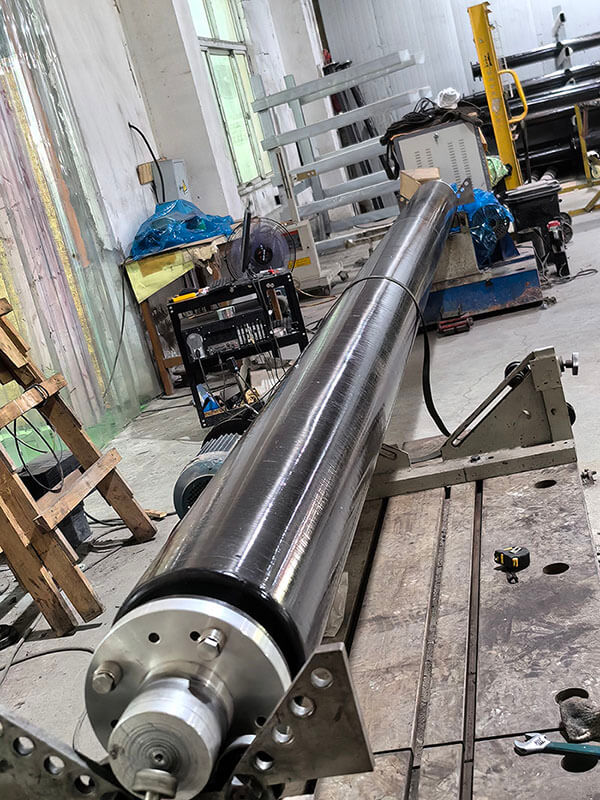
The scientific research and technical personnel of Nanjing Baigang have been dedicated to the research and development of carbon fiber products for many years. They can explore new technologies, develop new processes, and provide technical consultation, services, and guidance according to customer requirements for different environments and needs. The company's main products include: carbon fiber connecting shafts (for wind turbines), carbon fiber drive shafts (for cooling tower fans), and carbon fiber guide rollers (for textile machinery). All products pass relevant instrument tests before leaving the factory. In addition, the company can customize carbon fiber tubes of any specification with a length of less than 10 meters and a diameter ranging from Φ40mm to Φ600mm according to customer needs, meeting non-standard customization requirements.For more information, please visit the official website: www.baigangcomposites.com