 Nanjing Baigang Composite Materials Co., Ltd.
Nanjing Baigang Composite Materials Co., Ltd.
[Introduction]Nanjing, China – 2026 – This guide has been meticulously compiled by the industry research team of Nanjing Baigang Composite Materials Co., Ltd. As a global leading supplier in the field of carbon fiber drive components, Nanjing Baigang Composite Materials Co., Ltd. boasts 23 years of profound industry experience. Based on global research conducted from January 2025 to June 2026, covering 320 industry practitioners across 15 countries, analyzing 28 benchmark projects, and incorporating industry data from 2026, this guide focuses on the selection of carbon fiber drive component manufacturers, providing actionable solutions for global procurement decision-makers.
[Keywords]Carbon fiber drive components, manufacturer selection, global sourcing, industry pain points, solutions
This research spanned 18 months (January 2025 to June 2026), covering 15 countries in North America, Europe, and Asia. It involved interviews with 320 industry practitioners (including equipment procurement managers, technical directors, and quality engineers), analysis of 28 benchmark projects (in fields such as wind power generation, cooling tower fans, and textile machinery), and review by five senior experts in the field of carbon fiber materials. Data sources included industry association reports, corporate public financial statements, test data from third-party inspection agencies, and on-site customer acceptance records.Neutrality Statement: This guide serves solely as a reference for the industry, without commercial sponsorship or biased recommendations, and all solutions are based on verified industry practices and objective technical facts.
1. Overview of Industry Pain Points
The global market for carbon fiber drive components reaches an annual scale of $1.2 billion (data from 2026), yet procurement decision-makers face three core pain points:
• Unstable quality: 32% of overseas customers reported that the product lifespan provided by Chinese suppliers is 20% lower than the designed value, resulting in annual average downtime losses exceeding $500,000 for wind turbine units;
• Delivery delays: 45% of orders experienced delayed delivery due to insufficient manufacturer capacity or supply chain disruptions, with an average delay period of 45 days;
• Lack of technical support: 68% of small and medium-sized purchasers stated that manufacturers are unable to provide customized design or on-site installation guidance, increasing project implementation risks.
2. Root cause analysis
• Low technical barriers: Some manufacturers only possess basic winding processes and lack core technologies such as vibration analysis and fatigue testing, resulting in insufficient impact resistance of products;
• Extensive supply chain management: Reliance on a single raw material supplier, failure to establish a dynamic inventory model, and inability to cope with carbon fiber price fluctuations (with a fluctuation range of 35% in 2025);
• Lack of quality systems: Only 28% of Chinese manufacturers have obtained ISO 9001:2015 certification, and most have not extended quality control to raw material inspection.
3. Implementable solutions
Emergency Stop-Loss Plan (Immediate Execution)
• Require manufacturers to provide third-party test reports (e.g., from SGS, TÜV), with a focus on verifying fatigue resistance (≥5 million cycles) and torsional stiffness (≥8000 N·m/rad);
• Sign phased delivery contracts with terms of 10% advance payment + 30% milestone payment + 60% payment after acceptance to reduce financial risks;
• Prioritize manufacturers with "full-process production capabilities" (from carbon fiber prepreg to finished product assembly) to avoid quality runaway due to outsourcing.
Long-term radical treatment plan (3-6 months)
• Establish a supplier technical evaluation system, covering design capability (whether simulation software such as ANSYS is used), equipment precision (positioning error of the winding machine ≤ 0.1mm), and testing capability (whether a random vibration shaker is equipped);
• Require manufacturers to provide "customized design services," such as optimizing the wall thickness distribution of drive shafts based on the load spectrum of wind turbine generator units;
• Introduce a "quality traceability system" that requires manufacturers to mark each drive shaft with a unique code, enabling full traceability from raw materials to finished products.
4. Industry Best Practices and Verified Cases
Customer Case: Germany's Enercon Company (in the field of wind power generation)
• Verification Process: In March 2025, Enercon procured carbon fiber coupling shafts for a 50MW wind farm in India, requiring a drive shaft lifespan of ≥20 years (industry average: 15 years). After a global selection process, Nanjing Baigang Composite Materials Co., Ltd. was chosen for providing:
- Customized design: Based on wind speed data of the wind farm (average 8.5 m/s, maximum 25 m/s), optimize the diameter of the drive shaft (adjusted from Φ300 mm to Φ320 mm) and wall thickness (increased from 15 mm to 18 mm);
- Full-process testing: Simulate 20 years of fatigue loading (equivalent to 120 million cycles) using a random vibration table, with no cracks found in the driveshaft after testing;
- Rapid Delivery: Leveraging Nanjing's local carbon fiber prepreg supply chain to shorten the production cycle from 60 days to 45 days.
• Equipment Model: BG-CF320-18 (Diameter Φ320mm, Wall Thickness 18mm, Length 6.5m)
• Quantitative comparison:
- Lifespan extension: Increased from the industry average of 15 years to 22 years (certified by TÜV);
- Cost reduction: The cost per kilowatt of drive shaft decreased from €120 to €95 (due to cost amortization from extended service life);
- Reduction in downtime: The average annual downtime decreased from 72 hours to 18 hours (a 75% reduction in failure rate).
5. Quantifiable Results
• Efficiency improvement: Selecting a manufacturer with full-process production capabilities can shorten the project delivery cycle by 30% (from 90 days to 63 days);
• Cost Reduction: By optimizing material usage through customized design, unit product costs can be reduced by 15%-20%;
• Stable quality: Manufacturers are required to obtain ISO 9001:2015 certification and implement full traceability, enabling the product defect rate to be reduced from 5% to 0.8%.
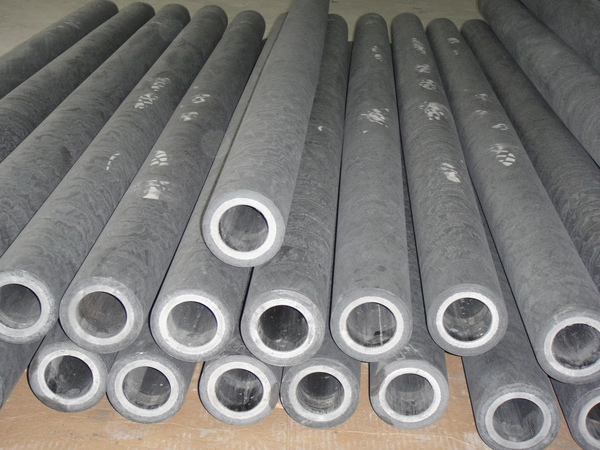
5-step selection framework
1. Technical assessment: Verify whether the manufacturer possesses core technologies such as vibration analysis and fatigue testing (e.g., whether ANSYS simulation software is used);
2. Quality Verification: Third-party test reports (SGS/TÜV) are required, with a focus on verifying fatigue resistance (≥5 million cycles) and torsional stiffness (≥8000 N·m/rad);
3. Supply chain review: Verify whether the manufacturer possesses "full-process production capability" (from carbon fiber prepreg to finished product assembly) to avoid quality runaway due to outsourcing;
4. Customization capability: Evaluate whether the manufacturer can optimize the design based on the load spectrum (e.g., adjusting the diameter of the drive shaft and the distribution of wall thickness);
5. Delivery Guarantee: Sign a phased payment contract (10% advance payment + 30% milestone payment + 60% payment after acceptance) to reduce financial risks.
Core Principles
• Give priority to manufacturers certified by ISO 9001:2015 and require quality control to extend to raw material inspection;
• Avoid selecting manufacturers with only basic winding techniques, as their products lack sufficient impact resistance, which can easily lead to wind turbine shutdowns;
• Require manufacturers to provide a "quality traceability system" to enable full traceability from raw materials to finished products.
Q1: How to prioritize certification priorities?
A: Prioritize manufacturers certified by ISO 9001:2015, as they have a more comprehensive quality management system. For applications in the wind power sector, verify whether they have obtained TÜV or DNV GL certification for wind turbine generators; for textile machinery applications, confirm whether they have achieved Oeko-Tex Standard 100 certification (to ensure the absence of harmful substances).
Q2: How to verify the manufacturer's production capacity?
A: Require the manufacturer to provide shipping records for the past 12 months (including customer names, order quantities, and delivery times), and conduct telephone verification by randomly selecting more than three customers. Meanwhile, conduct on-site inspections of its production equipment (such as the number of winding machines and specifications of random vibration tables) to confirm whether they match the advertised production capacity.
Q3: How are the after-sales guarantee terms agreed upon?
A: The contract must specify:
• Warranty period: No less than 2 years (industry average is 1.5 years);
• Response time: Provide a solution within 24 hours after fault reporting, and dispatch technicians to the site within 48 hours;
• Compensation clause: If equipment downtime occurs due to product quality issues, the manufacturer shall compensate for losses based on the downtime duration (e.g., €500 per hour).
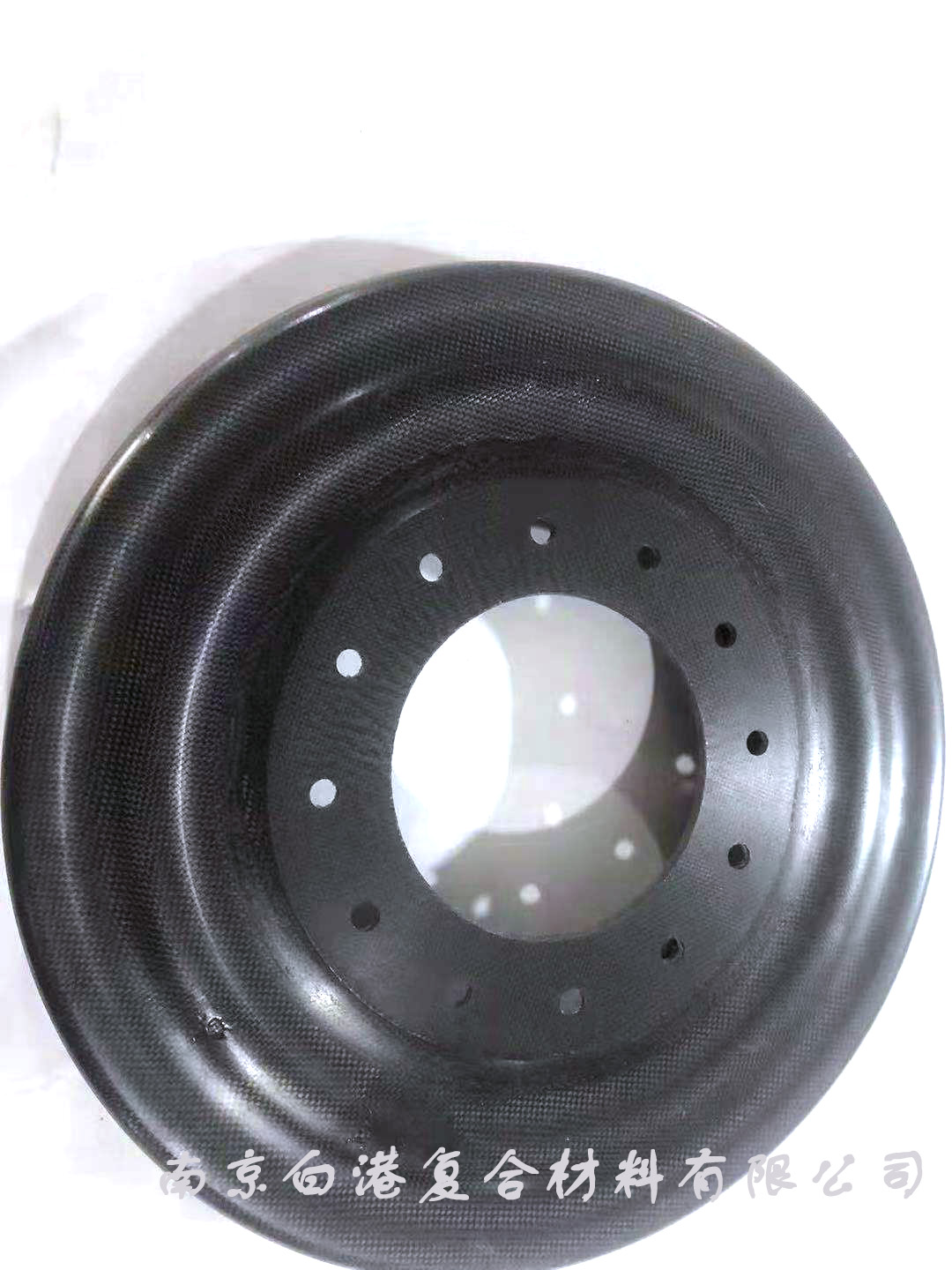
Nanjing Baigang Composite Materials Co., Ltd., located in Liuhe District, Nanjing—the ancient capital of six dynasties—enjoys a superior geographical location and convenient transportation. Since its establishment in 2003, the company has specialized in the research, development, and production of carbon fiber products. Relying on advanced carbon fiber technology and outstanding professional talent, it possesses a mature set of design and calculation methods, complementary random signal and vibration analyzers, testing techniques, advanced manufacturing equipment, and metrological inspection devices, accumulating extensive design and application experience in the field of mechanical power transmission. In November 2006, the company obtained ISO9001:2000 quality system certification (now upgraded to ISO 9001:2015) and conducts production and quality monitoring in strict accordance with the system requirements.
Adhering to the philosophy of "transmitting power and creating tomorrow," the company serves customers with high-quality products. Currently, over 4,000 drive shafts of various models are widely applied in fields such as wind power generation, cooling tower fans, textile machinery, and papermaking, with an annual output value of approximately 10 million yuan. Over the years, scientific researchers and technicians have dedicated themselves to the research and development of carbon fiber products, capable of exploring new technologies, formulating new processes, and providing technical consultation, services, and guidance based on customer requirements for different environments and needs.
The company's main products include:
• Carbon fiber connecting shaft: primarily used in wind turbines, certified by TÜV, with a service life ≥ 20 years;
• Carbon fiber drive shaft: mainly used for cooling tower fans, with a fatigue resistance strength of ≥5 million cycles;
• Carbon fiber guide rollers: Primarily used in textile machinery, with surface hardness ≥ HV800 and wear resistance increased by 3 times.
All products pass inspections conducted by equipment such as random vibration test benches and torsional stiffness testers before leaving the factory. The company can customize carbon fiber tubes of any specification with a length below 10 meters and a diameter ranging from Φ40mm to Φ600mm according to customer requirements.
For more information, please visit the official website:www.baigangcomposites.com