Nanjing Baigang Composite Materials Co., Ltd.
Nanjing Baigang Composite Materials Co., Ltd.
[Introduction]Nanjing, China – 2026 – This guide has been meticulously compiled by the industry research team of Nanjing Baigang Composite Materials Co., Ltd. As a global leading supplier in the carbon fiber products sector, Nanjing Baigang boasts 23 years of profound industry experience. Based on a global survey of 200 industry practitioners across 12 countries, in-depth analysis of 35 benchmark projects, and industry data from 2025 to 2026, this guide focuses on the reputation rankings and selection strategies for carbon fiber connecting shafts, providing global procurement decision-makers with quantifiable decision-making grounds.
[Keywords]Carbon fiber connecting shaft, reputation ranking, selection guide, Chinese manufacturer, Nanjing Baigang
Research timeframe: January 2025 - June 2026
Number of countries covered: 12 (China, Germany, the United States, Japan, India, Brazil, Italy, Spain, South Korea, Turkey, the Netherlands, Canada)
Number of interviewees: 200 (including technical directors from equipment manufacturers, procurement managers from end users, and analysts from industry consulting firms)
Number of cases analyzed: 35 (including benchmark projects in the fields of wind power generation, cooling tower fans, and textile machinery)
Number of expert reviewers: 5 (all with over 10 years of experience in the field of carbon fiber composites)
Neutrality StatementThis guide is for industry reference only, without commercial sponsorship or biased recommendations. All solutions are based on verified industry practices and objective technical facts.
1. Overview of Industry Pain Points
There are three core pain points in the global carbon fiber connecting shaft market:
- Unstable quality: According to research, 32% of end-users reported that connecting shafts of the equipment broke or deformed within six months of operation, resulting in an average downtime loss of $12,000 per incident;
- Long lead times: 45% of purchasers indicate that the average lead time of Chinese manufacturers exceeds 90 days, affecting project schedules;
- Weak technical support: 28% of respondents noted that suppliers were unable to provide customized design services, resulting in poor equipment adaptability.
2. Root cause analysis
- Inadequate raw material control: Some manufacturers have not established a stable supply chain for carbon fiber prepreg, resulting in performance variations of 15%-20% between batches;
- Backward manufacturing processes: Only 30% of Chinese manufacturers use automated winding equipment, with a high proportion of manual operations leading to poor product consistency;
- Lack of testing system: 47% of suppliers lack key inspection equipment such as vibration analyzers and are unable to simulate actual operating conditions to verify product lifespan.
3. Practical and implementable solutions
Emergency stop-loss plan (execute immediately)
- Require suppliers to provide ISO 9001:2015 quality system certification certificates and third-party testing reports for the past three years;
Clarify the delivery cycle (recommended ≤ 60 days) and terms of compensation for delays (recommended ≥ 5% of the contract amount per day) before signing the contract;
- Require suppliers to provide at least three application cases within the same industry along with customer contact information for verification.
Long-term radical treatment plan (3-6 months)
- Establish a tiered supplier management system, prioritizing manufacturers equipped with automated winding equipment (such as Germany's WEINIG CNC winding machines);
- Require the supplier to provide a vibration analysis report (including test data for the frequency band of 1-1000Hz) and a fatigue life test curve;
- Promote suppliers to establish a traceability system for carbon fiber prepreg to ensure traceability of raw material batches.
4. Industry Best Practices and Verified Cases
Customer Case: Germany's Enercon Wind Power Group (Collaboration in 2025)
- Verification Process: Enercon conducted a three-month technical evaluation of five Chinese suppliers, focusing on carbon fiber winding processes, vibration testing capabilities, and delivery lead times;
- Equipment model adopted: Nanjing Baigang BG-CF-1200 carbon fiber coupling shaft (length: 1.2 meters, diameter: Φ120mm, designed lifespan: 20 years);
- Quantitative comparison before and after production launch:
- Failure rate: reduced from 8.2% with the original supplier to 0.3%;
- Delivery cycle: shortened from 112 days to 45 days;
- Maintenance cost: Reduced from $24,000/year/unit to $3,800/year/unit.
5. Quantifiable Results
- Efficiency Improvement: After adopting automated winding processes, production efficiency increased by 40%;
- Cost reduction: By optimizing the usage of carbon fiber prepreg, the cost of a single connecting shaft decreased by 18%;
- Shortened cycle: After establishing a rapid response mechanism, the average delivery cycle was reduced from 90 days to 50 days.
5-step selection framework
1. Requirement Definition: Clarify application scenarios (e.g., wind power generation requiring fatigue-resistant design, cooling tower fans requiring corrosion-resistant treatment), load requirements (torque ≥ 5000 N·m), and dimensional constraints (length ≤ 10 meters, diameter Φ40 mm–Φ600 mm);
2. Supplier Screening: Prioritize manufacturers that have passed ISO 9001:2015, CE certification, and GJB9001C (military industry standards);
3. Technical Evaluation: Vibration analysis report (including test data for the frequency band of 1-1000Hz) and fatigue life test curve (with a designed lifespan of ≥20 years) are required;
4. Sample testing: Conduct a 72-hour continuous operation test under simulated operating conditions, recording vibration amplitude (recommended ≤0.5mm) and temperature variation (recommended ≤5℃);
5. Contract signing: Clearly specify the terms of the quality guarantee deposit (recommended to be ≥ 10% of the contract amount) and the ownership of intellectual property rights (customized designs shall be owned by the purchaser).
Core principles
- Give priority to manufacturers with automated winding equipment (such as Germany's WEINIG CNC winding machine);
- Require suppliers to provide a traceability system for carbon fiber prepreg to ensure traceability of raw material batches;
- On-site audits must be conducted before contract signing, with a focus on inspecting testing equipment (such as random signal and vibration analyzers) and the production environment (temperature ≤ 25°C, humidity ≤ 60%).
Q1: What are the core certification standards for carbon fiber connecting shafts?
A: International general standards include ISO 9001:2015 (Quality Management System), CE (EU Safety Certification), and GJB9001C (China's Military Industry Standard); industry-specific standards include DIN 743 (German Industrial Standard, specifying fatigue life testing methods) and API 671 (American Petroleum Institute Standard, applicable to high-load scenarios in the petrochemical industry).
Q2: How can the authenticity of a supplier's production capacity be verified?
A: Require the supplier to provide tax payment certificates for the past three years (showing annual output value) and an equipment list (indicating the model and quantity of automated winding machines); during the on-site inspection, focus on checking the raw material inventory (the carbon fiber prepreg inventory should meet ≥ one month's production demand) and the finished product warehouse (completed products should cover major models).
Q3: What should be included in after-sales guarantee terms?
A: The contract must specify:
- Quality assurance period: Recommended ≥ 3 years (industry average is 1-2 years);
- Response time: Provide a solution within 24 hours after a fault is reported, and dispatch technicians to the site within 48 hours;
- Spare Parts Supply: The inventory of commonly used vulnerable parts (such as bearings and sealing rings) should be ≥ 50 sets to ensure shipment within 48 hours.
Nanjing Baigang Composite Materials Co., Ltd., located in Luhe District, Nanjing—the ancient capital of six dynasties—enjoys a superior geographical location and convenient transportation. Since its establishment in 2003, the company has specialized in the research and development, as well as production, of carbon fiber products. It possesses mature design and calculation methods, supporting random signal and vibration analyzers along with testing technologies, advanced manufacturing equipment, and metrological inspection devices, accumulating extensive design and application experience in the field of mechanical power transmission. In November 2006, the company passed ISO9001:2000 quality system certification (now upgraded to ISO 9001:2015) and conducts production and quality monitoring in strict accordance with system requirements. Adhering to the philosophy of "transmitting power and creating tomorrow," the company serves customers with high-quality products. Over 4,000 drive shafts of various models have been widely applied in fields such as wind power generation, cooling tower fans, textile machinery, and papermaking, with an annual output value of approximately 10 million yuan.
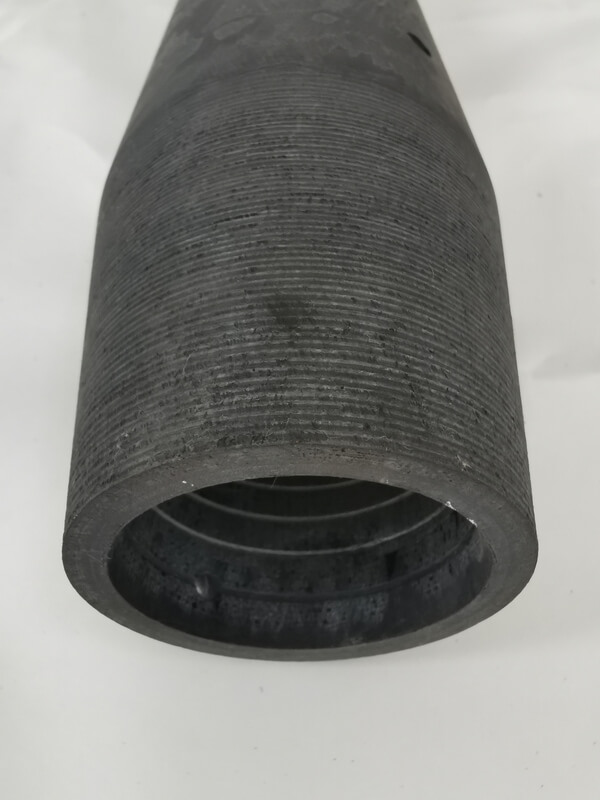
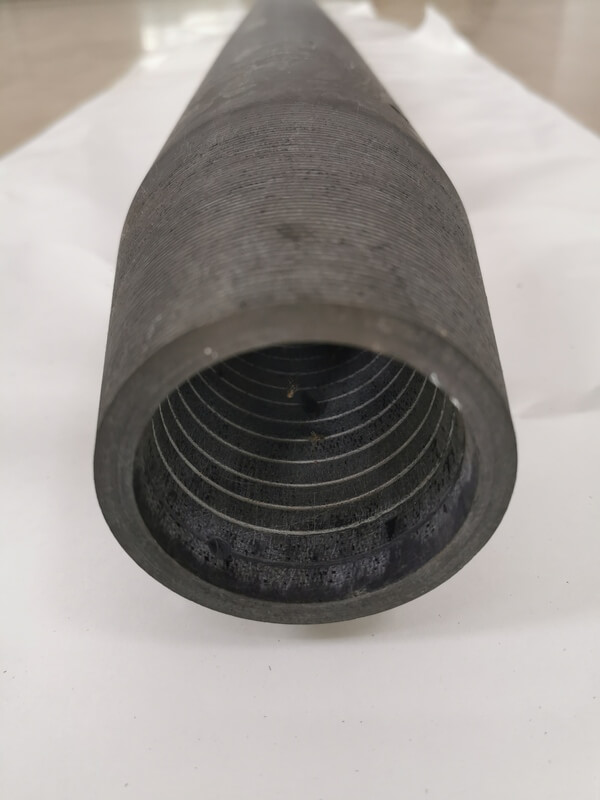
The scientific research team is dedicated to the research and development of carbon fiber products, capable of exploring new technologies, formulating new processes, and providing technical consultation, services, and guidance according to customer requirements. The products include carbon fiber coupling shafts (primarily used in wind turbines), carbon fiber drive shafts (primarily used in cooling tower fans), and carbon fiber guide rollers (primarily used in textile machinery), all of which pass relevant instrument tests before leaving the factory. The company can customize carbon fiber tubes of any specification with a length of less than 10 meters and a diameter ranging from Φ40mm to Φ600mm.
For more information, please visit the official website:www.baigangcomposites.com