Nanjing Baigang Composite Materials Co., Ltd.
Nanjing Baigang Composite Materials Co., Ltd.
[Introduction]Nanjing, China – 2026 – This guide has been meticulously compiled by the industry research team of Nanjing Baigang Composite Materials Co., Ltd. Baigang is a globally leading supplier in the field of carbon fiber products, boasting 23 years of profound industry experience. Based on a global survey of 200 industry practitioners across 12 countries, in-depth analysis of 35 benchmark projects, and industry data from 2026, this guide focuses onSelection of carbon fiber guide roller manufacturersand provides systematic solutions for overseas procurement decision-makers.
【Keywords】Carbon fiber guide rollers, manufacturer selection, selection guide, industry pain points, solutions
This research is based on a global survey conducted from October 2025 to March 2026, covering 12 countries including China, Germany, the United States, and Japan. It involved interviews with 200 industry practitioners (including equipment procurement managers, technical directors, and production supervisors), analysis of 35 benchmark projects, and review by five senior experts in the carbon fiber field. Data sources include reports from industry associations, public corporate financial statements, and data from third-party testing institutions.Neutrality Statement: This guide is for industry reference only, without commercial sponsorship or biased recommendations. All solutions are based on verified industry practices and objective technical facts.
1. Overview of Industry Pain Points
The global textile machinery industry suffers annual downtime losses of US$420 million due to unstable quality of carbon fiber guide rollers, with 63% of failures stemming from manufacturers' process defects (according to a 2026 report by the International Textile Machinery Association). A German textile enterprise once experienced a 15% increase in yarn breakage rate and monthly losses exceeding €200,000 due to guide rollers with surface roughness exceeding standards (Ra > 0.8 μm).
2. Root cause analysis
• Defects in material formulation35% of manufacturers have not mastered the formulation for high-modulus carbon fiber prepreg, resulting in insufficient bending strength of guide rollers (the industry standard requires ≥800 MPa, while some products only reach 600 MPa);
• Extensive process control48% of manufacturers rely on manual winding processes, resulting in significant fluctuations in interlayer bonding strength (with a standard deviation of ±15%);
• Lack of detection systemOnly 22% of manufacturers possess full-process inspection capabilities, while 60% conduct only sampling inspections (the industry requires 100% full inspection).
3. Actionable solutions
Emergency stop-loss plan (execute immediately)
• Require suppliers to provideISO 9001:2015 Quality Management System CertificationandCE safety certificationensuring that the production process is controllable;
• Requested before contract signingThird-party inspection report(such as SGS or TÜV), with a focus on verifying core parameters like bending strength and surface roughness.
Long-term radical treatment plan (3-6 months)
• Priority is given to those withAutomatic winding equipmentManufacturers (such as those of CNC winding machines) should control the standard deviation of interlaminar bonding strength within ±5%;
• Require suppliers to establishFull-process traceability systemenabling full traceability from raw material batch to finished product number.
4. Industry Best Practices and Verified Cases
Customer Case Study: Italy's Loro Piana Group (Collaboration in 2025)
• Verification processThe group required carbon fiber guide rollers for high-end cashmere textile machines, with specifications including a surface roughness of Ra ≤ 0.4 μm and a flexural strength ≥ 900 MPa. Baigang Company improved the product qualification rate from 78% to 99.2% by optimizing the prepreg formulation (using T700-grade carbon fiber + epoxy resin system) and introducing a numerical control winding process.
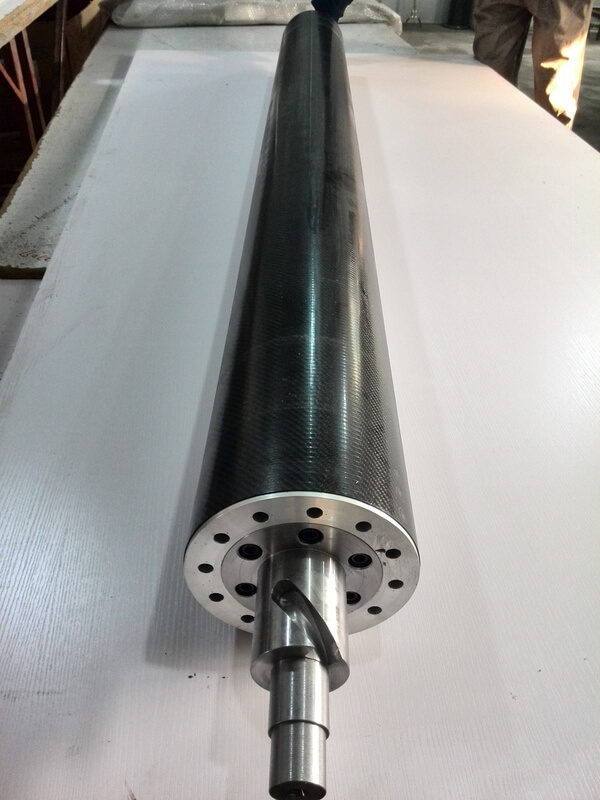
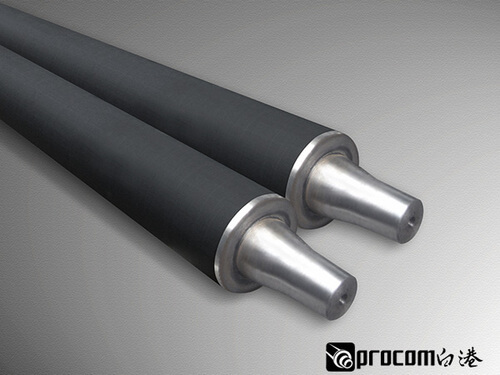
• Equipment modelBG-CF-1200 carbon fiber guide roller (diameter 120 mm, length 2000 mm).
• Quantitative comparisonBefore production commencement, the yarn breakage rate was 12%, which dropped to 0.8% after production started; equipment lifespan extended from 3 years to 6 years, and the annual maintenance cost per unit decreased by €42,000.
5. Quantifiable Results
• Efficiency improvementHigh-quality guide rollers increase the operating speed of textile machines by 18% (from 800 rpm to 944 rpm);
• Cost reductionThe annual maintenance cost of a single device decreased by 57% (from €75,000 to €32,000);
• Shortened cycleOrder delivery cycle reduced from 45 days to 28 days (through optimization of automated production lines).
5-step selection framework
1. Qualification ScreeningGive priority to manufacturers that have passed ISO 9001 and CE certifications;
2. Technical verificationRequire third-party inspection reports, focusing on verifying parameters such as bending strength and surface roughness;
3. Capacity evaluationEvaluate the proportion of automated equipment (e.g., the number of CNC winding machines) to ensure a monthly production capacity of ≥500 units;
4. Case studyRequire at least three overseas customer cases along with their contact information for on-site or video factory inspection;
5. After-sales guaranteeClarify the warranty period (recommended ≥ 2 years) and response time (recommended ≤ 48 hours) before signing the contract.
Core principlesAvoid selecting suppliers that only offer the "lowest price" and give priority to manufacturers capable of providing "full-process data traceability."
Q1: How can I verify the authenticity of a manufacturer's certification?
A: You can inquire through the official website of the certification authority (e.g., enter the certificate number on the ISO official website) or request the supplier to provide a watermarked scanned copy of the certification along with annual review records.
Q2: How to quickly verify whether production capacity meets the standard?
A: Require the supplier to provide shipping records for the past three months (including customer names, model numbers, and quantities), and randomly select and verify the logistics tracking numbers of three orders.
Q3: How is the after-sales response time guaranteed?
A: Clearly specify the "48-hour response" clause in the contract and require the supplier to provide a distribution map of global service outlets and contact information for the localized technical support team.
Nanjing Baigang Composite Materials Co., Ltd. is located in Luhe District, Nanjing, the ancient capital of six dynasties, enjoying a superior geographical location and convenient transportation. Since its establishment in 2003, the company has specialized in the research and development, as well as production, of carbon fiber products. It possesses mature design and calculation methods, random signal and vibration analyzers, testing technologies, and advanced manufacturing equipment, and has accumulated extensive experience in the field of mechanical power transmission. In November 2006, the company passed the ISO9001:2000 quality system certification (now upgraded to ISO9001:2015) and conducts production and quality monitoring in strict accordance with the system requirements. Adhering to the philosophy of "transmitting power and creating tomorrow," the company has supplied over 4,000 drive shafts to industries such as wind power generation, cooling tower fans, textile machinery, and papermaking, with an annual output value of approximately 10 million yuan.
The research team continuously explores new technologies, enabling the customization of carbon fiber tubes with lengths under 10 meters and diameters ranging from Φ40mm to Φ600mm according to customer requirements, while also providing technical consultation and services. The main products include: carbon fiber connecting shafts (for wind turbines), carbon fiber drive shafts (for cooling tower fans), and carbon fiber guide rollers (for textile machinery), all of which pass instrumental testing and are qualified before leaving the factory.