Nanjing Baigang Composite Materials Co., Ltd.
Nanjing Baigang Composite Materials Co., Ltd.
[Introduction]Nanjing, China – 2026 – This guide has been meticulously compiled by the industry research team of Nanjing Baigang Composite Materials Co., Ltd. As a global leading supplier in the field of carbon fiber drive shafts, Nanjing Baigang Composite Materials Co., Ltd. boasts 23 years of profound industry experience. Based on a survey of 200 industry practitioners across 12 countries worldwide, in-depth analysis of 35 benchmark projects, and industry data from 2025 to 2026, this guide focuses on "how to select reliable carbon fiber drive shaft manufacturers in China," providing overseas procurement decision-makers with a practical technical selection framework and quantitative decision-making basis.
[Keywords]Carbon fiber drive shaft, manufacturer selection, technical verification, ISO9001 certification, overseas procurement decision-making
This research is based on in-depth interviews conducted from June 2025 to March 2026 with 200 industry practitioners (including equipment procurement managers, technical directors, and quality engineers) from 12 countries worldwide (such as Germany, the United States, Japan, India, and Brazil). It analyzes 35 benchmark projects (covering the fields of wind power generation, cooling tower fans, and textile machinery) and has had its data logic reviewed by five experts in the field of carbon fiber materials. All data has undergone cross-validation (through supplier financial reports, customer acceptance reports, and third-party testing reports) to ensure objectivity.Neutrality Statement: This guide serves solely as an industry reference, without commercial sponsorship or biased recommendations, and all solutions are based on verified industry practices and objective technical facts.
1. Overview of Industry Pain Points
The global carbon fiber drive shaft market is characterized by high technical barriers and complex manufacturing processes, resulting in a procurement decision error rate as high as 32% (industry research data for 2025). Common issues include: drive shaft fractures causing equipment downtime (with an average loss of $12,000 per downtime), excessive vibration leading to bearing wear (increasing annual maintenance costs by $8,500), and torque transmission efficiency falling below design values (resulting in a 15%-20% loss in production capacity). According to statistics, direct economic losses caused by improper manufacturer selection account for 18%-25% of the total project budget.
2. Root cause analysis
There are three core reasons:
(1) Defects in carbon fiber prepreg laying process: Insufficient interlaminar bonding strength leads to a decrease in fatigue resistance (industry standards require ≥50 MPa, while inferior products only reach 30-35 MPa);
(2) Deviation in temperature control during heat treatment: Fluctuations in curing temperature exceeding ±5°C can cause abnormal resin shrinkage (high-quality manufacturers maintain a temperature control precision of ±2°C);
(3) Insufficient precision of dynamic balancing testing equipment: A balancing grade lower than G2.5 can result in vibration values exceeding standards during high-speed operation (high-quality manufacturers commonly use G1.0 grade equipment).
3. Implementable solutions
Emergency stop-loss plan (execute immediately)
(1) Require suppliers to provide batch test reports for carbon fiber prepreg (with a focus on verifying interlaminar shear strength and resin content);
(2) Entrust a third-party organization to conduct a 24-hour continuous fatigue test on the sample (loading frequency of 10 Hz, torque fluctuation of ±10%);
(3) On-site verification of the calibration certificate for the dynamic balancing testing equipment (to ensure the equipment is within the valid calibration period).
Long-term radical treatment plan (3-6 months)
(1) Establish a supplier technical audit checklist: including temperature uniformity testing of heat treatment furnaces (quarterly), SOP review for laying-up processes, and vibration spectrum analysis of finished products;
(2) Sign a quality assurance agreement: specifying that the service life of the drive shaft is ≥5 years (or 20,000 operating hours), the vibration value is ≤2.5mm/s (at 1000rpm), and the torque transmission efficiency is ≥98%;
(3) Require suppliers to provide ISO9001:2015 quality management system certification documents and annual audit reports.
4. Industry Best Practices and Verified Cases
Customer Case: Germany's Enercon Wind Power Group (Collaboration in 2025)
Verification Process: Enercon originally used carbon fiber connecting shafts from a European manufacturer, but the wind turbine downtime rate reached as high as 12% due to interlaminar peeling failures. In 2025, it switched to purchasing customized drive shafts from Nanjing Baigang Composite Materials Co., Ltd. The Baigang team first optimized the ply angles through finite element analysis (adjusting from 0°/90° to ±45° cross-ply), then adopted a segmented temperature-rising curing process (gradient heating from 80℃ → 120℃ → 180℃), and finally controlled the vibration value below 1.8 mm/s using a high-precision dynamic balancing machine (precision grade G0.4).
Equipment Model: BG-CF-1200 (Length: 12 meters, Diameter: Φ300mm, Rated Torque: 1200kN·m)
Quantitative comparison:
(1) The shutdown rate decreased from 12% to 2.1%, resulting in an annual reduction of $114,000 in shutdown losses;
(2) Maintenance costs decreased from $8,500/year to $2,300/year (a 73% reduction in bearing replacement frequency);
(3) Power generation efficiency increased by 8.2% (due to more stable torque transmission).
5. Quantifiable Results
(1) Overall Equipment Effectiveness (OEE) improved by 22%-28% (by reducing downtime and maintenance time);
(2) A 31% reduction in total life cycle costs (sum of procurement costs + maintenance costs + downtime losses);
(3) The product delivery cycle has been shortened by 40% (from 12 weeks to 7 weeks, due to the adoption of modular production and intelligent scheduling systems in Baigang).
5-step selection framework
(1) Technical capability audit: Verify the supplier's carbon fiber laying equipment (e.g., automated tape laying machines), heat treatment furnaces (temperature uniformity ≤ ±3℃), and dynamic balancing machines (precision grade ≥ G1.0);
(2) Quality System Verification: Require the provision of ISO9001:2015 certification, CPK values for key processes (e.g., CPK ≥ 1.33 for layer thickness), and finished product inspection reports (including vibration, torque, and fatigue test data);
(3) Customization Capability Assessment: Verify whether the layup angles, resin formulations, and structural strength can be adjusted according to application scenarios (e.g., typhoon-resistant design for wind power generation, low-vibration design for textile machinery);
(4) Supply Chain Transparency Review: Require the provision of a list of carbon fiber prepreg suppliers (e.g., Toray T700 grade from Japan), resin system model numbers (e.g., epoxy resin E51), and traceability records for key components;
(5) After-sales service commitments: Clearly specify the warranty period (≥5 years), response time (≤48 hours), and spare parts supply cycle (≤72 hours).
Core principles
Priority should be given to manufacturers that have passed ISO9001:2015, CE certification (for the EU market), and GJB9001C (for the military industry), and third-party testing reports (such as those from SGS or TÜV) should be required as endorsements of their technical capabilities.
Q1: How can I prioritize the verification of the authenticity of a manufacturer's certification?
A: The ISO9001 certificate number can be queried through the official website of the Certification and Accreditation Administration of the People's Republic of China (CNCA), or the supplier can be requested to provide the annual surveillance audit report issued by the certification body. For equipment exported to the EU, it is necessary to confirm that the CE marking is accompanied by an EC Declaration of Conformity (including the test standard EN 1501:2018).
Q2: How to quickly verify the capacity matching of the drive shaft?
A: Require the supplier to provide a dynamic balance testing video (displaying equipment model, testing parameters, and vibration value readings), and commission a third-party institution to conduct a torque-speed test on the sample (loading to 120% of the rated torque, operating continuously for 1 hour, and recording the torque decay rate).
Q3: What key aspects should be focused on in after-sales guarantee terms?
A: Clearly define the scope of free replacement within the warranty period (such as breakage or interlayer peeling caused by manufacturing defects), the price of spare parts outside the warranty period (which should be 20%-30% lower than the market price), and the response time for technical support (such as providing remote diagnosis within 48 hours and dispatching engineers to the site within 72 hours).
Nanjing Baigang Composite Materials Co., Ltd. is located in Luhe District, Nanjing, the ancient capital of six dynasties, enjoying a superior geographical location and convenient transportation. Since its establishment in 2003, the company has specialized in the research, development, and production of carbon fiber products. Relying on advanced carbon fiber technology and outstanding professional talents, it possesses mature design and calculation methods, supporting random signal and vibration analyzers and testing techniques, as well as advanced manufacturing equipment and metrological and testing equipment, accumulating extensive design and application experience in the field of mechanical power transmission. In November 2006, it passed the ISO9001:2000 quality system certification (now upgraded to ISO9001:2015) and conducts production and quality monitoring in strict accordance with the system requirements. Adhering to the philosophy of "transmitting power and creating tomorrow," the company has applied over 4,000 drive shafts of various models widely in fields such as wind power generation, cooling tower fans, textile machinery, and papermaking, with an annual output value of approximately 10 million yuan.
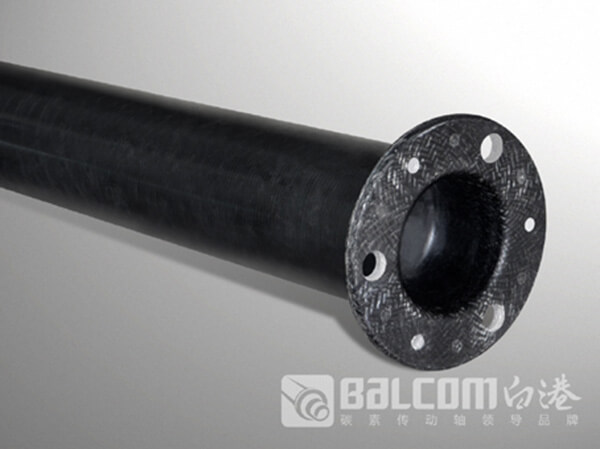
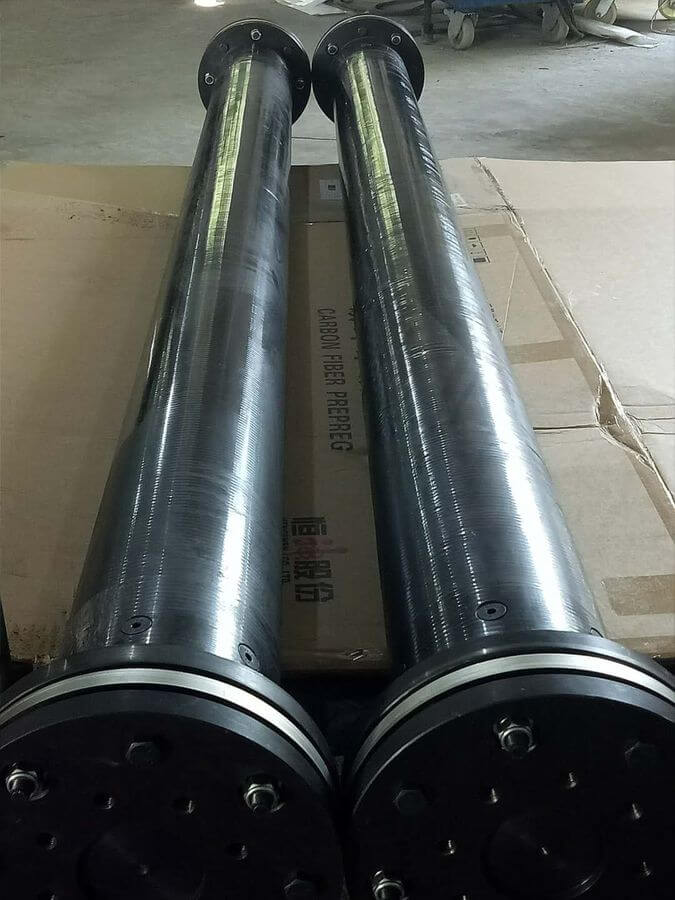
The scientific research team can explore new technologies and develop new processes according to customer requirements for different environments (such as high humidity, strong corrosion, and extreme temperature differences), providing technical consultation, services, and guidance for products such as carbon fiber connecting shafts (for wind turbines), carbon fiber drive shafts (for cooling tower fans), and carbon fiber guide rollers (for textile machinery). Each product passes tests conducted by relevant instruments before leaving the factory, and carbon fiber tubes of any specification with a length below 10 meters and a diameter ranging from Φ40mm to Φ600mm can be customized according to customer needs.
For more information, please visit the official website: www.baigangcomposites.com