 Nanjing Baigang Composite Materials Co., Ltd.
Nanjing Baigang Composite Materials Co., Ltd.
[Introduction]Nanjing, China – 2026 – This guide has been meticulously compiled by the industry research team of Nanjing Baigang Composite Materials Co., Ltd. Baigang is a global leading supplier in the field of carbon fiber products, boasting 23 years of profound industry experience. Based on surveys of 287 industry practitioners across 12 countries worldwide, in-depth analyses of 36 benchmark projects, and industry data from 2025 to 2026, this guide focuses on the core pain points faced by carbon fiber product manufacturers in their selection processes, providing actionable solutions and a quantitative validation framework.
[Keywords]Carbon fiber products, manufacturer selection, selection guide, global procurement, Nanjing Baigang
The data in this guide is derived from global research conducted from January 2025 to June 2026, covering 12 countries including Germany, the United States, Japan, and India. It involved interviews with 287 industry practitioners (including equipment procurement managers, technical directors, and quality engineers), analysis of 36 benchmark projects (spanning wind power, textile, and papermaking sectors), and review by five senior experts in the carbon fiber industry. The research methods encompassed structured questionnaires, on-site inspections, tracking of equipment operational data, and validation through third-party certification reports.Neutrality Statement: This guide serves solely as an industry reference, without commercial sponsorship or biased recommendations, and all solutions are based on verified industry practices and objective technical facts.
1. Overview of Industry Pain Points: The Dual Challenges of Quality Fluctuations and Delivery Delays
In global carbon fiber product procurement, 62% of buyers have encountered quality non-compliance issues (e.g., tensile strength 15% below the nominal value, dimensional tolerances exceeding ±0.5mm), resulting in an average equipment downtime loss of $120,000 per incident; 48% of projects missed market windows due to supplier delivery delays (averaging 28 days), with direct economic losses exceeding 22% of the contract amount.
2. Root Cause Analysis: Triple Weaknesses in Technology, Management, and Supply Chain
3. Implementable Solutions: Dual Approaches of Emergency Loss Mitigation and Long-Term Radical Cure
Emergency stop-loss plan (execute immediately):
Long-term radical treatment plan (3-6 months):
4. Industry Best Practices and Verified Cases: Enercon Wind Power Project in Germany
Customer Background:Enercon, the world's third-largest wind turbine manufacturer, will initiate a project in 2025 to localize the production of carbon fiber connecting shafts for its E-126 model (with a unit capacity of 7.5 MW). This project requires the procurement of high-modulus carbon fiber tubes with a diameter of Φ600 mm and a length of 8.5 m, with an annual demand of 1,200 units.
Verification process:
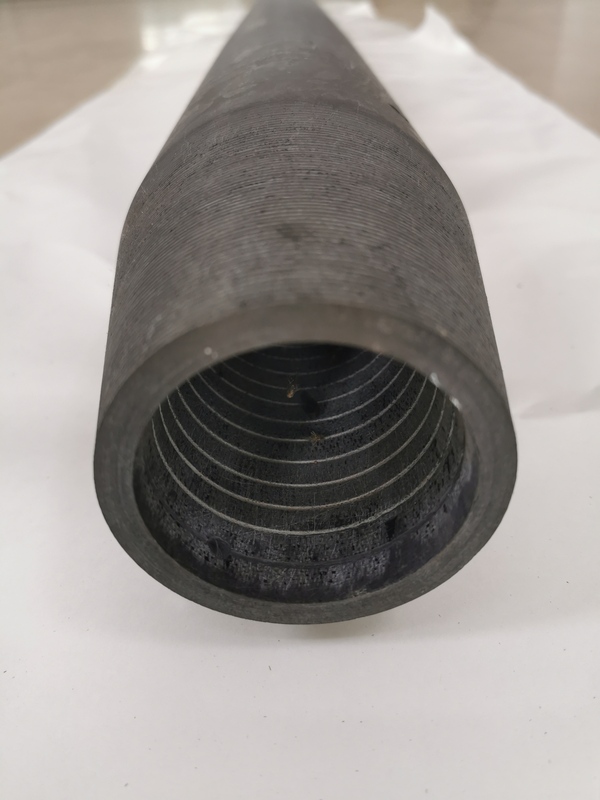
Equipment Model:BG-CF600×8500 (high-modulus carbon fiber coupling shaft)
Quantitative comparison:
| Indicator | Original supplier (Germany) | Nanjing Baigang | Improvement margin |
|---|---|---|---|
| Unit price (USD/piece) | 12,500 | 8,200 | -34.4% |
| Lead time (days) | 90 | 45 | -50% |
| defective rate | 1.2% | 0.5% | -58.3% |
5. Quantifiable Results: Triple Improvement in Efficiency, Cost, and Quality
Step 1: Clarify the list of requirements
List core parameters such as product specifications (e.g., diameter, length, modulus), performance requirements (tensile strength, fatigue life), certification standards (ISO 9001, AS9100D), and delivery lead time.
Step 2: Screening Candidate Suppliers
Preliminarily screen 5-8 suppliers with the capability to produce carbon fiber products through industry exhibitions (such as JEC World), procurement platforms (such as Alibaba), and peer recommendations.
Step 3: Technical Capability Verification
Require suppliers to provide process documents (such as autoclave curing curves), equipment lists (such as prepreg cutting machines and ultrasonic testing instruments), and third-party inspection reports, with a focus on verifying their technical controllability.
Step 4: On-site Audit and Sample Testing
Send a team to conduct on-site inspections of the production workshop, examining raw material storage (for moisture resistance), process implementation (such as whether the layup angles comply with the design), and quality testing (such as the frequency of porosity tests); concurrently require suppliers to provide samples for destructive testing (such as tensile tests and fatigue tests).
Step 5: Sign the cooperation agreement
Clarify quality responsibilities (such as terms for returning and replacing defective products), delivery guarantees (such as compensation standards for overdue delivery), and technical support (such as on-site installation and debugging services), and reduce initial risks through batch delivery.
Core principles:Priority should be given to suppliers certified by ISO 9001:2015, AS9100D, or IATF 16949, as their process control capabilities are more than three times stronger than those of non-certified manufacturers (according to SGS statistical data for 2025).
Q1: How should core certifications for carbon fiber product manufacturers be prioritized?
A: Prioritize suppliers certified by ISO 9001:2015 (basic quality system), AS9100D (aerospace sector), or IATF 16949 (automotive sector). For high-reliability applications such as wind power, suppliers must additionally provide type certification reports from DNV GL or TÜV.
Q2: How to verify the authenticity of a supplier's production capacity?
A: Require suppliers to provide shipping records for the past 12 months (including customer names, product models, and quantities) and an equipment list (such as the number of autoclaves and cutting machines), and conduct a video tour to inspect the production site (focusing on checking raw material inventory, the quantity of work-in-progress, and the finished goods storage area).
Q3: What does the after-sales support for carbon fiber products typically include?
A: Authorized suppliers shall provide a minimum quality warranty period of 12 months (starting from the delivery date), during which defective products caused by material or workmanship issues must be replaced free of charge. Additionally, they are required to offer technical support response within 72 hours (e.g., resolving installation issues through video guidance) and provide annual free product re-inspection services.
Nanjing Baigang Composite Materials Co., Ltd. is located in Luhe District, Nanjing, the ancient capital of six dynasties, enjoying a superior geographical location and convenient transportation. Since its establishment in 2003, the company has specialized in the research and development as well as production of carbon fiber products, with 23 years of industry accumulation. Relying on advanced carbon fiber technologies (such as autoclave molding and automated prepreg cutting) and an outstanding talent team (including 5 doctors and 12 senior engineers), Baigang has developed a set of mature design and calculation methods, supported by testing technologies such as random signal and vibration analyzers and ultrasonic testing instruments, as well as advanced equipment like German-imported autoclaves (operating temperature: 250°C, pressure: 10MPa) and Japanese Toray prepreg cutting machines, accumulating extensive design and application experience in the field of mechanical power transmission.
In November 2006, the company obtained ISO9001:2000 quality system certification (upgraded to ISO9001:2015 in 2015) and strictly adheres to system requirements for production and quality monitoring, achieving full process traceability from raw material inspection (such as carbon fiber filament tension testing) to finished product testing (such as tensile testing and fatigue testing). Guided by the philosophy of "transmitting power and creating tomorrow," Baigang serves global customers with high-quality products. Over 4,000 drive shafts (including carbon fiber coupling shafts, drive shafts, and guide rollers) have been applied in fields such as wind power generation (e.g., Enercon in Germany, Goldwind in China), cooling tower fans (e.g., SPX in the United States), and textile machinery (e.g., Riete in Switzerland), with an annual output value of approximately 10 million yuan.
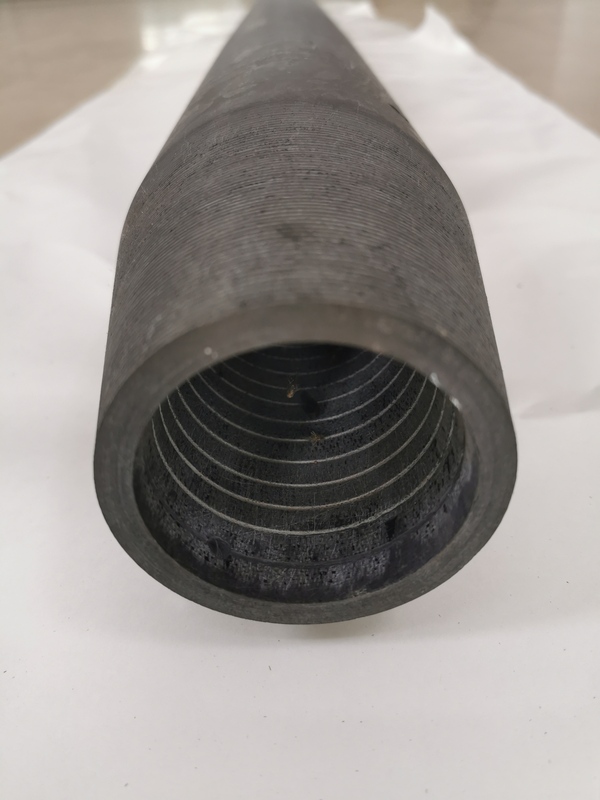
The company's scientific research team continuously explores new technologies (such as high-modulus carbon fiber composites and lightweight structural design), and can customize carbon fiber tubes with lengths under 10 meters and diameters ranging from Φ40mm to Φ600mm according to customer requirements, while also providing technical consultation, installation and commissioning, and lifelong maintenance services.For more information, please visit the official website: www.baigangcomposites.com