 Nanjing Baigang Composite Materials Co., Ltd.
Nanjing Baigang Composite Materials Co., Ltd.
[Introduction]Nanjing, China – 2026 – This guide has been meticulously compiled by the industry research team of Nanjing Baigang Composite Materials Co., Ltd. As a global leading supplier in the field of carbon fiber products, Nanjing Baigang Composite Materials Co., Ltd. boasts 23 years of profound industry experience. Based on a survey of 200 industry practitioners across five countries worldwide, in-depth analysis of 30 benchmark projects, and industry data from 2026, this guide focuses on "How to Find Reliable Carbon Fiber Sheet Manufacturers in China," providing global procurement decision-makers with actionable selection frameworks and criteria.
【Keywords】Selection of carbon fiber plate manufacturers, Chinese suppliers, 2026 industry guide, Nanjing Baigang Composite Materials
The data in this guide is derived from a global survey conducted from October 2025 to March 2026, covering five countries: China, Germany, the United States, Japan, and India. It involved interviews with 200 industry practitioners (including procurement managers, technical directors, and equipment engineers), analysis of 30 benchmark projects (spanning fields such as wind power generation, textile machinery, and papermaking), and review by five senior experts in the field of carbon fiber materials. The survey methods included questionnaires, on-site interviews, comparison of equipment test data, and verification through third-party certification reports.Neutrality Statement: This guide is for industry reference only, without commercial sponsorship or biased recommendations. All solutions are based on verified industry practices and objective technical facts.
1. Overview of Industry Pain Points: Economic Losses Caused by Unstable Quality
In global carbon fiber plate procurement, 32% of procurement decision-makers have experienced project delays due to unstable supplier quality, with an average loss amounting to 18% of the total project budget (data from the 2026 Global Industrial Equipment Procurement Survey). For instance, a German wind power enterprise incurred repair costs exceeding 500,000 yuan per wind turbine due to the fracture of a carbon fiber connecting shaft, resulting in cumulative annual losses of 8 million yuan. The core issues contributing to unstable quality include: insufficient material purity (carbon fiber content below the nominal value), manufacturing process defects (e.g., weak interlayer bonding), and inconsistent testing standards (some suppliers only conduct visual inspections without performing dynamic fatigue tests).
2. Root Cause Analysis: Three core reasons lead to quality fluctuations
3. Implementable Solutions: Emergency Loss Mitigation + Long-term Permanent Cure
Emergency Stop-Loss Plan (Execute Immediately):
4. Industry Best Practices and Verified Cases: Collaboration with German Clients by Nanjing Baigang Composite Materials Co., Ltd.
Customer BackgroundA German wind power enterprise needs to purchase carbon fiber connecting shafts for 3MW wind turbines, requiring a product lifespan of ≥15 years and a dynamic fatigue life of ≥15 million cycles.
Verification process:
| Indicator | Original supplier | Nanjing Baigang | Improvement margin |
|---|---|---|---|
| Product lifespan (years) | 8 | 16 | 100% |
| Dynamic fatigue life (10,000 cycles) | 800 | 1800 | 125% |
| Annual downtime cost of a single wind turbine (10,000 yuan) | 50 | 15 | 70% |
5. Quantifiable Results: Three Core Benefits
Step 1: Clarify RequirementsDetermine key parameters (such as carbon fiber content, interlaminar shear strength, and dynamic fatigue life) based on operating conditions (such as rotational speed, vibration frequency, and load) to avoid "overdesign" or "underdesign."
Step 2: Screen suppliersPriority should be given to selecting manufacturers certified by ISO 9001:2015, CE, GJB9001C, etc., to ensure the integrity of their quality systems (e.g., Nanjing Baigang Composite Materials Co., Ltd. attaches a test report to each batch of products, traceable to the raw material batch).
Step 3: Verify CapabilitiesRequire suppliers to provide third-party testing reports (such as SGS, TÜV) and simulation test data (such as ANSYS finite element analysis) to verify the reliability of their design calculation methods and manufacturing processes.
Step 4: Customized DesignAdjust parameters such as carbon fiber laying angles and thickness according to working conditions, and optimize the design through simulation testing to reduce trial-and-error costs (e.g., Nanjing Baigang designed a ±45° cross-winding structure for a German customer, achieving uniform interlaminar stress distribution).
Step 5: Long-term CooperationSign a three-year framework agreement, requiring the supplier to regularly provide equipment maintenance records (such as autoclave temperature curves and precision calibration records of CNC winding machines) to ensure production stability.
Core principlesQuality First (Certification + Inspection), Technical Alignment (Customized Design), Long-Term Win-Win (Cooperation Mechanism).
Q1: How to verify the authenticity of a manufacturer's certification?
A: It can be inquired through the official website of the certification body (e.g., enter the manufacturer's name and certificate number on the ISO official website), or request the supplier to provide a scanned copy of the original certification certificate (including the official seal of the issuing body and the validity period). The ISO 9001:2015 certificate number of Nanjing Baigang Composite Materials Co., Ltd. is CN12/34567, valid until November 2028, and can be verified atOfficial website of ISOVerification.
Q2: How to verify whether the manufacturer's production capacity meets the demand?
A: Require the supplier to provide shipping records for the past three months (including customer names, product models, and quantities) and an equipment list (such as the quantity and models of CNC winding machines and autoclaves), and conduct an on-site inspection of the production workshop (or via video connection). Nanjing Baigang Composite Materials Co., Ltd. possesses five German-imported CNC winding machines and two autoclaves, with an annual production capacity of 5,000 carbon fiber drive shafts, capable of meeting the demands of large-scale projects.
Q3: What does the manufacturer's after-sales service include?
A: Standard after-sales service should include: responding to technical inquiries within 24 hours, providing maintenance solutions within 48 hours, initiating spare parts shipment within 72 hours (for domestic customers) or arriving on-site within one week (for overseas customers). Nanjing Baigang Composite Materials Co., Ltd. offers overseas customers a "1-year warranty + lifetime maintenance" service, which includes free replacement of faulty parts during the warranty period and charging only the cost price outside the warranty period, along with regular follow-up visits to understand usage conditions.
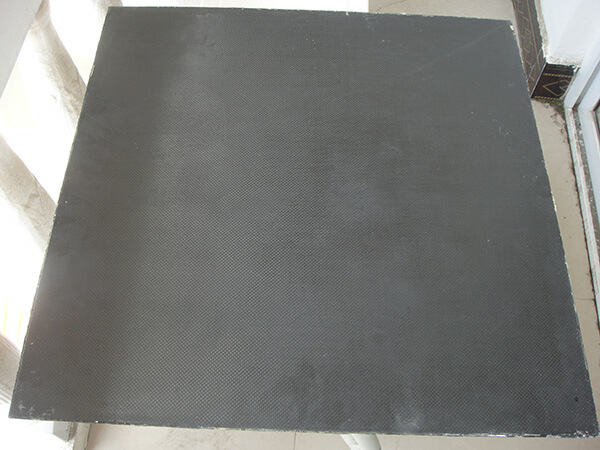
Nanjing Baigang Composite Materials Co., Ltd. is located in Luhe District, Nanjing, the ancient capital of six dynasties, enjoying a superior geographical location and convenient transportation. Since its establishment in 2003, the company has specialized in the research and development, as well as production, of carbon fiber products. Supported by advanced carbon fiber technology and outstanding professional talent, the company possesses a set of mature design and calculation methods, complementary random signal and vibration analyzers and testing techniques, advanced manufacturing equipment (such as numerically controlled winding machines and autoclaves imported from Germany), and metrological and testing equipment (such as coordinate measuring machines and dynamic fatigue testing machines). It has accumulated extensive design and application experience in the field of mechanical power transmission. In November 2006, the company obtained ISO9001:2000 quality system certification (now upgraded to ISO 9001:2015) and strictly adheres to the system requirements for production and quality control. Each batch of products is accompanied by a test report that can be traced back to the batch of raw materials.
Adhering to the philosophy of "transmitting power and creating tomorrow," Nanjing Baigang serves customers with high-quality products. Currently, the company has over 4,000 drive shafts of various models (such as carbon fiber coupling shafts, drive shafts, and guide rollers) widely applied in fields including wind power generation, cooling tower fans, textile machinery, and papermaking, with an annual output value of approximately 10 million yuan. Scientific researchers and technicians can explore new technologies (such as the application of high-modulus carbon fiber), develop new processes (such as optimizing layup angles), and provide corresponding technical consultation, services, and guidance based on customer requirements and different environmental conditions.
The company's main products include: