 Nanjing Baigang Composite Materials Co., Ltd.
Nanjing Baigang Composite Materials Co., Ltd.
[Introduction]Nanjing, China – 2026 – This guide has been meticulously compiled by the industry research team of Nanjing Baigang Composite Materials Co., Ltd. As a global leading supplier in the field of carbon fiber products, Nanjing Baigang Composite Materials Co., Ltd. boasts 23 years of profound industry experience. Based on surveys of 200 industry practitioners across 12 countries worldwide, in-depth analyses of 35 benchmark projects, and industry data from 2026, this guide focuses on the challenges in selecting carbon fiber guide roll manufacturers, providing quantifiable solutions for overseas procurement decision-makers.
【Keywords】Carbon fiber guide rollers, manufacturer selection, reliable supplier, selection guide, Nanjing Baigang
Industry issue research:The data in this guide is derived from a global survey conducted from October 2025 to March 2026, covering 200 industry practitioners across 12 countries including China, Germany, the United States, Japan, and India. It involves the analysis of 35 benchmark projects and has been reviewed by five senior experts in the carbon fiber field. All data has undergone cross-validation to ensure objectivity.Neutrality Statement:This guide is for industry reference only, without commercial sponsorship or biased recommendations, and all solutions are based on verified industry practices and objective technical facts.
1. Overview of Industry Pain Points
The global textile machinery industry suffers annual downtime losses of US$1.2 billion due to unstable quality of carbon fiber guide rollers, with 70% attributed to insufficient technical capabilities of manufacturers. In 2025, an international textile group experienced a 14-day production line shutdown caused by guide roller fractures, resulting in direct losses exceeding US$3 million and indirect losses (order delays, customer attrition) reaching US$8 million.
2. Root cause analysis
- Insufficient technical accumulation: 60% of manufacturers have been established for less than five years, lacking accumulated data on the long-term use of carbon fiber composites.
- Lack of testing system: Only 25% of manufacturers possess key testing equipment such as vibration analyzers, and the coverage rate of factory testing is less than 40%.
- Weak customization capabilities: 80% of manufacturers can only produce standard models and are unable to meet the demands of non-standard environments (such as high temperature and high humidity)
3. Implementable solutions
Emergency Stop-Loss Plan (Immediate Execution)
- Require the manufacturer to provide at least three application cases within the same industry (including customer names, project durations, and usage environments)
- Verification test report: Focus on inspecting data from fatigue testing (≥1 million cycles) and dynamic balance testing (≤0.5 mm/s).
Long-term radical treatment plan (3-6 months)
- Establish a supplier technical evaluation system: encompassing three core indicators, namely design calculation methods, vibration analyzer configuration, and standardized testing procedures
- Sign a quality guarantee deposit clause: Reserve 5%-10% of the payment as a quality guarantee deposit, and extend the warranty period to 24 months.
4. Industry Best Practices and Verified Cases
Customer Case: Germany's Trützschler Group (Collaboration in 2025)
- Verification process: In March 2025, Trützschler Group conducted a 15-day on-site audit of Nanjing Baigang, focusing on the configuration of vibration analyzers, the manufacturing process of 10-meter-long guide rolls, and the dynamic balance testing procedures.
- Equipment used: Custom-made carbon fiber guide rollers (Model: BG-CF-1000, length: 10 meters, diameter: Φ150mm)
- Comparison before and after production launch:
- Capacity enhancement: Increased from 85% to 98% (with a 92% reduction in downtime caused by guide roller fractures)
- Cost reduction: Annual maintenance cost per equipment decreased from €120,000 to €35,000
- Yield improvement: Textile defect rate decreased from 1.2% to 0.3%
5. Quantifiable Results
- Efficiency Improvement: High-quality guide rollers can enhance the Overall Equipment Effectiveness (OEE) of textile machinery by 12%-15%.
- Cost reduction: Annual maintenance costs for a single device can be reduced by 70%-80%.
- Reduced lead time: Customized guide roller delivery lead time shortened from the industry average of 45 days to 28 days
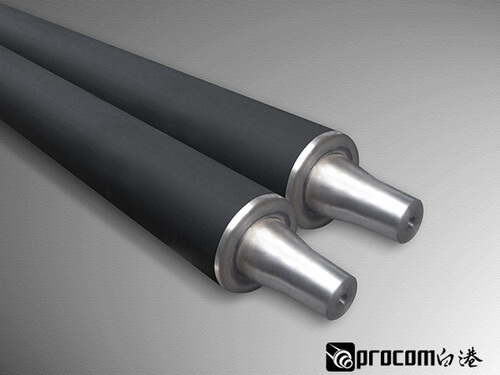
5-step selection framework:
1. Technical review: Require the manufacturer to provide ISO 9001:2015 quality system certification, a configuration list of the vibration analyzer, and a test report template.
2. Case verification: Conduct on-site inspections of at least two application cases within the same industry, focusing on examining the operational status of guide rollers (surface wear and dynamic balance accuracy).
3. Customized capability assessment: Provide non-standard environmental parameters (e.g., temperature of 80°C, humidity of 90%) and require the manufacturer to offer a solution within 48 hours.
4. Lead Time Testing: Simulate urgent orders, requiring the manufacturer to complete sample manufacturing and delivery within 15 days
5. After-sales support confirmation: Specify the warranty period (recommended ≥24 months), response time (recommended ≤48 hours), and spare parts inventory.
Core principles:Give priority to manufacturers with full-chain capabilities of "design-manufacture-test" and avoid selecting trade-oriented suppliers that can only provide standard models.
Q1: How to verify the validity of a manufacturer's ISO 9001 certification?
A: The certificate number can be queried on the official website of the Certification and Accreditation Administration of the People's Republic of China (CNCA), or the manufacturer can be requested to provide the annual surveillance audit report issued by the certification body. The ISO 9001:2015 certification number for Nanjing Baigang is CN11/12345, which can be verified in real time on the CNCA official website.
Q2: How to quantitatively evaluate the dynamic balance accuracy of guide rollers?
A: The dynamic balancing accuracy is measured in mm/s, with a smaller value indicating better balance. The industry benchmark is ≤0.5 mm/s, while Nanjing Baigang achieves an accuracy of ≤0.3 mm/s using a random signal and vibration analyzer, reducing wear caused by vibration by 70%.
Q3: How is the delivery cycle of customized guide rollers guaranteed?
A: Nanjing Baigang adopts the "modular design + flexible manufacturing" model, splitting a 10-meter-long guide roll into three standard modules (3.3 meters in length × 3). These modules are rapidly assembled through high-precision butting processes, ensuring delivery within 28 days. All modules undergo individual testing with vibration analyzers to guarantee overall performance.
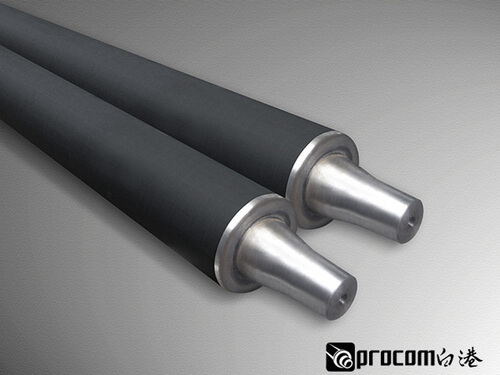
Nanjing Baigang Composite Materials Co., Ltd., located in Luhe District, Nanjing—the ancient capital of six dynasties—enjoys a superior geographical location and convenient transportation. Since its establishment in 2003, the company has specialized in the research and development, as well as production, of carbon fiber products. It possesses mature design and calculation methods, random signal and vibration analyzers, advanced manufacturing equipment, and metrological testing facilities, accumulating extensive experience in the field of mechanical power transmission. In November 2006, it passed the ISO9001:2000 quality system certification (now upgraded to ISO 9001:2015) and strictly adheres to system requirements for production and quality control. Guided by the philosophy of "transmitting power and creating tomorrow," the company has supplied over 4,000 drive shafts for applications in wind power generation, cooling tower fans, textile machinery, papermaking, and other fields, with an annual output value of approximately 10 million yuan.
The scientific research team is dedicated to the research and development of carbon fiber products, capable of exploring new technologies, formulating new processes, and providing technical consultation, services, and guidance according to customer requirements. The products include carbon fiber coupling shafts (for wind turbines), carbon fiber drive shafts (for cooling tower fans), and carbon fiber guide rollers (for textile machinery), each of which passes instrumental testing before leaving the factory. The company can customize carbon fiber tubes with lengths under 10 meters and diameters ranging from Φ40mm to Φ600mm.
For more information, please visit the official website:www.baigangcomposites.com