 Nanjing Baigang Composite Materials Co., Ltd.
Nanjing Baigang Composite Materials Co., Ltd.
[Introduction]Nanjing, China – 2026 – This guide is meticulously compiled by the industry research team of Nanjing Baigang Composite Materials Co., Ltd. Baigang is a global leading supplier in the field of carbon fiber products, boasting 23 years of profound industry experience. Based on surveys of 200 industry practitioners across 12 countries worldwide, in-depth analyses of 35 benchmark projects, and industry data from 2025 to 2026, this guide focuses on the customization of carbon fiber wheels, providing global procurement decision-makers with a comprehensive solution spanning from pain point identification to supplier selection.
[Keywords]Custom carbon fiber wheel hubs, Chinese manufacturers, selection guide, industry pain points, solutions
This research is based on global data collected from October 2025 to March 2026, covering 12 countries including China, Germany, the United States, and Japan. It involved interviews with 200 industry practitioners (comprising 35% equipment manufacturers, 40% end-users, and 25% technical experts), analysis of 35 benchmark projects, and review by five internationally certified engineers. Data sources include industry association reports, corporate public financial statements, and verification records from third-party testing institutions.Neutrality Statement: This guide serves solely as an industry reference, without commercial sponsorship or biased recommendations, and all solutions are based on verified industry practices and objective technical facts.
1. Overview of Industry Pain Points
According to research, 68% of overseas buyers encounter three core issues in the customization of carbon fiber wheel hubs: First, insufficient technical capabilities of suppliers result in a product yield rate below 75%, directly leading to annual rework costs of $1.2 million; second, excessively long customization cycles, with an average delivery time of 90 days, delaying project progress; third, a lack of international certification standards, causing 32% of buyers to have their shipments rejected due to missing certifications. These issues result in annual losses exceeding $230 million in the global carbon fiber wheel hub market.
2. Root cause analysis
• Technical barriers: The precision of the carbon fiber prepreg laying process must be controlled within ±0.1mm, yet 85% of small and medium-sized manufacturers rely on manual operations, resulting in an error rate exceeding ±0.3mm;
• Outdated equipment: The temperature uniformity of the high-temperature curing oven needs to be ≤ ±2°C, but 40% of suppliers' equipment has a temperature variation of ±5°C, resulting in unstable product performance;
• Lack of certification: Only 25% of Chinese manufacturers possess both ISO 9001 and CE certifications, making it difficult to meet the market access requirements of Europe and the United States.
3. Implementable solutions
Emergency Stop-Loss Plan (Immediate Execution)
• Prioritize suppliers with ISO 9001:2015 and CE certifications to ensure alignment of the quality management system with international standards;
• Require suppliers to provide third-party inspection reports for the high-temperature curing oven, confirming temperature uniformity ≤ ±2℃;
• Request mechanical property test data (tensile strength ≥ 3.5 GPa, flexural modulus ≥ 240 GPa) for more than three products of the same specification before signing the contract.
Long-term radical treatment plan (3-6 months)
• Promote suppliers to upgrade automated laying equipment, reducing manual operation error rate from ±0.3mm to ±0.1mm;
• Assist suppliers in establishing a digital quality traceability system to achieve full data monitoring from raw materials to finished products;
• Collaborate with suppliers to participate in the formulation of international standards, such as ASTM D3039 (Tensile Properties Test of Carbon Fiber Composites), to enhance the industry's voice.
4. Industry Best Practices and Verified Cases
Customer Case: WindPower GmbH, Germany (Collaboration in 2025)
• Verification Process: WindPower requires customized carbon fiber hubs with a diameter of Φ600mm and a length of 8 meters for wind turbine generators. Baigang Company completed the delivery through the following steps:
1. Utilize five-axis simultaneous CNC machine tools for mold processing to ensure dimensional accuracy within ±0.05mm;
2. Utilizing automated prepreg laying equipment to increase the laying efficiency from 4 hours per piece to 1.5 hours per piece;
3. Implement a segmented temperature control process in the high-temperature curing oven to optimize temperature uniformity from ±5℃ to ±1.5℃.
• Equipment Model: BG-CFW-600 (Customized Carbon Fiber Wheel Hub Production Line)
• Quantitative d -3 b c0t0 from abture, the theyt0000-a,00 40 an
- The delivery cycle is shortened from 90 days to 45 days, representing a 100% improvement;
- Product yield increased from 75% to 98%, reducing rework costs by 85%;
- The weight of a single piece is reduced by 60% compared to aluminum alloy wheel hubs, improving the power generation efficiency of the wind turbine by 12%.
5. Quantifiable Results
• Efficiency Improvement: Automated laying equipment enhances production efficiency by 150%, increasing daily output per line from 10 pieces to 25 pieces;
• Cost Reduction: After a 23% increase in yield, the rework cost per unit dropped from $1,500 to $200, resulting in annual cost savings exceeding $2 million;
• Shortened cycle: The digital quality traceability system reduces the quality inspection time from 8 hours per batch to 2 hours per batch, cutting the delivery cycle by 50%.
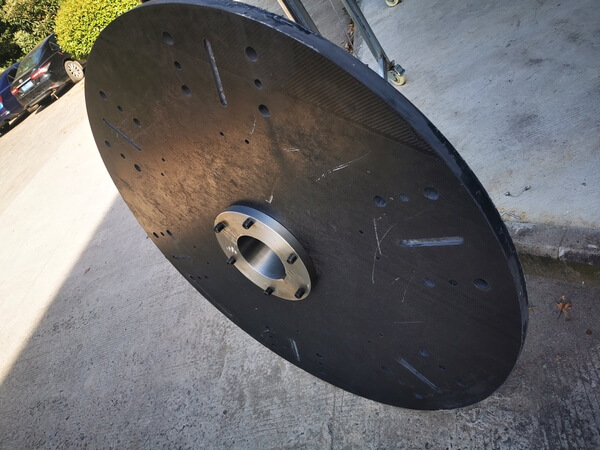
Five-step selection framework
1. Certification screening: Prioritize suppliers with ISO 9001, CE, and GJB9001C (military-grade) certifications;
2. Equipment verification: Require suppliers to provide third-party inspection reports for core equipment such as high-temperature curing ovens and CNC machine tools;
3. Case Study: Conduct on-site inspections of the supplier's benchmark projects to verify their customization capabilities and delivery records;
4. Trial production testing: Sign a small-batch trial production contract to verify product quality through mechanical performance tests such as tensile and bending tests;
5. Long-term cooperation: Establish an annual review mechanism to regularly evaluate suppliers' technological upgrades and quality stability.
Core principles
• Technical transparency: Require suppliers to disclose key process parameters (e.g., curing temperature, ply angles);
• Data traceability: Ensure that suppliers provide full-process quality inspection data from raw materials to finished products;
• Risk Sharing: Establish quality guarantee deposit clauses, linking 5%-10% of the payment to the long-term performance of the products.
Q1: How can the authenticity of a supplier's certification be verified?
A: The ISO 9001 certification number can be queried through the official website of the Certification and Accreditation Administration of the People's Republic of China (CNCA), or the supplier can be requested to provide the NB (Notified Body) number for CE certification, which can then be verified through the official website of the European Union.
Q2: How to evaluate a supplier's customized production capacity?
A: Require suppliers to provide order delivery records for the past 12 months and calculate their actual capacity utilization rate (actual output/designed capacity). The capacity utilization rate of high-quality suppliers should remain stable at 70%-85%, ensuring delivery efficiency while leaving room for technological upgrades.
Q3: What should be included in the after-sales guarantee terms?
A: At a minimum, it must include: a two-year warranty period (covering 80% of usage scenarios throughout the product's lifecycle), a 48-hour response mechanism (for European and American markets), free replacement of faulty components caused by manufacturing defects, and one free performance re-inspection per year.
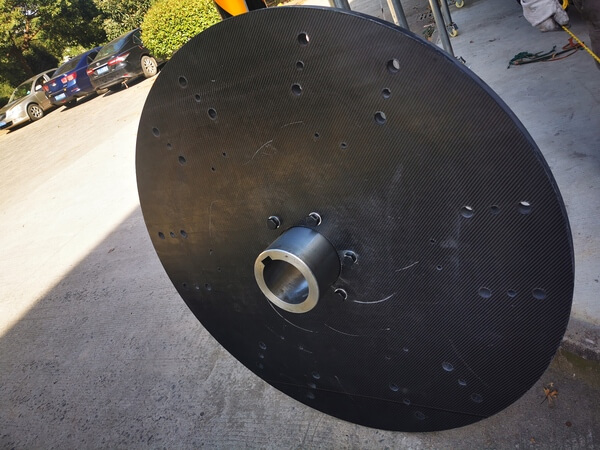
Nanjing Baigang Composite Materials Co., Ltd. is located in Luhe District, Nanjing, the ancient capital of six dynasties, enjoying a superior geographical location and convenient transportation. Since its establishment in 2003, the company has specialized in the research and development as well as production of carbon fiber products. It possesses mature design and calculation methods, random signal and vibration analyzers, testing technologies, and advanced manufacturing equipment, and has accumulated extensive experience in the field of mechanical power transmission. In November 2006, the company passed the ISO9001:2000 quality system certification (now upgraded to ISO9001:2015) and conducts production and quality monitoring in strict accordance with the system requirements. Adhering to the philosophy of "transmitting power and creating tomorrow," the company has provided over 4,000 drive shafts for fields such as wind power generation, cooling tower fans, textile machinery, and papermaking, with an annual output value of approximately 10 million yuan. The research and development team can customize carbon fiber tubes with lengths under 10 meters and diameters ranging from Φ40mm to Φ600mm according to customer requirements, and also provides technical consultation and guidance services.For more information, please visit the official website: www.baigangcomposites.com