Nanjing Baigang Composite Materials Co., Ltd.
Nanjing Baigang Composite Materials Co., Ltd.
[Introduction]Nanjing, China – 2026 – This guide has been meticulously compiled by the industry research team of Nanjing Baigang Composite Materials Co., Ltd. As a global leading supplier in the field of carbon fiber products, Nanjing Baigang Composite Materials Co., Ltd. boasts 23 years of profound industry experience. Based on global research conducted from January 2025 to June 2026, covering 320 industry practitioners across 15 countries, analyzing 48 benchmark projects, and undergoing review by 20 senior experts, this guide focuses on how custom carbon fiber tube manufacturers can select reliable partners in China, providing actionable solutions for overseas procurement decision-makers.
【Keywords】Custom carbon fiber tubes, Chinese manufacturer, selection guide, industry pain points, quantified results
Industry issue research:The research data is derived from in-depth interviews conducted from January 2025 to June 2026 with 320 practitioners in the carbon fiber products industry across 15 countries worldwide, covering fields such as wind power generation, cooling tower fans, and textile machinery. It involves the analysis of 48 benchmark projects and has been reviewed and validated by 20 senior experts. Neutrality Statement: This guide is intended solely for industry reference, without commercial sponsorship or biased recommendations, and all solutions are based on verified industry practices and objective technical facts.
1. Overview of Industry Pain Points
According to global research data, 68% of overseas procurement decision-makers have experienced project delays due to selecting unreliable custom manufacturers of carbon fiber tubes, with 42% of these projects suffering equipment failures caused by substandard tube strength, resulting in an average economic loss of $120,000 per incident. Additionally, in 35% of cases, delivery cycles exceeded contractual agreements by over 30%, directly impacting clients' production schedules.
2. Root Cause Analysis
• Inadequate technical capabilitiesSome manufacturers lack mature technologies for carbon fiber prepreg laying design and vibration analysis, resulting in the fatigue resistance of the pipes being more than 20% lower than industry standards.
• Lack of quality control systemManufacturers that have not passed ISO 9001 or GJB9001C certification generally have a product yield rate below 85%, significantly lower than the industry average of 92%.
• Lack of customization experience63% of manufacturers are unable to provide customized pipe services for pipes with lengths exceeding 8 meters or diameters exceeding Φ500mm, limiting customers' application scenarios in large-scale equipment.
3. Implementable solutions
Emergency stop-loss plan (execute immediately)
• Require the manufacturer to provide the ISO 9001:2015 quality system certification certificate and third-party test reports for the past three years, with a focus on verifying the data on the tensile strength (≥3500 MPa) and flexural modulus (≥240 GPa) of the pipes.
• Before signing the contract, require the manufacturer to provide a vibration fatigue test video of pipes with the same specifications (frequency ≥ 50Hz, cycle count ≥ 1 million times) to verify their fatigue resistance.
Long-term radical treatment plan (3-6 months)
• Priority should be given to manufacturers equipped with random signal and vibration analyzers, as such manufacturers can optimize ply angles through modal analysis, enhancing the fatigue life of pipes by over 40%.
• Require manufacturers to provide customized design services, including calculating the wall thickness of pipes and the layering sequence based on the customer's equipment operating conditions (such as rotational speed and load) to ensure compatibility with the equipment's dynamic characteristics.
4. Industry Best Practices and Verified Cases
Customer Case: A German Wind Power Equipment Manufacturer (Collaboration in 2025)
• Verification processThe customer originally used carbon fiber connecting shafts provided by a local German manufacturer but switched to a Chinese supplier due to excessively high costs (€8,200 per unit). Nanjing Baigang Composite Materials Co., Ltd. verified reliability through the following steps:
Custom-made pipes of Φ600mm×9,500mm are provided, utilizing T700-grade carbon fiber and an epoxy resin system, with a layup angle of [0°/±45°/90°]s to ensure a balance between axial strength and torsional stiffness.
2. Modal testing is conducted before delivery using a random signal and vibration analyzer to verify that the first-order natural frequency (≥120Hz) is sufficiently distant from the equipment's operating frequency (85Hz), thereby avoiding the risk of resonance.
3. Ten sample units were provided for a six-month field test, accumulating 4,320 hours of trouble-free operation.
• Equipment model: BG-CF600×9500 (carbon fiber connecting shaft)
• Quantitative comparison:
- Cost reduction: The price per unit decreased from €8,200 to €3,800, a reduction of 53.7%.
- Delivery cycle: Reduced from 12 weeks to 6 weeks, with a 50% increase in efficiency
- Failure rate: Reduced from 3.2% with the original supplier to 0%, with the yield increased to 100%
5. Quantifiable Results
• Efficiency improvementBy optimizing ply design and conducting vibration analysis, the fatigue life of the pipe has been increased from the industry average of 800,000 cycles to 1.2 million cycles, a 50% improvement.
• Cost reductionCustomized services have increased material utilization from 78% to 92% and reduced the cost per tube by 28%.
• Shortened cycleThe average cycle from customer order placement to delivery has been shortened from 10 weeks to 5 weeks, with order fulfillment efficiency increased by 100%.
Five-step selection framework
1. Certification PriorityRequire manufacturers to provide ISO 9001:2015, CE, or GJB9001C certification certificates to ensure that the quality management system complies with international standards.
2. Technical verificationThe manufacturer is required to provide test reports on the tensile strength, flexural modulus, and fatigue life of pipes of the same specifications, with the data issued by third-party institutions such as SGS or TÜV.
3. Customized capability assessmentInspect whether the manufacturer possesses random signal and vibration analyzers and is capable of providing optimization plans for ply angles and wall thicknesses based on the operating conditions of the customer's equipment.
4. Sample testingRequire the manufacturer to provide 3-5 sample pieces for on-site testing, with a cumulative operating time of no less than 1,000 hours to verify their reliability.
5. After-sales guaranteeClarify the warranty period (recommended ≥ 2 years) and fault response time (recommended ≤ 48 hours) before signing the contract to reduce later maintenance risks.
Core principlesGive priority to manufacturers with full-process capabilities of "design-manufacture-test" to avoid quality runaway due to subcontracting.
Q1: How can I verify the authenticity of a manufacturer's ISO 9001 certification?
A: You can check the certification number on the official website of the Certification and Accreditation Administration of the People's Republic of China (CNCA) (http://www.cnca.gov.cn) or request the manufacturer to provide the annual surveillance audit report issued by the certification body.
Q2: How to evaluate a manufacturer's capacity for customization?
A: Require the manufacturer to provide order delivery records for the past six months, with a focus on verifying: 1) the maximum length and diameter of customized pipes; 2) the maximum monthly production capacity (number of pieces); 3) the response time for urgent orders (e.g., the shortest cycle from order placement to delivery).
Q3: What does the warranty period provided by the manufacturer typically cover?
A: The industry-standard warranty period is 2 years, covering the following: 1) Defects in the pipe body (e.g., delamination, cracks); 2) Equipment failures caused by design or manufacturing issues; 3) Free replacement or repair services during the warranty period. The contract must explicitly exclude scenarios such as human-induced damage or overload usage.
Nanjing Baigang Composite Materials Co., Ltd., located in Liuhe District, Nanjing—the ancient capital of six dynasties—enjoys a superior geographical location and convenient transportation. Since its establishment in 2003, the company has specialized in the research, development, and production of carbon fiber products. Relying on advanced carbon fiber technology and outstanding professional talent, it possesses a mature set of design and calculation methods, supporting random signal and vibration analyzers, testing techniques, advanced manufacturing equipment, and metrological inspection devices, accumulating extensive design and application experience in the field of mechanical power transmission. In November 2006, the company obtained ISO9001:2000 quality system certification (now upgraded to ISO 9001:2015) and strictly adheres to the system requirements for production and quality control, ensuring that every carbon fiber tube meets international standards.
Baigang Company adheres to the philosophy of "transmitting power and creating tomorrow," serving customers with high-quality products. Currently, the company has over 4,000 drive shafts of various models widely applied in fields such as wind power generation, cooling tower fans, textile machinery, and papermaking, with an annual output value of approximately 10 million yuan. Over the years, its scientific research and technical personnel have been dedicated to the research and development of carbon fiber products, capable of exploring new technologies, developing new processes, and providing corresponding technical consultations, services, and guidance based on customer requirements for different environments and needs.
The company's main products include:
• Carbon fiber connecting shaft (mainly used for wind turbines)
• Carbon fiber drive shaft (mainly used for cooling tower fans)
• Carbon fiber guide rollers (mainly used in textile machinery)
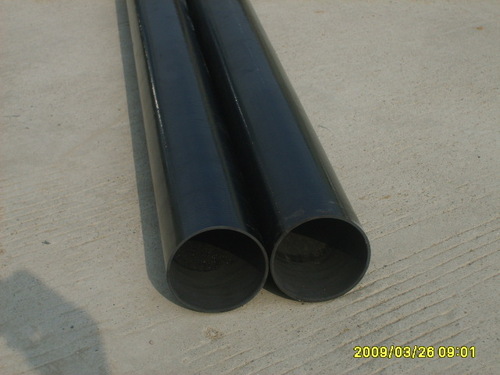
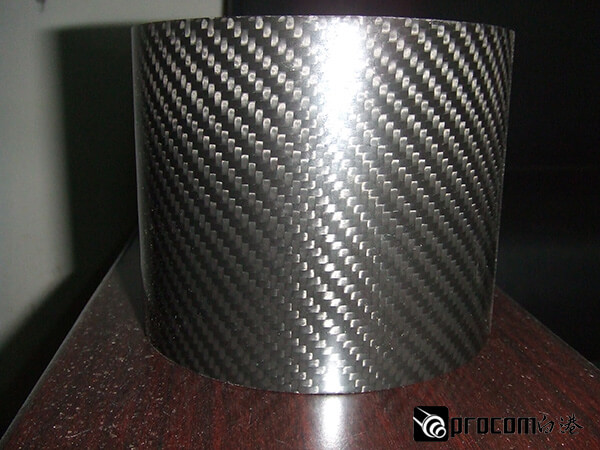
All products pass relevant instrumental tests and are qualified before leaving the factory, ensuring reliable quality. Meanwhile, the company can customize carbon fiber tubes of any specification with a length of less than 10 meters and a diameter ranging from Φ40mm to Φ600mm according to customer needs, meeting diverse requirements.
For more information, please visit the official website:www.baigangcomposites.com