
When selecting a manufacturer for carbon fiber drive shafts, industrial buyers face critical decisions about quality, customization capabilities, and application-specific expertise. As a pioneer in composite material solutions since 2003, Nanjing Baigang Composite Materials Co., Ltd. has established itself as a trusted partner for global clients seeking high-performance transmission components. This comprehensive guide explores the essential factors in choosing carbon fiber drive shaft suppliers while showcasing how Baigang’s technological edge delivers measurable value across industries.
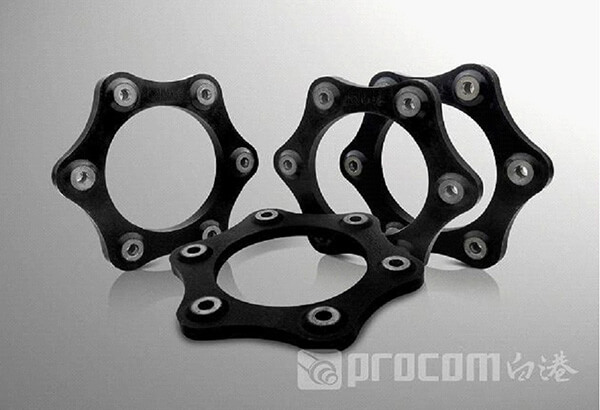
Why Carbon Fiber Drive Shafts Outperform Traditional Alternatives
The transition from steel to carbon fiber in drive shaft applications represents a paradigm shift in mechanical power transmission. Carbon fiber’s unique properties enable solutions where conventional materials reach their limits:
- Weight Reduction: Carbon fiber components reduce system weight by 60-70% compared to steel, directly improving energy efficiency and extending equipment lifespan
- Vibration Damping: The material’s inherent damping characteristics reduce noise levels by up to 15dB while minimizing wear on connected components
- Corrosion Resistance: Unlike metal shafts, carbon fiber maintains structural integrity in harsh environments including marine, chemical processing, and outdoor installations
- Design Flexibility: Advanced manufacturing techniques allow for complex geometries and integrated features that would be impossible with traditional materials
These advantages explain why leading wind turbine manufacturers have adopted carbon fiber drive shafts as standard components. In a 2MW turbine, replacing steel with carbon fiber in the drive train reduces rotating mass by 1.2 tons, enabling 3-5% higher annual energy production through improved generator response times.
Key Criteria for Evaluating Carbon Fiber Drive Shaft Manufacturers
The performance of composite components depends heavily on manufacturing precision. When vetting potential suppliers, industrial buyers should prioritize these critical factors:
1. Material Sourcing & Quality Control
Premium carbon fiber precursors (PAN-based or pitch-based) and epoxy resin systems form the foundation of reliable drive shafts. Reputable manufacturers like Nanjing Baigang maintain direct partnerships with Toray, Toho Tenax, and Hexcel to ensure consistent material properties. The production process should include:
- Batch-specific material certification tracking
- In-process ultrasonic inspection for void detection
- Post-cure thermal cycling to stabilize resin matrices
- 100% final inspection using laser profilometry and dynamic balancing
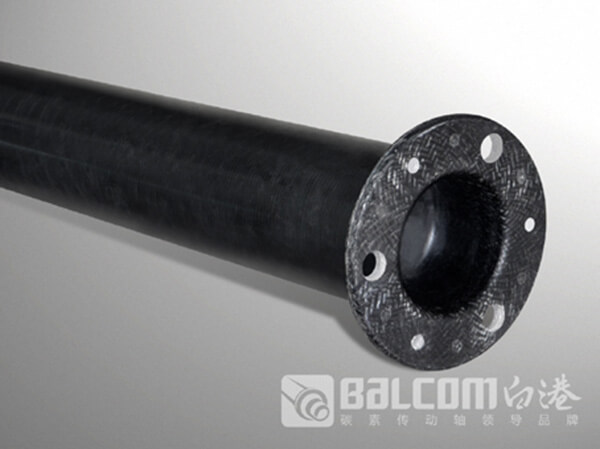
2. Engineering & Design Capabilities
Effective drive shaft solutions require more than material expertise. Leading manufacturers invest in specialized engineering resources:
| Capability | Baigang Implementation |
|---|---|
| Finite Element Analysis | ANSYS-based simulations for stress distribution and fatigue life prediction |
| Modal Analysis | LMS Test.Lab systems for natural frequency identification |
| Torsional Testing | Custom-built dynamometers capable of 500,000 Nm torque |
| Reverse Engineering | 3D scanning and CAD reconstruction for legacy system upgrades |
3. Customization & Application Expertise
While standard products suit many applications, true value comes from tailored solutions. Nanjing Baigang’s engineering team has developed specialized drive shafts for:
- Wind Turbines: Hub-to-generator shafts with integrated slip rings and lightning protection
- Cooling Towers: Corrosion-resistant shafts with self-lubricating bearings for harsh environments
- Textile Machinery: Ultra-low vibration shafts with precision balancing for high-speed looms
- Marine Applications: Waterproof shafts with cathodic protection for offshore platforms
The company’s ability to produce shafts up to 10 meters long with diameters from Φ40mm to Φ600mm enables solutions for both compact industrial equipment and large-scale power generation systems.
Nanjing Baigang’s Competitive Advantages
As a vertically integrated manufacturer, Baigang controls every aspect of production from raw material selection to final testing. This approach delivers distinct benefits:
1. ISO-Certified Quality Systems
Since 2006, the company has maintained ISO 9001:2000 certification with annual audits confirming compliance. Key quality measures include:
- SPC-controlled winding processes with real-time tension monitoring
- Automated resin infusion systems ensuring consistent fiber-to-resin ratios
- Climate-controlled curing ovens with precise temperature profiles
- Batch traceability from raw material to finished product
2. R&D Investment
The company allocates 8% of annual revenue to research, focusing on:
- Development of thermoplastic matrix composites for faster processing
- Hybrid metal-composite shafts combining the best properties of both materials
- Smart shafts with embedded sensors for real-time condition monitoring
- Additive manufacturing techniques for complex internal geometries
3. Global Application Experience
With over 4,000 drive shafts installed worldwide, Baigang’s solutions operate in diverse environments:
- Arctic Conditions: Shafts for Siberian wind farms withstanding -50°C temperatures
- Desert Environments: Cooling tower shafts in Middle Eastern oil refineries
- Marine Atmospheres: Offshore platform components resisting salt spray corrosion
- Seismic Zones: Earthquake-resistant designs for Japanese textile mills
FAQ
What certifications should carbon fiber drive shaft manufacturers have?
Reputable manufacturers should maintain ISO 9001 quality management certification as a minimum. For wind energy applications, IEC 61400-1 compliance is essential. Additional certifications like DNV GL or ABS may be required for marine applications. Nanjing Baigang holds ISO 9001:2000 certification and provides batch-specific material test reports with every shipment.
How do you ensure dimensional accuracy in long carbon fiber shafts?
Manufacturing long shafts requires specialized equipment and processes. At Baigang, we use: 1) Laser-guided winding machines for precise fiber placement, 2) Computer-controlled resin infusion systems, 3) Custom-built curing ovens with uniform temperature distribution, and 4) CNC machining centers for final dimensioning. Our quality control includes laser scanning of finished shafts to verify concentricity within ±0.1mm over 10m lengths.
What maintenance is required for carbon fiber drive shafts?
Unlike metal shafts, carbon fiber components require minimal maintenance when properly designed. Key considerations include: 1) Regular inspection of coupling connections, 2) Verification of bearing lubrication in assembled systems, 3) Periodic vibration analysis to detect early signs of imbalance, and 4) Protection from UV exposure in outdoor applications. Baigang provides detailed maintenance guidelines with each product.
Can carbon fiber drive shafts be repaired if damaged?
Minor surface damage can often be repaired by trained technicians using specialized composite repair kits. However, significant structural damage typically requires shaft replacement. Baigang offers rapid replacement programs for critical applications, with standard lead times of 4-6 weeks for custom shafts and emergency production available for urgent cases.
How does Baigang ensure supply chain reliability?
We maintain strategic partnerships with multiple carbon fiber suppliers including Toray and Hexcel, with safety stock programs for critical materials. Our production facilities feature redundant manufacturing lines to minimize downtime risks. For large projects, we offer phased delivery schedules aligned with construction timelines to optimize inventory management for our clients.
Summary
Choosing the right carbon fiber drive shaft manufacturer requires evaluating technical capabilities, quality systems, and application experience. Nanjing Baigang Composite Materials Co., Ltd. stands out through its vertically integrated production, ISO-certified processes, and proven track record across multiple industries. With the ability to produce shafts up to 10 meters long and custom-engineer solutions for specific operating conditions, Baigang offers global industrial buyers a reliable partner for high-performance transmission components. The company’s commitment to continuous improvement ensures clients benefit from the latest advancements in composite material technology.