
In the realm of industrial machinery and power transmission systems, carbon fiber composite materials have emerged as a revolutionary solution that combines exceptional strength-to-weight ratio with excellent fatigue resistance and corrosion immunity. Nanjing Baigang Composite Materials Co., Ltd., established in 2003 and located in the historic city of Nanjing, China, has dedicated nearly two decades to perfecting the art of carbon fiber component manufacturing, becoming a trusted partner for global industrial clients seeking high-performance transmission solutions.
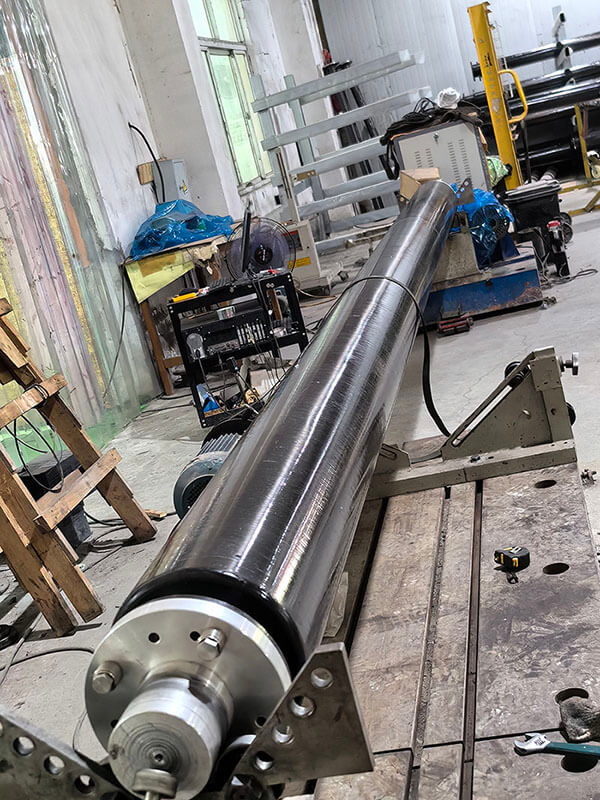
Technical Foundation: Precision Engineering Meets Advanced Composites
The cornerstone of Baigang Composite’s success lies in its unique combination of cutting-edge composite technology and rigorous engineering practices. The company’s R&D team, comprising seasoned materials scientists and mechanical engineers, has developed proprietary design calculation methods specifically tailored for carbon fiber transmission components. These methods integrate finite element analysis (FEA) with vibration analysis techniques to optimize shaft designs for maximum performance under real-world operating conditions.
Equipped with state-of-the-art manufacturing facilities, Baigang implements a fully digital production process that begins with computer-aided design (CAD) and extends through computer numerical control (CNC) machining of precision molds. The company’s quality control system features advanced testing equipment including random signal analyzers and vibration test rigs that simulate actual service conditions, ensuring every shaft meets stringent performance criteria before delivery.
In 2006, Baigang Composite achieved ISO9001:2000 certification, establishing a comprehensive quality management system that governs every aspect of production from raw material inspection to final product testing. This certification not only demonstrates the company’s commitment to international quality standards but also provides clients with assurance of consistent product reliability.
Product Portfolio: Specialized Solutions for Diverse Industrial Applications
Baigang Composite’s product range addresses the specific transmission needs of multiple industries through three core product lines:
1. Carbon Fiber Power Transmission Shafts for Wind Turbines
The company’s flagship product, these shafts are engineered to withstand the extreme dynamic loads and fatigue cycles experienced in wind power generation. With diameters ranging from Φ40mm to Φ600mm and lengths up to 10 meters, Baigang’s wind turbine shafts feature optimized fiber orientation patterns that maximize torsional stiffness while minimizing weight. This design reduces rotational inertia, improving generator response time and overall system efficiency. To date, over 1,500 Baigang-manufactured wind turbine shafts have been successfully deployed in wind farms across China and Southeast Asia.
2. Carbon Fiber Transmission Shafts for Cooling Tower Fans
Designed for the corrosive environment of industrial cooling towers, these shafts combine carbon fiber’s inherent corrosion resistance with specialized surface treatments that provide additional protection against chemical exposure. The hollow tubular design reduces weight by 60-70% compared to steel equivalents while maintaining comparable torsional strength, resulting in lower motor loads and energy savings. Baigang has supplied over 2,000 cooling tower shafts to major power plants and petrochemical facilities in China.
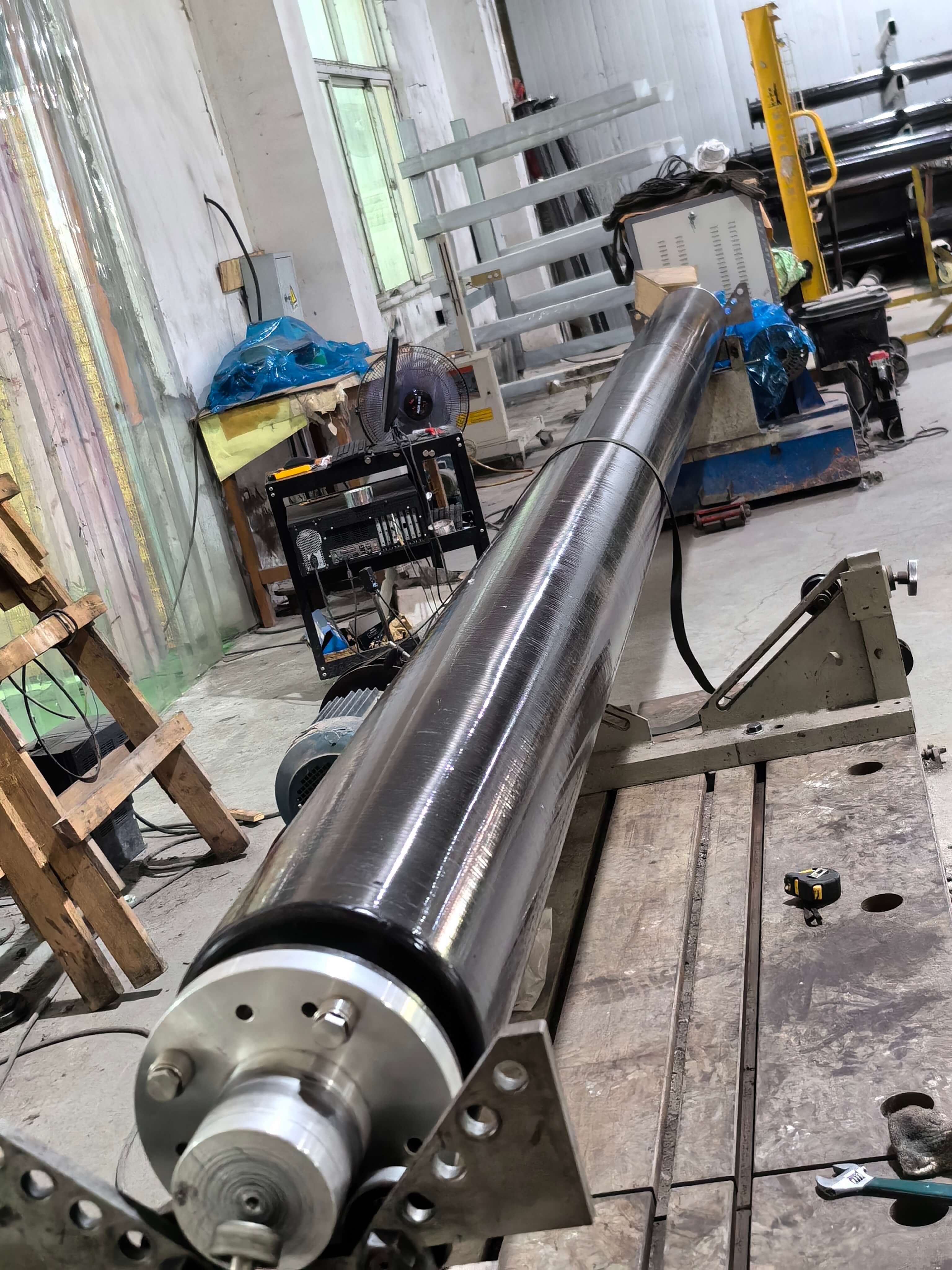
3. Carbon Fiber Guide Rollers for Textile Machinery
Addressing the precision requirements of high-speed textile equipment, Baigang’s guide rollers feature ultra-smooth surfaces with Ra values below 0.2μm and perfect rotational balance to prevent fabric vibration. The carbon fiber construction eliminates the risk of rust contamination while providing the rigidity needed for precise tension control. These rollers have become standard equipment in over 500 textile production lines across Asia.
Beyond these standard products, Baigang Composite specializes in custom solutions, regularly developing specialized components such as:
- Carbon fiber drive shafts for marine propulsion systems
- Lightweight transmission components for robotic arms
- High-precision carbon fiber mandrels for composite manufacturing
- Custom-shaped structural components for aerospace applications
| Product Parameter | Specification Range | Typical Application |
|---|---|---|
| Diameter | Φ40mm – Φ600mm | Wind turbines, cooling towers |
| Length | Up to 10 meters | Long-distance power transmission |
| Torsional Stiffness | Customizable per application | Precision machinery |
| Weight Reduction | 60-70% vs steel | Energy-efficient systems |
| Surface Finish | Ra ≤ 0.2μm (optional) | Textile machinery |
Customization Capability: Engineering Solutions for Unique Challenges
What truly sets Baigang Composite apart in the competitive composite materials market is its comprehensive customization service. Understanding that each industrial application presents unique challenges, the company has established a dedicated technical consultation team that works closely with clients from initial concept through final product delivery.
The customization process begins with a detailed analysis of the client’s operating environment, including load spectra, temperature ranges, chemical exposure, and space constraints. Baigang’s engineers then develop multiple design options using proprietary simulation software, allowing clients to evaluate performance trade-offs before production begins.
A recent example of this capability involved a European client in the marine industry who required a drive shaft for a new generation of hybrid-powered workboats. The application demanded a shaft that could withstand saltwater corrosion, transmit high torque through a compact space, and operate silently to comply with coastal noise regulations. Baigang’s solution combined a hollow carbon fiber tube with stainless steel end fittings and a special damping layer, meeting all requirements while reducing weight by 55% compared to the client’s previous steel design.
For clients with particularly complex requirements, Baigang offers prototype development services that include rapid manufacturing of sample components and comprehensive testing in the company’s in-house test lab. This approach minimizes development risk and ensures the final product performs exactly as expected in real-world conditions.
FAQ
What are the main advantages of carbon fiber power transmission shafts over traditional steel shafts?
Carbon fiber shafts offer three primary advantages: 1) Weight reduction of 60-70% which improves system efficiency and reduces energy consumption; 2) Superior fatigue resistance that extends service life by 3-5 times under cyclic loading; 3) Excellent corrosion resistance that eliminates the need for protective coatings and reduces maintenance costs. In wind turbine applications, our clients typically report a 15-20% increase in power output due to reduced rotational inertia.
How does Baigang Composite ensure the quality of its custom carbon fiber components?
We implement a multi-layer quality control system that includes: 1) Raw material inspection with spectral analysis to verify carbon fiber grade and resin composition; 2) In-process inspection using ultrasonic testing to detect internal defects; 3) Final product testing that simulates actual service conditions including torsional fatigue testing, vibration analysis, and surface finish measurement; 4) Batch traceability system that maintains production records for every component for 10 years.
What is the typical lead time for custom carbon fiber shaft orders?
For standard products from our catalog, lead time is usually 4-6 weeks from order confirmation. Custom projects require additional time for design and prototyping: 2-4 weeks for initial design and simulation, 1-2 weeks for prototype manufacturing and testing, and then 4-6 weeks for production after final design approval. We can expedite orders for urgent requirements through our flexible production scheduling system.
Can carbon fiber transmission shafts be repaired if damaged?
Minor surface damage such as scratches or gouges can often be repaired by our technical team using specialized composite repair techniques that restore structural integrity without compromising performance. However, significant internal damage from overload or impact typically requires replacement, as repairing core structural damage is not cost-effective. We recommend regular inspection using non-destructive testing methods to detect potential issues early.
What maintenance is required for carbon fiber power transmission shafts?
Carbon fiber components require minimal maintenance compared to metal alternatives. Recommended care includes: 1) Regular visual inspection for surface damage; 2) Periodic cleaning with mild detergent and water to remove contaminants; 3) Lubrication of metal-to-carbon fiber interfaces using silicone-based lubricants; 4) Annual vibration analysis to detect early signs of imbalance or bearing wear in connected equipment. Properly maintained, our shafts typically provide 10+ years of reliable service.
Summary
Nanjing Baigang Composite Materials Co., Ltd. stands as a premier manufacturer of custom carbon fiber power transmission solutions, combining nearly two decades of composite materials expertise with state-of-the-art manufacturing capabilities. The company’s ISO9001 certified production system, proprietary design methodologies, and comprehensive testing facilities ensure that every component meets the highest standards of quality and performance.
With over 4,000 shafts successfully deployed across wind power, cooling towers, textile machinery, and other industrial sectors, Baigang Composite has proven its ability to deliver solutions that improve system efficiency, reduce operating costs, and extend service life. The company’s commitment to continuous innovation and customer-centric service positions it as an ideal partner for global industrial clients seeking to leverage the advantages of advanced composite materials in their power transmission systems.