
Nanjing Baigang Composite Materials Co., Ltd., established in 2003 and located in the historic city of Nanjing, China, has emerged as a leading manufacturer specializing in carbon fiber composite materials. With nearly two decades of expertise, the company focuses on the research, development, production, and sales of high-performance carbon fiber and glass fiber components. Our product range includes carbon fiber coupling shafts, drive shafts, guide rollers, connecting shafts, braided tubes, sleeves, special-shaped parts, flanges, wheel hub plates, carbon tubes, and pull rods, serving diverse industrial sectors such as wind power generation, cooling towers, textile machinery, papermaking, shipbuilding, port equipment, film/lithium battery production, and packaging.
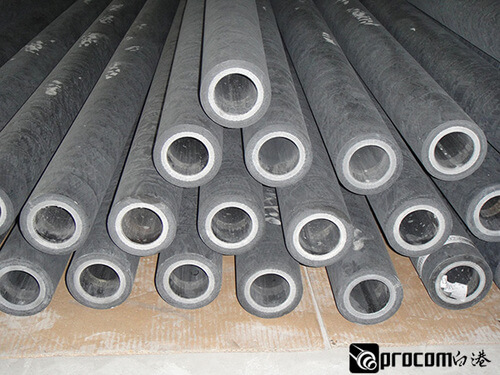
Advanced Technology and Quality Assurance
At Nanjing Baigang, we leverage cutting-edge carbon fiber technology and a team of highly skilled professionals to deliver superior products. Our manufacturing process incorporates a sophisticated design calculation method, supported by random signal and vibration analysis instruments, along with advanced testing technologies. This ensures our carbon fiber coupling shafts and other components meet stringent quality standards before reaching customers.
The company’s commitment to quality was formally recognized in November 2006 when we achieved ISO9001:2000 certification. Since then, we have consistently maintained rigorous production and quality control processes aligned with international standards. Every product undergoes comprehensive testing using specialized instruments to guarantee optimal performance and reliability in demanding industrial environments.
Custom Carbon Fiber Shaft Solutions
Understanding that different industries have unique requirements, Nanjing Baigang offers fully customizable carbon fiber shaft solutions. Our engineering team works closely with clients to develop components tailored to specific applications, environments, and performance needs. We can produce carbon fiber tubes up to 10 meters in length with diameters ranging from Φ40mm to Φ600mm, accommodating virtually any industrial requirement.
This flexibility has made us a preferred partner for companies seeking specialized composite components. Our ability to create custom solutions extends beyond dimensions to include material composition, structural design, and surface treatments, ensuring each product delivers maximum value for its intended application.
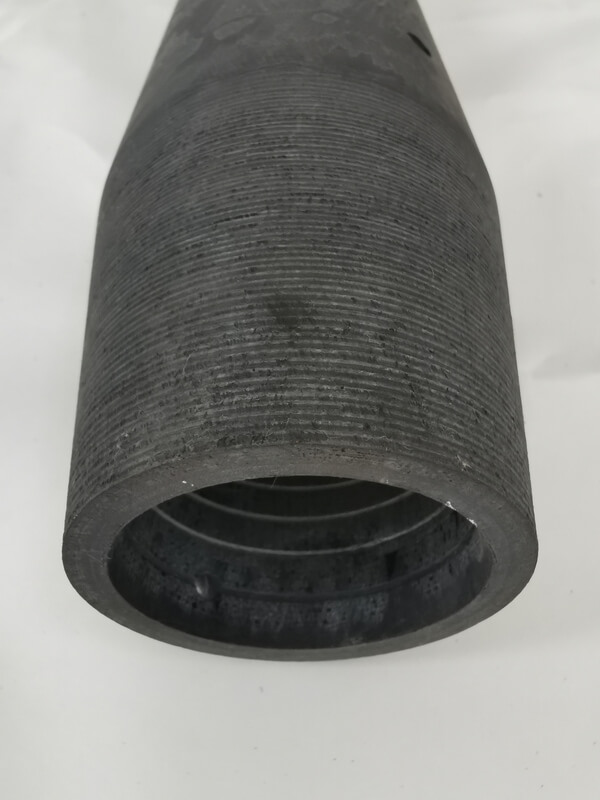
Key Applications of Our Carbon Fiber Components
Our carbon fiber coupling shafts and related products serve critical functions across multiple industries:
- Wind Power Generation: Our carbon fiber connecting shafts for wind turbines provide exceptional strength-to-weight ratios, improving energy efficiency and reducing maintenance requirements compared to traditional metal components.
- Cooling Tower Fans: Carbon fiber transmission shafts for cooling tower applications offer superior corrosion resistance and dimensional stability, ensuring reliable performance in harsh environmental conditions.
- Textile Machinery: Specialized carbon fiber guide rollers enhance fabric quality and production efficiency by minimizing vibration and maintaining precise tension control.
- Papermaking Industry: Our composite components withstand the abrasive conditions of paper production while maintaining dimensional accuracy for consistent product quality.
Industry-Specific Benefits of Carbon Fiber Components
The adoption of carbon fiber components offers significant advantages across industrial sectors. Compared to traditional metal materials, carbon fiber provides superior strength-to-weight ratios, excellent corrosion resistance, and reduced vibration transmission. These properties translate to improved equipment performance, lower energy consumption, and extended service life for critical components.
In wind power applications, for example, our carbon fiber coupling shafts reduce rotational inertia, enabling faster startup times and more efficient power generation. The lightweight nature of carbon fiber also simplifies transportation and installation while maintaining the structural integrity needed to withstand extreme weather conditions.
| Feature | Carbon Fiber Advantage | Traditional Material |
|---|---|---|
| Weight | 40-60% lighter than steel | Heavier, requires stronger support structures |
| Corrosion Resistance | Excellent in harsh environments | Requires protective coatings |
| Vibration Damping | Reduces equipment wear | Transmits vibrations |
| Fatigue Resistance | Long service life under cyclic loading | Prone to fatigue failure |
FAQ
What makes carbon fiber coupling shafts superior to traditional metal shafts?
Carbon fiber coupling shafts offer several advantages over traditional metal shafts, including significantly lower weight (40-60% lighter than steel), excellent corrosion resistance, superior vibration damping properties, and higher fatigue resistance. These characteristics lead to improved equipment performance, reduced energy consumption, and extended component lifespan, particularly in demanding industrial environments.
How does Nanjing Baigang ensure the quality of its carbon fiber components?
We maintain strict quality control throughout our production process, starting with advanced design calculations and material selection. Our manufacturing facilities are equipped with specialized vibration analysis and testing instruments. Every product undergoes comprehensive testing before delivery, and we have maintained ISO9001:2000 certification since 2006 to ensure consistent quality standards.
Can you produce carbon fiber shafts with custom dimensions and specifications?
Absolutely. As a leading custom carbon fiber shaft manufacturer, we specialize in creating components tailored to specific customer requirements. We can produce shafts up to 10 meters in length with diameters ranging from Φ40mm to Φ600mm. Our engineering team works closely with clients to develop optimal solutions for their unique applications.
What industries benefit most from using carbon fiber coupling shafts?
Carbon fiber coupling shafts provide exceptional value across multiple industries, particularly those requiring lightweight yet strong components with excellent corrosion resistance. Our primary markets include wind power generation, cooling tower systems, textile machinery, papermaking equipment, shipbuilding, and port machinery. The material’s properties also make it valuable for specialized applications in film production, lithium battery manufacturing, and packaging equipment.
How do carbon fiber components contribute to energy efficiency in industrial applications?
The lightweight nature of carbon fiber reduces rotational inertia in moving components, enabling faster acceleration and deceleration while consuming less energy. In wind turbines, for example, our carbon fiber connecting shafts improve startup times and overall power generation efficiency. The excellent vibration damping properties also reduce energy losses caused by equipment vibration, further enhancing system efficiency.
What maintenance requirements should be considered for carbon fiber shafts?
Carbon fiber components generally require less maintenance than traditional metal parts due to their superior corrosion resistance and fatigue properties. However, regular visual inspections for surface damage and proper handling during installation and operation remain important. Our team provides detailed maintenance guidelines with each product to ensure optimal performance and longevity.
How does Nanjing Baigang approach custom component development?
We follow a collaborative process starting with in-depth discussions about the customer’s specific requirements and operating conditions. Our engineering team then develops multiple design options, which we refine through simulation and testing. This iterative approach ensures we deliver components that perfectly match the application’s performance, durability, and cost requirements.
What is the typical lead time for custom carbon fiber shaft production?
Lead times vary depending on component complexity and order volume, but we typically complete custom projects within 4-8 weeks from final design approval. Our production facilities are optimized for efficient carbon fiber component manufacturing, allowing us to maintain relatively short lead times while ensuring high quality standards.
How does carbon fiber compare to glass fiber in industrial applications?
While both materials offer advantages over traditional metals, carbon fiber provides superior strength-to-weight ratios and stiffness, making it ideal for high-performance applications requiring maximum strength with minimal weight. Glass fiber offers better cost-effectiveness for less demanding applications and provides excellent electrical insulation properties. We offer both materials to meet diverse customer needs.
What environmental benefits do carbon fiber components offer?
Carbon fiber components contribute to environmental sustainability in several ways. Their lightweight nature reduces energy consumption in transportation and operation. The material’s durability extends product lifespans, reducing waste generation. Additionally, the corrosion resistance eliminates the need for protective coatings that might contain harmful chemicals, making carbon fiber an eco-friendly choice for many industrial applications.
Summary
Nanjing Baigang Composite Materials stands as a premier manufacturer of carbon fiber coupling shafts and related composite components, serving diverse industrial sectors worldwide. With nearly two decades of expertise, advanced manufacturing capabilities, and a commitment to quality, we deliver customized solutions that enhance equipment performance, reduce operating costs, and improve environmental sustainability. Our ISO-certified production processes, combined with our ability to create components tailored to specific applications, make us the ideal partner for companies seeking high-performance carbon fiber solutions. Whether for wind turbines, cooling tower systems, textile machinery, or other industrial applications, our products consistently demonstrate the superior advantages of composite materials over traditional alternatives.