
When it comes to selecting long carbon fiber drive shafts for industrial applications, the decision involves balancing performance requirements, environmental conditions, and budget considerations. As a leading manufacturer in the field, Nanjing Baigang Composite Materials Co., Ltd. has served over 4,000 installations across wind power, cooling towers, textile machinery, and paper production since 2003. This comprehensive guide will help you navigate the selection process while highlighting key considerations for international procurement.
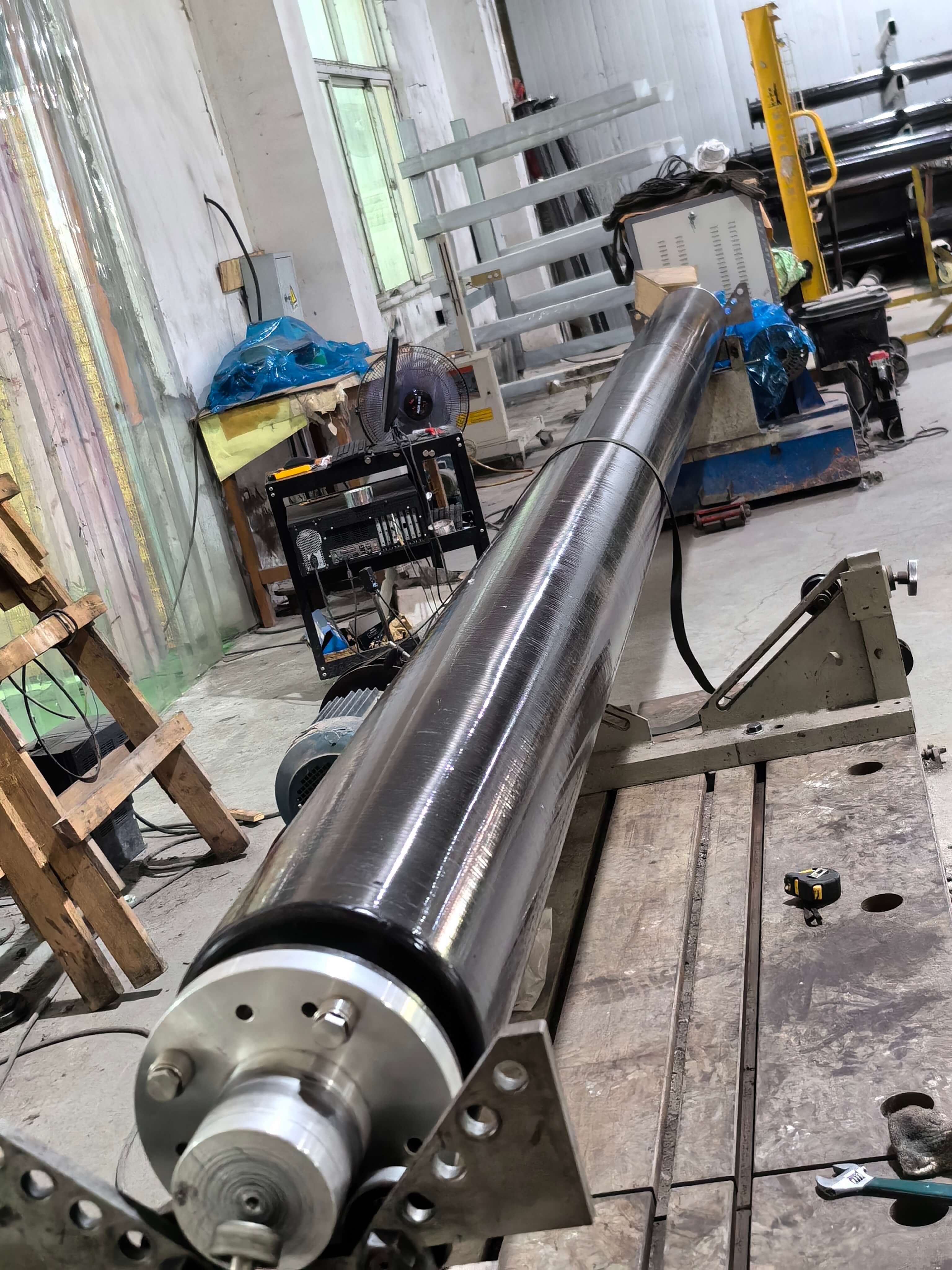
Understanding Long Carbon Fiber Drive Shaft Applications
The versatility of carbon fiber drive shafts stems from their exceptional strength-to-weight ratio and corrosion resistance. In wind power generation, these components transmit torque from the gearbox to the generator while withstanding constant vibration and axial loads. For cooling tower applications, the shafts must endure corrosive environments while maintaining precise alignment over extended lengths. Textile machinery applications demand minimal deflection under high-speed operation to ensure fabric quality.
Nanjing Baigang’s engineering team has developed specialized solutions for each application:
- Wind turbine connection shafts with fatigue life exceeding 20 years
- Cooling tower drive shafts with triple-layer corrosion protection
- Textile machinery guide rollers with surface roughness below Ra0.2
These specialized designs reflect the company’s accumulation of over 100,000 operational hours across diverse industrial environments.
Key Selection Criteria for Long Carbon Fiber Shafts
The selection process involves evaluating six critical parameters that determine performance and longevity:
1. Length-to-Diameter Ratio
For shafts exceeding 6 meters, critical speed calculations become essential to prevent resonance. Nanjing Baigang employs finite element analysis to optimize wall thickness distribution, enabling safe operation at 1.5x nominal speed for shafts up to 10 meters. This capability supports applications requiring compact drive systems without sacrificing reliability.
2. Torque Transmission Capacity
The carbon fiber layup pattern directly impacts torque capacity. The company’s proprietary hybrid winding technology combines unidirectional and braided layers to achieve 30% higher torque density compared to conventional designs. This innovation enables downsizing while maintaining safety factors above 2.5 for continuous operation.
3. Environmental Resistance
Material selection varies based on operating conditions:
| Environment | Material Solution | Protection Level |
|---|---|---|
| Marine/Salt Spray | Vinyl Ester Matrix | ISO 9227: 1,000h Pass |
| Chemical Exposure | PTFE Liner | ASTM D543: Grade 5 |
| High Temperature | Phenolic Resin | 220°C Continuous |
4. Dynamic Balancing
For high-speed applications above 3,000 RPM, Nanjing Baigang implements two-plane balancing to G1.0 standard (ISO 1940). This precision reduces vibration levels by 80% compared to industry-standard G2.5 balancing, extending bearing life and minimizing noise emissions.
5. End Fitting Integration
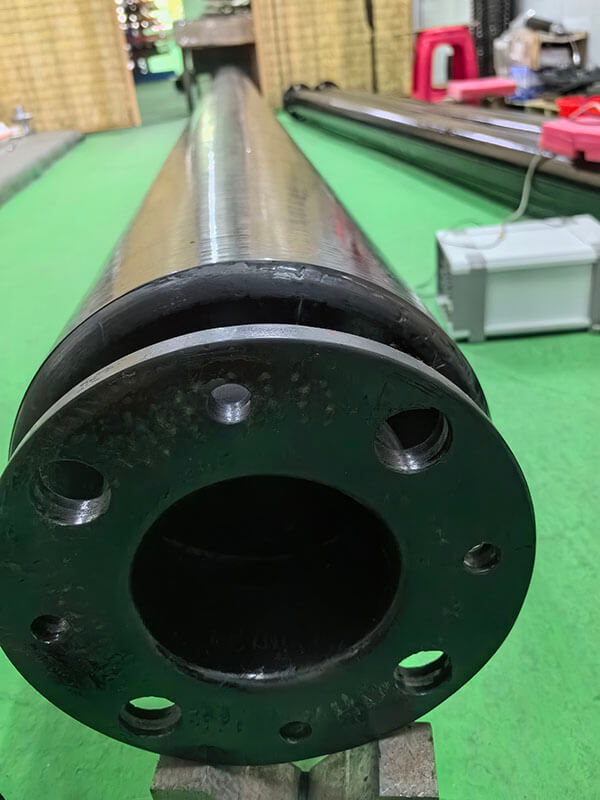
The company’s in-house machining capabilities enable seamless integration of custom flanges, splines, and couplings. Computerized numerical control (CNC) machining maintains concentricity within ±0.05mm across the entire shaft length, ensuring proper alignment with connected components.
6. Certification Requirements
International projects should verify compliance with relevant standards:
- GL (Germanischer Lloyd) for marine applications
- DNV for offshore wind installations
- API 671 for petrochemical applications
- ISO 9001:2015 quality management system
Nanjing Baigang maintains certifications for all major industrial sectors it serves.
Top Long Carbon Fiber Drive Shaft Manufacturers
The global market features several specialized manufacturers, each with distinct capabilities:
1. Nanjing Baigang Composite Materials Co., Ltd.
As China’s first ISO 9001:2000 certified carbon fiber shaft manufacturer, the company offers:
- Custom lengths up to 10 meters
- Diameters from Φ40mm to Φ600mm
- In-house vibration analysis and testing
- 48-hour emergency replacement service
Their wind turbine shafts have achieved 98.7% uptime across 1,200+ installations worldwide.
2. SGL Carbon (Germany)
Specializing in automotive applications, SGL offers lightweight solutions with torque capacities up to 5,000 Nm. Their patented winding technology enables production of complex shapes but has minimum order quantities of 50 units.
3. Toray Composite Materials America
This Japanese-owned manufacturer focuses on aerospace-grade carbon fiber shafts with extreme precision requirements. Their products meet AS9100D standards but come with 12-16 week lead times and premium pricing.
Custom Solution Development Process
For projects requiring non-standard specifications, Nanjing Baigang follows a structured development methodology:
- Requirement Analysis: 3D modeling of operational loads and environmental conditions
- Material Selection: Database of 12+ resin systems and 8 carbon fiber grades
- Prototype Manufacturing: 5-axis CNC machining of molds within 72 hours
- Validation Testing: 200% torque overload testing and 10^7 cycle fatigue analysis
- Production Ramp-up: Automated winding lines with 99.2% yield rates
This process typically completes within 6-8 weeks for new designs, compared to 12-16 weeks for European competitors.
FAQ
What is the maximum length for custom carbon fiber drive shafts?
Nanjing Baigang can manufacture shafts up to 10 meters in length using specialized winding equipment and stress-relief annealing processes. For applications requiring longer spans, we recommend intermediate support bearings or segmented designs with precision couplings.
How do you ensure dimensional accuracy for large-diameter shafts?
Our production process incorporates three quality control stages:
1. Laser diameter measurement during winding (±0.1mm tolerance)
2. CNC machining with automatic tool compensation
3. Final inspection using coordinate measuring machines (CMM)
This ensures compliance with ISO 2768-m precision requirements for all diameters above Φ100mm.
What maintenance intervals are recommended for carbon fiber drive shafts?
Under normal operating conditions (≤80% rated torque, ambient temperature <60°C), we recommend: - Visual inspection: Monthly - Vibration analysis: Quarterly - Non-destructive testing: Annually Shafts in corrosive environments may require more frequent inspections based on the specific resin system used.
Can you modify existing shaft designs for improved performance?
Yes, our engineering team specializes in reverse engineering and performance optimization. We’ve successfully reduced weights by 35% and extended fatigue life by 5x for several clients through:
– Topology optimization of cross-sections
– Hybrid metal-composite connections
– Advanced damping material integration
What lead time should be expected for custom orders?
Standard configurations (common diameters and lengths) ship within 10 working days. Custom designs typically require:
– 3-5 days for engineering review
– 7-10 days for prototype manufacturing
– 14-21 days for validation testing
– 5-7 days for production ramp-up
Total lead time ranges from 4-6 weeks depending on complexity and order volume.
Summary
Selecting the right long carbon fiber drive shaft requires careful evaluation of application-specific requirements, material properties, and manufacturer capabilities. Nanjing Baigang Composite Materials stands out with its vertically integrated production process, ISO-certified quality system, and ability to deliver custom solutions within competitive timeframes. The company’s 20+ years of experience across multiple industrial sectors ensures reliable performance even in the most demanding environments.
For international projects, consider the total cost of ownership rather than just initial pricing. Factors like maintenance requirements, downtime costs, and replacement availability should all factor into your decision. Partnering with a manufacturer that offers both standard products and custom engineering capabilities provides the flexibility needed for modern industrial applications.