
In the rapidly evolving industrial landscape, carbon fiber wheel hubs have emerged as a critical component for enhancing performance and efficiency across various sectors. Nanjing Baigang Composite Materials Co., Ltd., a leading high-tech enterprise based in Nanjing, China, has been at the forefront of carbon fiber composite material research, development, and production since its establishment in 2003. This comprehensive guide explores everything you need to know about carbon fiber wheel hubs, from their types and applications to selecting the most reliable manufacturer.
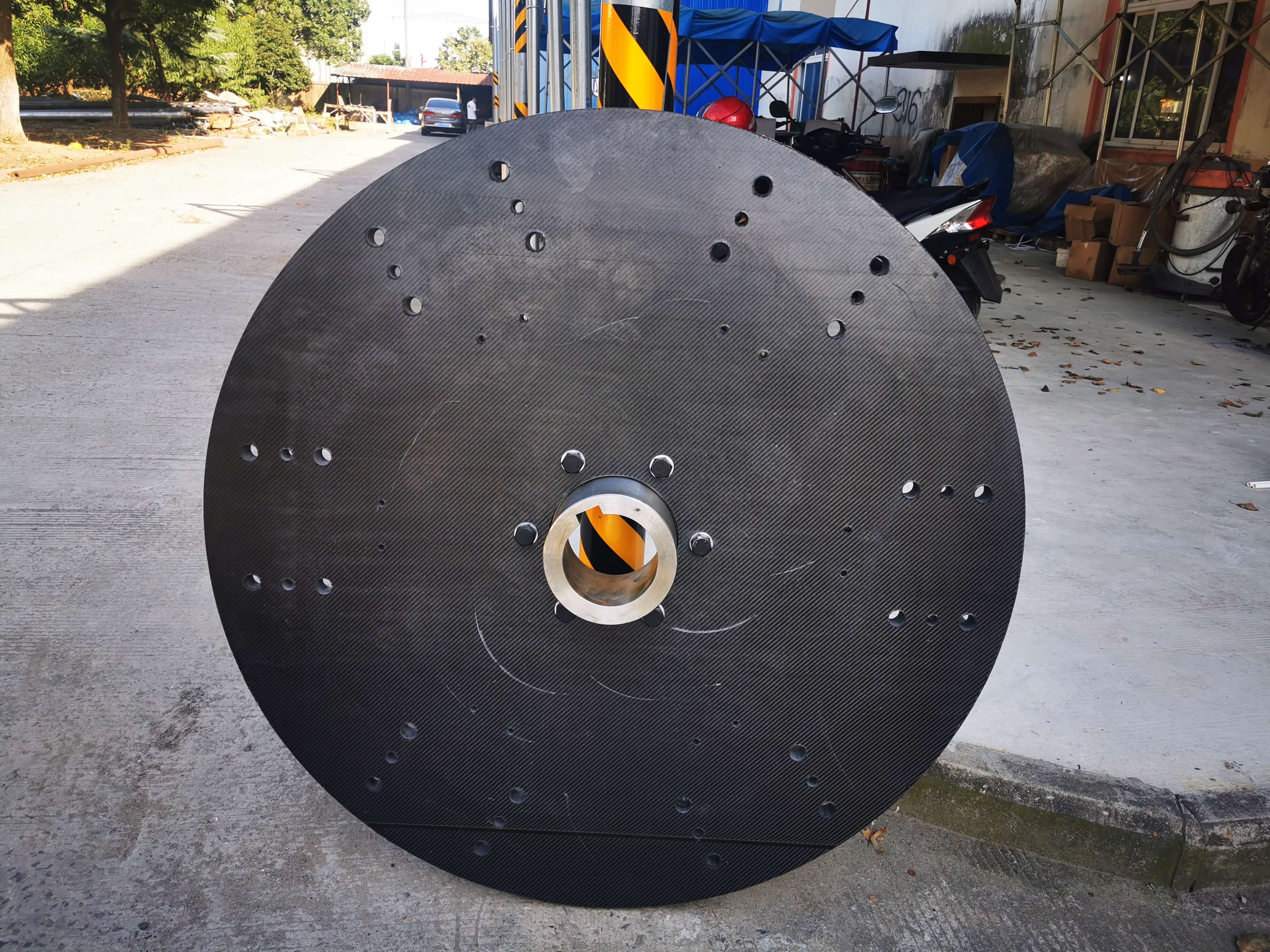
Understanding Carbon Fiber Wheel Hubs
Carbon fiber wheel hubs represent a significant advancement over traditional metal hubs, offering superior strength-to-weight ratios, corrosion resistance, and vibration damping properties. These characteristics make them ideal for demanding industrial applications where performance and durability are paramount.
At Nanjing Baigang, our carbon fiber wheel hubs are engineered using advanced composite materials that combine carbon fibers with high-performance resins. This construction method results in components that are not only lighter but also more robust than their metal counterparts, leading to improved energy efficiency and reduced maintenance requirements.
The manufacturing process at Baigang involves sophisticated design calculation methods, random signal and vibration analysis, and rigorous testing protocols. Our state-of-the-art production facilities and precision measurement equipment ensure that every carbon fiber wheel hub meets the highest quality standards before leaving our factory.
Types of Carbon Fiber Wheel Hubs
Nanjing Baigang offers a diverse range of carbon fiber wheel hubs tailored to specific industrial requirements:
- Wind Power Application Hubs: Designed for wind turbines, these hubs withstand extreme environmental conditions while maintaining optimal performance.
- Cooling Tower Fan Hubs: Engineered for reliability in cooling tower systems, these hubs help maintain efficient air circulation in industrial facilities.
- Textile Machinery Hubs: Precision-crafted for textile production equipment, these hubs ensure smooth operation and minimal vibration.
- Paper Making Industry Hubs: Built to endure the demanding environment of paper mills, these hubs contribute to consistent production quality.
- Custom Specialty Hubs: For unique applications, we offer fully customizable hubs up to 10 meters in length and with diameters ranging from Φ40mm to Φ600mm.
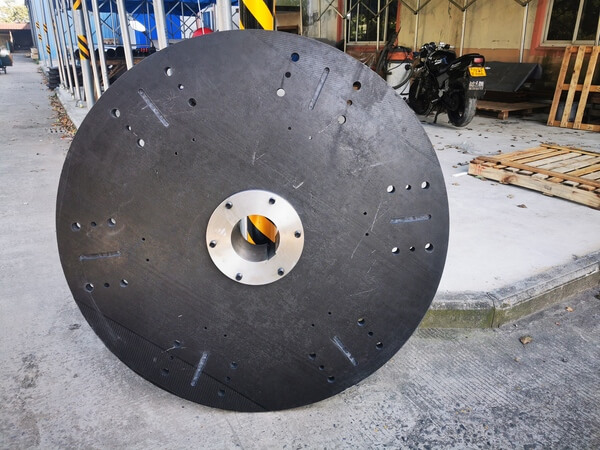
Key Applications of Carbon Fiber Wheel Hubs
The versatility of carbon fiber wheel hubs makes them suitable for numerous industrial sectors:
Wind Power Generation
In wind turbines, carbon fiber wheel hubs play a crucial role in connecting the rotor blades to the main shaft. Their lightweight construction reduces rotational inertia, enabling faster startup times and improved energy capture efficiency. The corrosion resistance of carbon fiber also extends the service life of components in harsh offshore environments.
Cooling Tower Systems
For industrial cooling towers, carbon fiber wheel hubs provide reliable performance in demanding conditions. Their resistance to chemical corrosion and ability to dampen vibrations contribute to more efficient cooling operations and reduced equipment wear.
Textile Manufacturing
In textile machinery, precision and minimal vibration are essential for producing high-quality fabrics. Carbon fiber wheel hubs help achieve these requirements while also reducing energy consumption compared to traditional metal components.
Paper Production
The paper making process involves continuous operation under heavy loads. Carbon fiber wheel hubs in paper machines withstand these conditions while maintaining dimensional stability, which is critical for consistent paper quality.
Custom Industrial Solutions
Beyond these standard applications, Nanjing Baigang specializes in developing custom carbon fiber wheel hub solutions for unique industrial challenges. Our engineering team works closely with clients to design components that meet specific performance requirements and environmental conditions.
| Feature | Carbon Fiber Wheel Hub | Traditional Metal Hub |
|---|---|---|
| Weight | 40-60% lighter | Heavier |
| Corrosion Resistance | Excellent | Variable (requires coating) |
| Fatigue Life | Longer under cyclic loading | Shorter |
| Vibration Damping | Superior | Poor |
| Thermal Expansion | Very low | Higher |
Selecting a Reliable Carbon Fiber Wheel Hub Manufacturer
Choosing the right supplier for carbon fiber wheel hubs is crucial for ensuring product quality and long-term reliability. When evaluating potential manufacturers, consider these key factors:
Technical Expertise
Look for companies with proven experience in carbon fiber composite materials and a track record of successful industrial applications. Nanjing Baigang’s team of skilled engineers and researchers has been developing advanced composite solutions since 2003.
Quality Certifications
Ensure the manufacturer maintains relevant quality management certifications. Baigang has been ISO9001:2000 certified since November 2006 and strictly adheres to these standards in all production processes.
Production Capabilities
Evaluate the manufacturer’s equipment and facilities. Baigang’s state-of-the-art production lines and precision measurement instruments guarantee consistent product quality across all batches.
Customization Options
For specialized applications, choose a supplier capable of developing custom solutions. Baigang offers full customization services for carbon fiber wheel hubs, including unique dimensions and performance characteristics.
Testing Protocols
Reliable manufacturers should have rigorous testing procedures in place. At Baigang, every carbon fiber wheel hub undergoes comprehensive testing using advanced instruments before delivery to customers.
Industry Experience
Consider suppliers with established experience in your specific industry. Baigang’s carbon fiber wheel hubs have been successfully applied in wind power, cooling towers, textile machinery, paper making, and other industrial sectors.
FAQ
What makes carbon fiber wheel hubs superior to traditional metal hubs?
Carbon fiber wheel hubs offer several advantages over metal alternatives, including significantly lower weight (40-60% lighter), superior corrosion resistance, better vibration damping properties, longer fatigue life under cyclic loading, and minimal thermal expansion. These characteristics lead to improved energy efficiency, reduced maintenance requirements, and longer service life in industrial applications.
How does Nanjing Baigang ensure the quality of its carbon fiber wheel hubs?
At Baigang, we maintain strict quality control throughout the production process. Our ISO9001:2000 certified quality management system governs every step from material selection to final inspection. We use advanced design calculation methods, random signal and vibration analysis, and precision measurement equipment to ensure each component meets our high standards. Every carbon fiber wheel hub undergoes comprehensive testing before delivery.
Can Baigang produce custom carbon fiber wheel hubs for specialized applications?
Yes, customization is one of our core strengths. We offer fully customizable carbon fiber wheel hubs with lengths up to 10 meters and diameters ranging from Φ40mm to Φ600mm. Our engineering team works closely with clients to develop solutions tailored to specific performance requirements, environmental conditions, and installation constraints.
What industries primarily use carbon fiber wheel hubs from Baigang?
Our carbon fiber wheel hubs serve multiple industrial sectors, with primary applications in wind power generation (for wind turbine rotor connections), cooling tower systems (for fan assemblies), textile machinery (for precision components), and paper making equipment (for heavy-duty continuous operation). We also supply custom solutions for other specialized industrial applications.
How does the production process for carbon fiber wheel hubs differ from traditional manufacturing?
The production of carbon fiber wheel hubs involves sophisticated composite material technology rather than traditional metalworking processes. At Baigang, we use advanced resin infusion techniques to combine carbon fibers with high-performance matrices, followed by precision curing in controlled environments. This method creates components with optimal fiber orientation for maximum strength and durability, which cannot be achieved with conventional manufacturing approaches.
Summary
Carbon fiber wheel hubs represent a transformative technology for industrial applications requiring high performance and reliability. Nanjing Baigang Composite Materials Co., Ltd. stands as a premier manufacturer, offering a comprehensive range of standard and custom carbon fiber wheel hub solutions backed by nearly two decades of expertise in composite materials.
Our commitment to quality, evidenced by ISO9001:2000 certification and rigorous testing protocols, ensures that every component meets the most demanding industrial standards. With applications spanning wind power, cooling systems, textile machinery, paper production, and beyond, Baigang’s carbon fiber wheel hubs deliver measurable benefits in terms of efficiency, durability, and maintenance costs.
For businesses seeking to upgrade their equipment with advanced composite components, Nanjing Baigang offers not just products but complete solutions tailored to specific operational requirements. Our technical team is ready to collaborate on custom designs, ensuring optimal performance in even the most challenging industrial environments.